

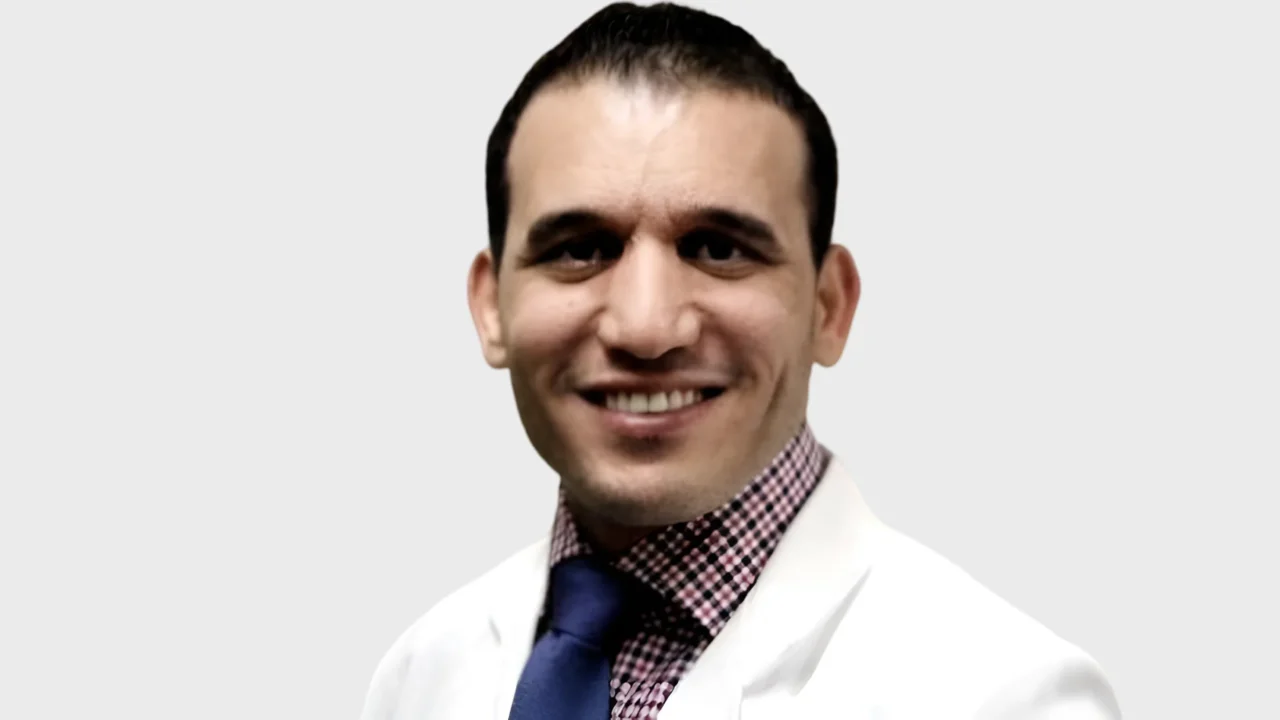
Tarek Dakakni: Mobile Stroke Units Make Treatment Faster, Clearer, and Smarter
Tarek Dakakni, Medical Director Neurosciences at Northeast Georgia Health System (NGHS), shared on LinkedIn:
”Innovation is making stroke care faster, clearer, and smarter.
Now we have to train our systems to keep up.
Technology is no longer the barrier. I think that adoption is.
If we want to save more brain with faster stroke treatment, we must align EMS, nurses, stroke teams, and leaders around one idea: Bring care to the patient, not the patient to the care.
Years ago, when I saw a portable CT scanner roll into a critically ill patient’s room for the first time, no transport team, no elevators, no delays, I started thinking, why move a fragile brain to technology when we can move technology to the brain?
That philosophy is now real in the field through the Mobile Stroke Unit (MSU).
In 2026, new ASA/AHA recommendations formally recognize MSUs as improving outcomes by shortening time to diagnosis and treatment.
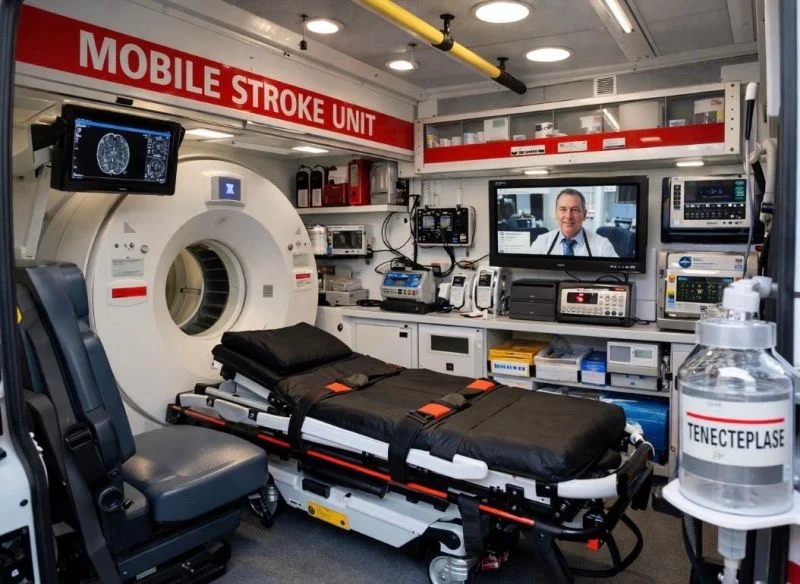
A Mobile Stroke Unit is a mini primary stroke center on wheels:
- On-board CT
- Tele-neurology
- Point-of-care labs
- Immediate thrombolytics treatment for eligible patients
Tenecteplase, which is now officially endorsed, makes this even faster.
Unlike alteplase, tenecteplase is a single IV bolus, not a one hour infusion.
That means stroke treatment can begin immediately in the field, not after hospital arrival.
Smarter triage. Faster intervention.
With MSU diagnosis and treatment:
Instead of Home to Primary Stroke Center to Transfer
We can move directly to Home to MSU treatment to Thrombectomy-capable or Comprehensive Stroke Center
This:
- Saves time, therefore, more eligible patients
- Preserves more neurons
- Reduces cost
- Expands access to thrombectomy and thrombolysis
And for hemorrhage?
MSUs allow us to:
- Diagnose intracranial hemorrhage immediately, and triage accordingly
- Start targeted blood pressure control
- Reduce risk of hematoma expansion before hospital arrival
The future is already here.
Portable MRI, AI-driven imaging, and rapid diagnostics are emerging to make bedside stroke diagnosis faster and more precise than ever.
This is not replacing clinicians.
It is amplifying us, helping to make treatment more efficient and faster, which is essential in stroke care.
Now, and more than ever, I’m very excited about the future of stroke care, where innovation, AI, and mobile technology make us faster, safer, and more human.
The question is: What would it take for any system to fully embrace this future?
Because every minute we save is not just brain, it’s life, identity, and independence.”
Stay updated with Hemostasis Today.
-
Nov 20, 2026, 17:27Adam Bryant: Great Science, Valuable Connections and a Wonderful Haematology Community at Blood 2026
-
Nov 20, 2026, 17:25Gurpreet Kaurr: Scientific Discussions, New Perspectives and Inspiration at HAEMATOCON 2026
-
Nov 20, 2026, 17:24Bispecific FVIIIa-Mimetic Antibodies in Haemophilia A – CRH French Reference Center for Hemophilia Lyon
-
Nov 20, 2026, 17:23Khalid Rehman: Psychosocial Burden Among Caregivers of Patients with Beta-Thalassemia Major in Pakistan
-
Nov 20, 2026, 17:20Dhinesh Selvaraju: Caplacizumab Becomes the First FDA-Approved Treatment for Pediatric aTTP
-
Nov 20, 2026, 17:19Paris Margaritis: Presenting Preclinical Data on GENV-HEM at the WFH Workshop
-
Nov 20, 2026, 17:18WFH Opens Public Comment on Draft Guidelines for Hemostatic Agents and Prophylaxis
-
Nov 20, 2026, 17:18Ketan Asawale: Consensus on the Management of Cancer-Associated Thrombosis in India
-
Nov 20, 2026, 17:16Ajay Samkaria: The Evolution of Hemostasis Diagnostics with the ACL TOP 70 Series