


Bartosz Hudzik: Clarifying Pulmonary Embolism Care with the New AHA/ACC Guideline
Bartosz Hudzik, Editorial Consultant at JACC Case Reports, shared a post on LinkedIn about the new AHA/ACC guideline by Mark A. Creager et al, adding:
”Pulmonary embolism care is evolving — and the new AHA/ACC guideline makes that clear.
This isn’t just another update.
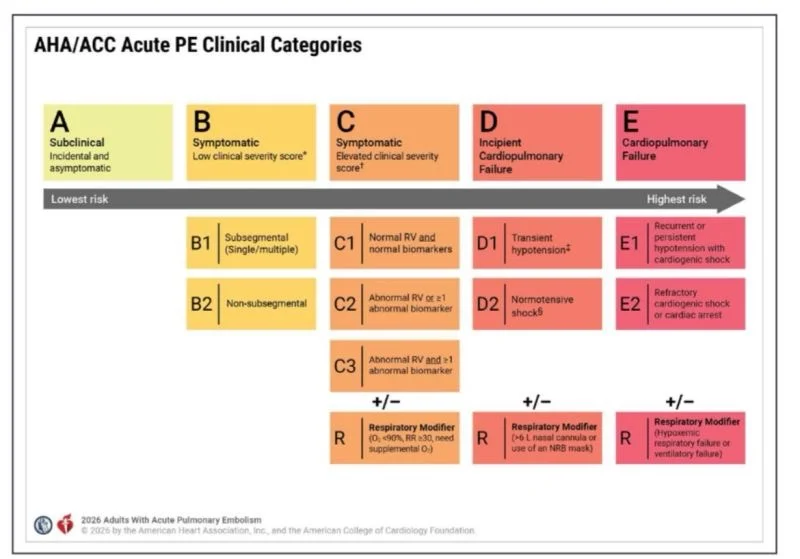
It reflects a broader shift from treating PE as a single acute event to managing it as a risk-stratified clinical pathway with structured follow-up.
A few takeaways that stand out:
- Risk stratification is now central to decision-making. The new classification framework helps identify which patients truly need intensive intervention — and which may be safely managed with less resource-intensive pathways.
- Therapeutic strategy continues to modernize. Direct oral anticoagulants remain preferred for most eligible patients, reinforcing the move toward safer, more streamlined anticoagulation.
- Follow-up is part of treatment. Persistent symptoms, functional limitation, and chronic thromboembolic disease are now explicitly addressed — highlighting that PE outcomes are determined long after discharge.
For clinicians, this means re-thinking workflows and escalation pathways.
For hospitals, it strengthens the case for coordinated PE response teams.
For patients, it signals more individualized and longitudinal care.
Curious how others are translating these recommendations into practice — particularly around triage pathways, outpatient management, and structured follow-up.
Cardiology and thrombosis experts across academia and clinical practice — would value your perspective on implementation challenges and opportunities”
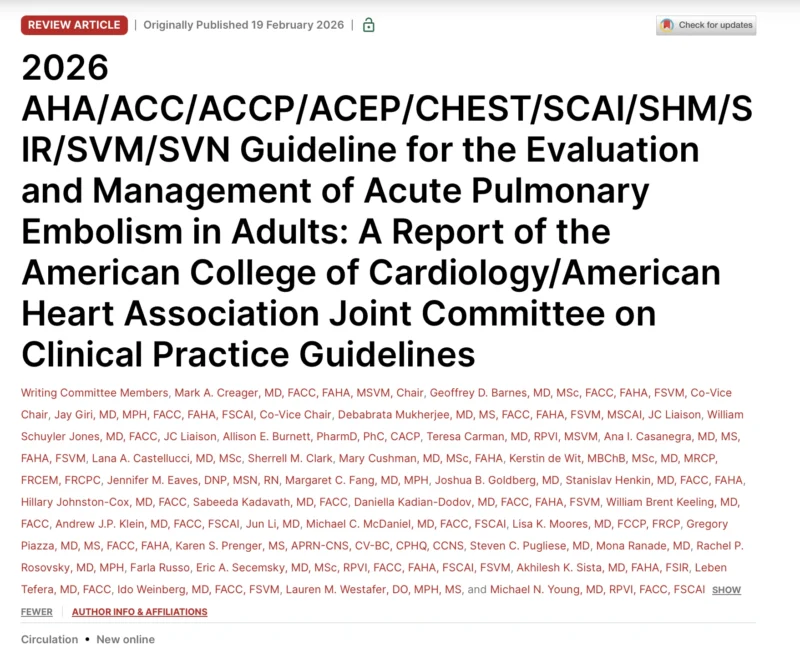
Title: 2026 AHA/ACC/ACCP/ACEP/CHEST/SCAI/SHM/SIR/SVM/SVN Guideline for the Evaluation and Management of Acute Pulmonary Embolism in Adults: A Report of the American College of Cardiology/American Heart Association Joint Committee on Clinical Practice Guidelines
Authors: Mark A. Creager, Geoffrey D. Barnes, Jay Giri, Debabrata Mukherjee, William Schuyler Jones, Allison E. Burnett, Teresa Carman, Ana I. Casanegra, Lana A. Castellucci, Sherrell M. Clark, Mary Cushman, Kerstin de Wit, Jennifer M. Eaves, Margaret C. Fang, Joshua B. Goldberg, Stanislav Henkin, Hillary Johnston-Cox, Sabeeda Kadavath, Daniella Kadian-Dodov, William Brent Keeling, Andrew J. P. Klein, Jun Li, Michael C. McDaniel, Lisa K. Moores, Gregory Piazza, Karen S. Prenger, Steven C. Pugliese, Mona Ranade, Rachel P. Rosovsky, Farla Russo, Eric A. Secemsky, Akhilesh K. Sista, Leben Tefera, Ido Weinberg, Lauren M. Westafer, Michael N. Young
Read the Full Article on Circulation
Stay updated on all scientific advances with Hemostasis Today.
-
Oct 5, 2026, 13:24Abdul Muqtadir Abbasi: Diagnostic Pearls for Evaluating Isolated Thrombocytopenia in Residents
-
Oct 5, 2026, 13:16Katerina Pavenski: Rethinking What ‘Normal’ Means for Iron Deficiency
-
Oct 5, 2026, 13:09Rick Matthews: Balancing Established VTE Partnerships with Innovative Interventional Technologies
-
Oct 5, 2026, 13:01Nawsherwan Mohammad: Recognizing TTP Before the ADAMTS13 Result Arrives
-
Oct 5, 2026, 12:51Bruno Pougault: The Hidden Challenges Behind Anti Xa Testing
-
Oct 5, 2026, 12:41Syed Huzaifa Khan: Rethinking CTRP12 as a Biomarker for In Stent Restenosis
-
Oct 5, 2026, 12:29Mirvat Alasnag: Creating a Space for Women in Cardiovascular Medicine
-
Oct 5, 2026, 11:59Khaoula Mazouzi: The Potential of Haemoglobin Vesicles as an Oxygen Carrier
-
Oct 5, 2026, 11:56Muhammet Özbilen: What Does New Evidence Tell Us About IV Iron in Pregnancy?