


AbQader Bedil: Donor Ferritin Testing and Iron Care
AbQader Bedil, Medical Laboratory Technologist at French Medical Institute for Mothers and Children- FMIC, Laboratory Incharge at Stanikza Diagnostic clinic, shared a post on LinkedIn:
”Donor Ferritin Testing and Iron Care
Blood donation is generous — but repeated donations quietly drain iron stores. Measuring serum ferritin (not just hemoglobin) is the fastest way to spot iron depletion and act before donors develop symptoms or get deferred. Practical ferritin programs now show you can protect donors and keep the supply stable.
Quick facts:
- Many blood operators now add selective or routine ferritin testing to their donor-wellness programs to identify donors at risk of iron deficiency.
- Expert reviews and working groups recommend ferritin-guided policies (testing, tailored donation intervals, and iron supplementation) as the best way to prevent iron depletion in frequent donors.
- Recent trials show ferritin-guided donation intervals or ferritin-based supplementation significantly raise donors’ ferritin and hemoglobin and reduce iron-deferral rates.
What a practical ferritin program looks like:
- Decide scope: pilot high-risk groups first (premenopausal females, young donors, repeat donors), then expand if capacity allows.
- Pick action thresholds: many programs flag ferritin ≲25 µg/L for intervention (deferred interval or iron offer), but define locally with lab vendors and clinical leads.
- Define actions: short donor pause (eg, 3–6 months), offer oral iron with instructions, or schedule follow-up ferritin testing. Put the action in SOPs and donor letters.
- Measure outcomes: track percent low-ferritin donors, donor return rates, iron-related deferrals, and the program’s effect on supply — iterate from data.
Why this matters:
Ferritin testing is donor-centred and evidence-based: it prevents iron deficiency, reduces unexpected deferrals, and keeps more healthy donors in the pool — that’s a win for donors and patients.”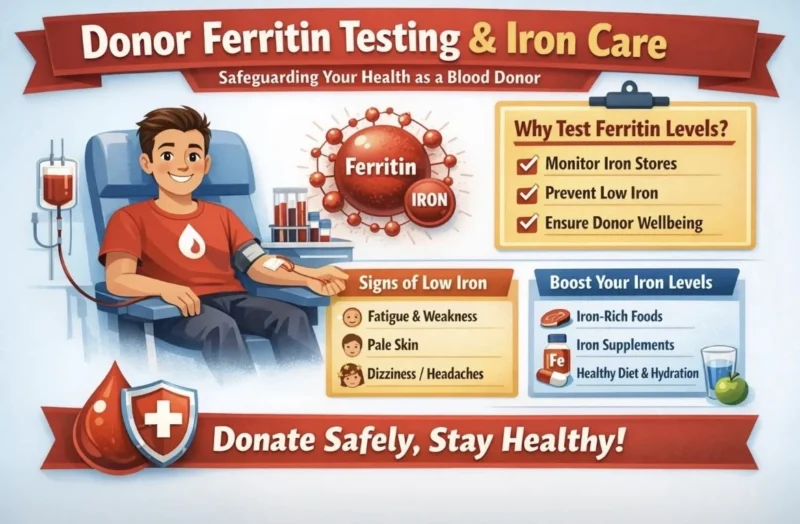
Stay updated with Hemostasis Today.
-
Nov 24, 2026, 15:57100 Years of von Willebrand Disease – From VWF Structure to Clinical Management and Future Directions – Seminars in Thrombosis and Hemostasis
-
Nov 24, 2026, 15:46Matthew Hazell: Rare Blood – Connecting Science with the Patient Experience
-
Nov 24, 2026, 15:23Cold Agglutinin Disease: Beyond Hemolysis Toward Complement-Directed Treatment
-
Nov 24, 2026, 15:19Essama Telli: Recognizing Retiform Purpura as a Sign of Vascular Injury and Thrombosis
-
Nov 24, 2026, 15:11Kerstin Piayda: University Hospital Giessen Performs Europe’s First PE Procedure With Lightning Flash 3.0
-
Nov 24, 2026, 14:55Cecilia Kretz: Evaluating Aspirin-Free Antithrombotic Strategies in HeartMate 3 Patients
-
Nov 24, 2026, 14:54The Future of Global Hemophilia Care and the Impact of the World Health Assembly Resolution
-
Nov 24, 2026, 14:39Andrija Velevski: Why Oxygen Availability Does Not Guarantee Tissue Oxygenation
-
Nov 24, 2026, 14:27Basyouni Omran: Clinical Guidance on Antiplatelet Use in Acute Ischemic Stroke