


Caitlin Raymond: Why Transfusion Medicine Should Be Looped in Early in Transfusion Reactions
Caitlin Raymond, Assistant Professor of Pathology and Transfusion Medicine at the University of Wisconsin-Madison, shared a post on LinkedIn:
“Many clinicians don’t realize that the blood bank has its own physician-led consult service available 24/7, aka Transfusion Medicine.
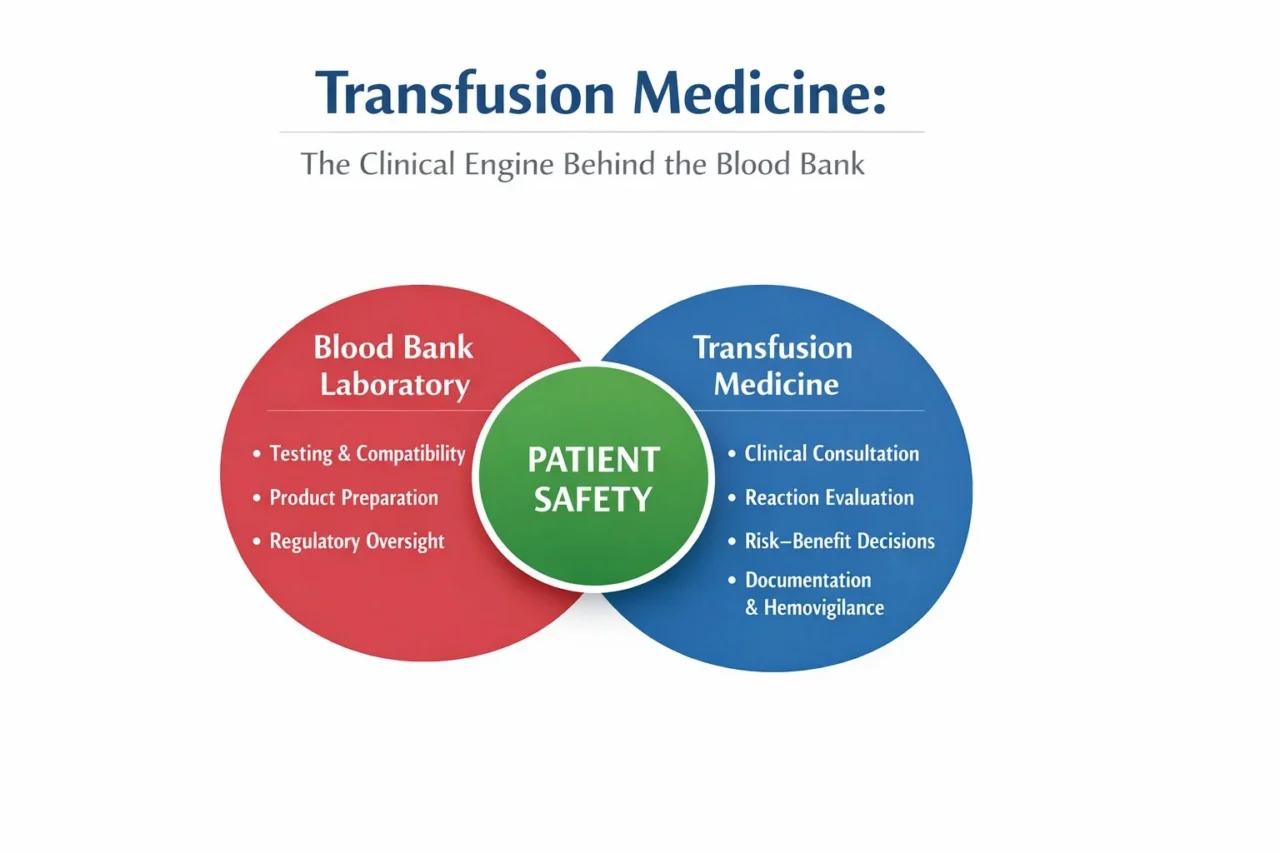
In many hospitals, the blood bank laboratory and the Transfusion Medicine service operate as one integrated safety system — but they serve different functions.
The lab ensures:
- Compatibility
- Product preparation
- Regulatory compliance
Transfusion Medicine provides:
- Real-time clinical judgment
- Reaction evaluation
- Risk–benefit consultation
- Hemovigilance oversight
When a patient develops hypoxia, hypotension, or fever during a transfusion, the question shifts from ‘What do the labs show?’ to ‘Is this TRALI? TACO? Hemolysis? Sepsis? Something else?’
That distinction between laboratory information and clinical judgement matters, both for the patient in front of you and for the integrity of hospital safety data.
I wrote about our complimentary roles in patient safety, and why Transfusion Medicine should be looped in early in transfusion reactions.”
Other posts featuring Caitlin Raymond on Hemostasis Today.
-
Sep 25, 2026, 10:49Shefina S: From Presenting to Hosting at TRANSCON 2026
-
Sep 25, 2026, 10:37Michelle Leona Cecil: Hemophilia Advocacy and the Power of Community
-
Sep 25, 2026, 10:13Michael Baria: Platelet Concentration and PRP Outcomes in Partial Rotator Cuff Tears
-
Sep 25, 2026, 09:49Haley Coleman: Volunteering to Support Hemophilia Awareness
-
Sep 25, 2026, 08:55Hitarth Mehta: BHMS Students Gain Practical Exposure to Haemophilia Diagnosis
-
Sep 25, 2026, 07:25Varun Capoor: How Therapeutic Apheresis and Transfusion Medicine Can Complement Clinical Management in SCD
-
Sep 25, 2026, 07:14Manshi Kesharwani: SAK-GQDs Modulate Thrombus Burden and Endothelial Function in Deep Vein Thrombosis
-
Sep 25, 2026, 06:20Farjah Hassan Algahtani: How Can We Better Identify Patients at Risk of Blood Clots after Metabolic and Bariatric Surgery?
-
Sep 25, 2026, 05:59Carla Lewis: Kids Conquering Sickle Disease Joins Nemours Children’s Hospital for 2nd Annual Awareness Event