

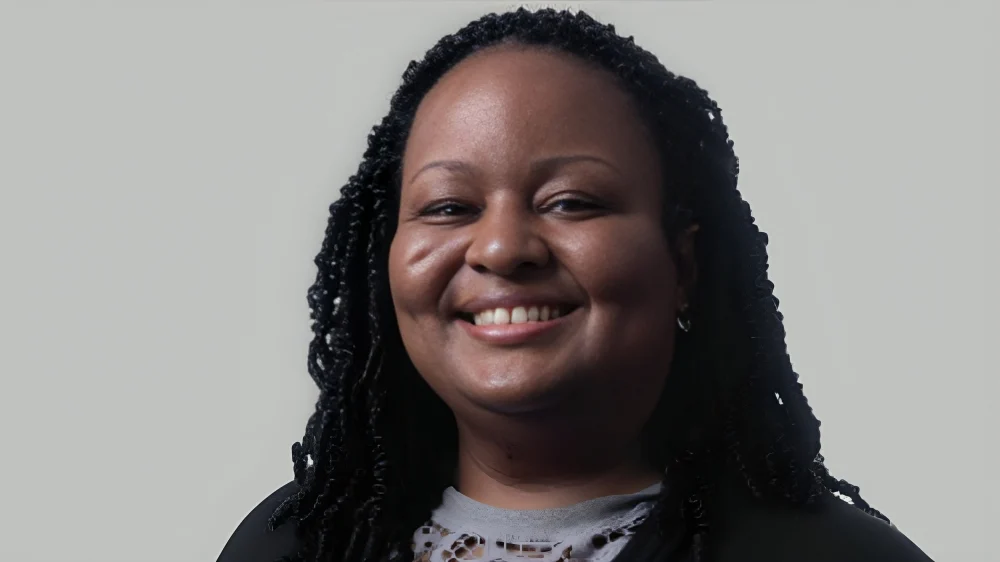
LaShanta Brice: Upcoming Hematology and Coagulation Session for Lab Professionals
LaShanta Brice, Scientific Engagement and Clinical Education Scientist at Stago, shared Mark Girton’s post on LinkedIn, adding:
”Medical Laboratory Professionals: Don’t Miss This Upcoming Hematology and Coagulation Session!
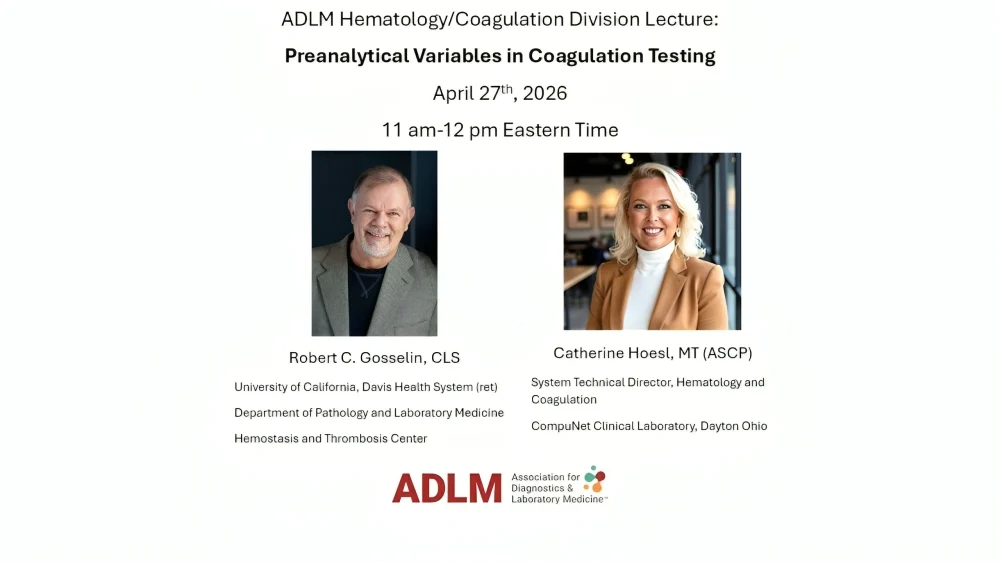
Understanding and controlling pre-analytical variables in coagulation testing is essential for ensuring accurate, reliable patient results. The Hematology and Coagulation Division of ADLM invites you to a focused division lecture that takes a deep dive into this critical aspect of laboratory practice.
- April 27, 2026
- 11:00 am – 12:00 pm Eastern Time
- Virtual Division Lecture
Join expert speakers as they discuss key factors influencing coagulation testing quality and walk through best practices to strengthen pre-analytical workflows in your laboratory.
Enhance your knowledge. Elevate your practice. Advance patient care.
Hope to see you there!”
Mark Girton, Clinical Assistant Professor at University of Michigan, shared a post on LinkedIn:
”Join the Hematology and Coagulation Division of ADLM to learn more about pre-analytical variable in coagulation testing!
This division lecture is coming up on April 27, 2026.”
Stay updated with Hemostasis Today.
-
Sep 30, 2026, 01:52Javed Anees: DADA2 – When a Young Stroke Is More Than a Stroke
-
Sep 30, 2026, 01:51How a Venous Thrombus Becomes Revascularized – ISTH
-
Sep 29, 2026, 22:45Victor Agunyego: Paracetamol – The Most Common Drug We Underestimate
-
Sep 29, 2026, 22:42Nova Sinclair: Advancing the Future of Hematology – Meet Our 2027 Organizing Committee
-
Sep 29, 2026, 22:41Lorenz Räber: Intracoronary Imaging in PCI – Why, When, How, and Which Modality?
-
Sep 29, 2026, 22:31Selma Turkovic: Pleased to Deliver the Opening Presentation at Kingston Hospital
-
Sep 29, 2026, 22:31Miguel Teran: Ultrasound and Simulation in Arterial Blood Sampling
-
Sep 29, 2026, 22:28Mohammad Refaei: Navigating Your Career in Hematology From Training to Practice
-
Sep 29, 2026, 22:27Matteo Foschi: 10 Clinical Pearls for Antithrombotic Therapy in Secondary Stroke Prevention