


Ney Carter Borges: Endocrine Drivers of Resistant Hypertension – Insights from the MOMENTUM Trial at ACC 26
Ney Carter Borges, Member Cardiologist of Global Physician Association at Cleveland Clinic Florida, shared a post in LinkedIn:
“Endocrine Drivers of Resistant Hypertension: Insights from the MOMENTUM Trial / ACC 26
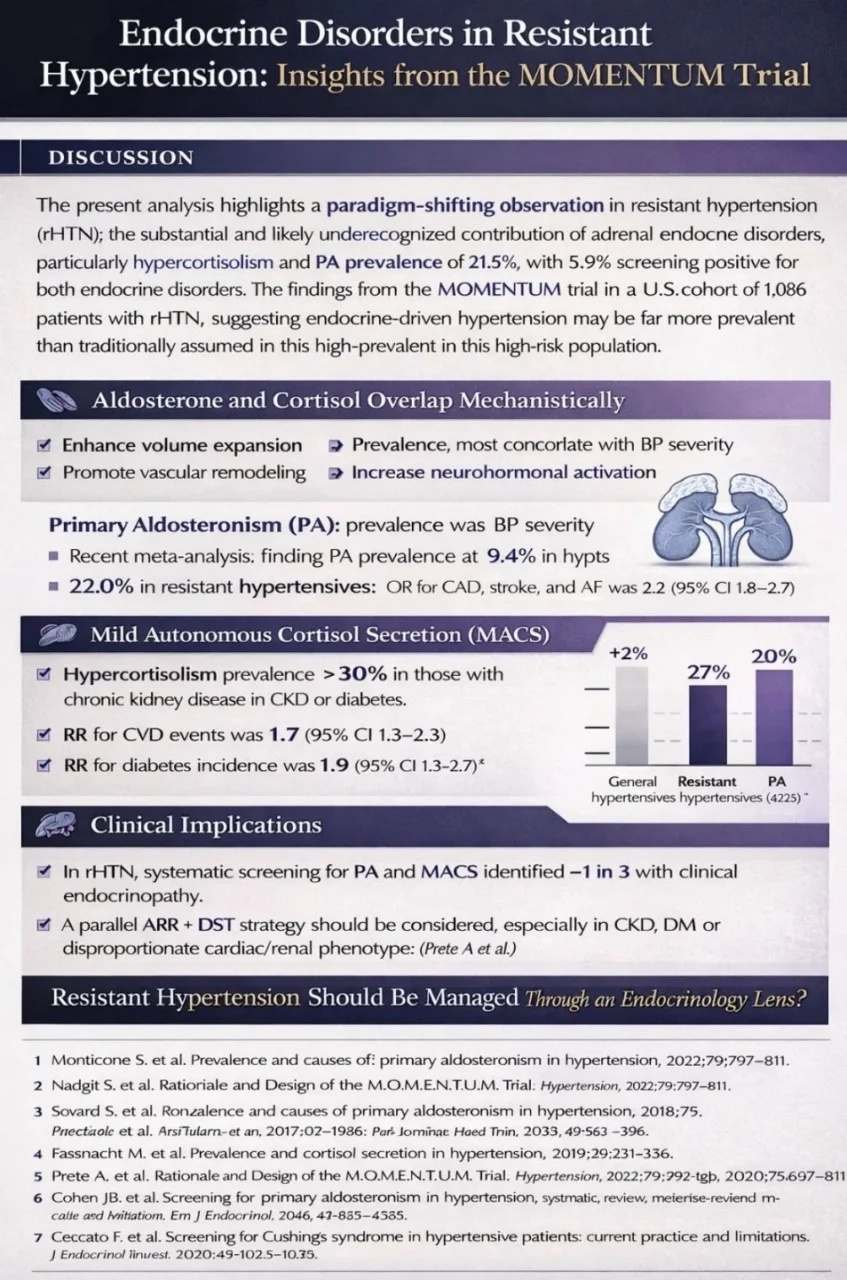
Resistant hypertension (rHTN) represents a high-risk clinical phenotype traditionally attributed to complex hemodynamic and pharmacologic factors. However, emerging evidence—highlighted by the MOMENTUM trial presented at ACC.26—suggests that underlying endocrine disorders, particularly hypercortisolism and primary aldosteronism (PA), may play a substantially larger role than previously recognized.
In the MOMENTUM cohort of 1,086 patients with rHTN, hypercortisolism was identified in 27.3% of individuals, while PA screening was positive in 21.5%. Notably, 5.9% of patients demonstrated biochemical evidence of both conditions. These findings reinforce the concept that endocrine-driven hypertension is not only prevalent but frequently overlapping, challenging the traditional view of isolated hormonal etiologies.
Primary aldosteronism has long been recognized as the most common form of secondary hypertension, with prevalence increasing alongside hypertension severity.
Beyond its effects on sodium retention and volume expansion, aldosterone contributes to vascular remodeling, myocardial fibrosis, and an increased risk of atrial fibrillation, stroke, and heart failure, independent of blood pressure levels. In parallel, mild autonomous cortisol secretion (MACS)—often clinically silent—has gained attention for its association with metabolic dysfunction, insulin resistance, and adverse cardiovascular outcomes.
Mechanistically, aldosterone and cortisol share converging pathways that exacerbate hypertension. Cortisol, particularly in states of chronic mild excess, can activate mineralocorticoid receptors through saturation of 11β-HSD2, thereby mimicking aldosterone-like effects.
This overlap may explain the observed co-secretion phenotype and the persistence of elevated blood pressure despite multidrug therapy.
Importantly, the MOMENTUM data suggest a higher prevalence of hypercortisolism in patients with chronic kidney disease, diabetes, and established cardiovascular disease, supporting a bidirectional relationship between endocrine dysregulation and cardiometabolic burden. These observations underscore the need for a broader diagnostic framework in rHTN.
Despite guideline recommendations, real-world screening for PA remains low, and evaluation for hypercortisolism is even less standardized.
The current evidence supports a dual-hormone screening strategy incorporating both aldosterone-renin ratio (ARR) and overnight dexamethasone suppression testing (DST), particularly in patients with resistant hypertension and high-risk phenotypes.
Although full peer-reviewed data from MOMENTUM are awaited, the consistency of these findings with prior literature strengthens their clinical relevance.
Collectively, these data raise a critical question: should resistant hypertension be routinely approached through an endocrinology lens?”
More posts featuring Ney Carter Borges on Hemostasis Today.
-
Nov 21, 2026, 20:00Jeyda Star: The FAST Signs of Stroke and the Reality of Life Afterward
-
Nov 21, 2026, 19:59Daniel Lindholm: Women Showed the Largest Improvement in Stroke Risk Over Time in Heart Failure
-
Nov 21, 2026, 19:56Neil Arrowsmith: Raising Awareness of Pulmonary Embolism in Young People
-
Nov 21, 2026, 19:52Muhammad Zeeshan Jamal: Thrilled to Present Our Research on Intermediate-Risk Acute PE in Abu Dhabi
-
Nov 21, 2026, 19:50Mounisha Devireddy: Proud to Share Our Research on High-Risk PE in Pregnancy
-
Nov 21, 2026, 19:47Melissa Hollo: How Severe Anemia Increases the Odds of Acute HF During Pregnancy and Postpartum
-
Nov 21, 2026, 19:44Ashenafi Tazebew Amare: Building Sustainable Systems to Close the Anti-D Immunoglobulin Access Gap in LMICs
-
Nov 21, 2026, 19:43Sheharyar Raza: Interpreting Clotting Times Through Reptilase Time and Thrombin Time Assays
-
Nov 21, 2026, 19:42Minoo Ahmadinejad: Serving on the ISTH 2027 Scientific Theme Committee for Women’s Health