

Tagreed Alkaltham: Motivational Drivers of Voluntary Blood Donation
Tagreed Alkaltham, Transfusion Medicine Lab Supervisor at KSMC, shared a post on LinkedIn:
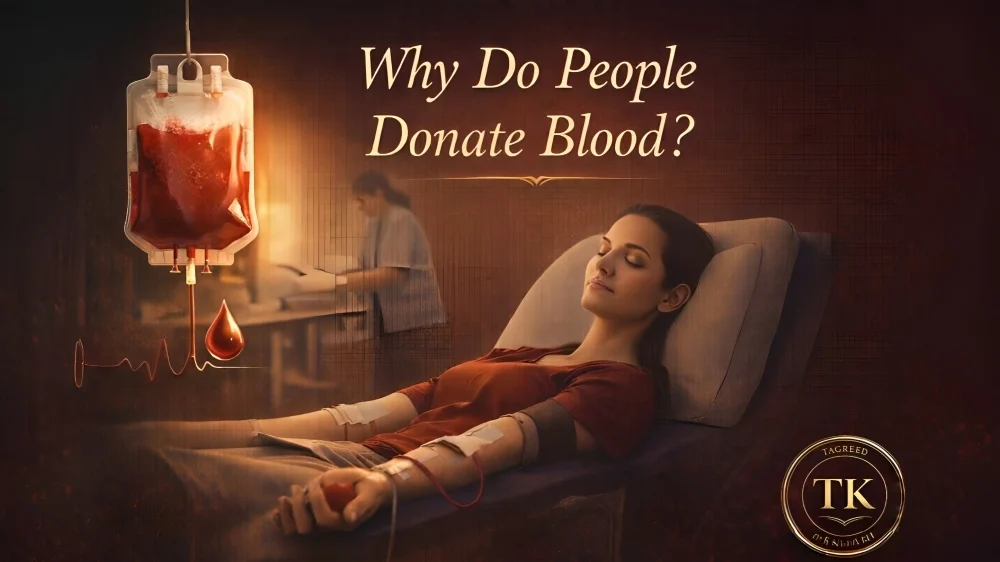
“Why Do People Donate Blood?
What makes a person leave the comfort of their home, walk into a donation center, face the needle, and willingly give a part of themselves to someone they may never meet?
It is not a simple act.
And it is never a small decision.
Blood donation sits at the intersection of emotion, ethics, and awareness.
Behind every donor, there is a story and more importantly, a driver.
So what truly motivates people to donate?
- Personal Connection:
For many, the journey begins when illness touches someone close.
A family member, a friend, or even a patient encounter.
In those moments, donation becomes deeply personal.
- Moral obligation and Humanitarian Values:
Some donate simply because they believe in helping others.
No recognition, no return, just a quiet conviction that saving a life is reason enough.
- Religious and Ethical Values:
In many communities, donation is driven by faith, compassion, and the belief in saving lives as a higher purpose.
- Social Influence:
People are influenced by those around them colleagues, friends, leaders.
Donation is often a socially reinforced behavior.
- Corporate and Institutional Culture:
Organizations that promote donation create environments where participation becomes the norm.
- National and Social Responsibility:
In times of crisis or shortage, donation becomes a statement of solidarity and shared responsibility.
- Health Perception:
Some believe donation has health benefits.
- Incentives and External Motivation:
Campaigns, recognition, or small rewards may not build lifelong donors, but they often initiate the first step.
- Curiosity and First-Time Experience:
Many start simply by trying.
A positive experience can turn curiosity into commitment.
- Emotional Triggers:
Stories, patient experiences, and impactful campaigns can move people to act.
- Recognition (Even if subtle):
A simple ‘thank you’ can reinforce the value of the act and encourage return.
- Convenience and Accessibility:
Sometimes, the difference is simply how easy it is to donate.
Trust in the System:
No motivation can survive without trust in safety, professionalism, and process.
Habit Formation:
Over time, donation can evolve into a routine a quiet, consistent act of giving.
But beyond all these factors, there is something less visible…
A quiet internal voice that says:
‘If I can help, why wouldn’t I?’
Blood donation is not driven by a single factor.
It is the result of a delicate balance between:
- Internal motivation (values, identity, beliefs)
- External influence (environment, campaigns, culture)
- Accessibility (ease, availability, convenience)
- Trust (safety, professionalism, transparency)
People don’t donate blood for one reason.
They donate when motivation meets opportunity, and trust removes hesitation.
People don’t just give blood.
They choose to donate it.”
Other posts featuring Tagreed Alkaltham on Hemostasis Today.
-
Sep 25, 2026, 12:43Thomas Dayspring: Reshaping the Biology of Atherosclerotic Plaques with New Therapies
-
Sep 25, 2026, 12:14Garima Sharma: Community Clinical Linkages for Better Postpartum Cardiovascular Care
-
Sep 25, 2026, 10:49Shefina S: From Presenting to Hosting at TRANSCON 2026
-
Sep 25, 2026, 10:37Michelle Leona Cecil: Hemophilia Advocacy and the Power of Community
-
Sep 25, 2026, 10:13Michael Baria: Platelet Concentration and PRP Outcomes in Partial Rotator Cuff Tears
-
Sep 25, 2026, 09:49Haley Coleman: Volunteering to Support Hemophilia Awareness
-
Sep 25, 2026, 08:55Hitarth Mehta: BHMS Students Gain Practical Exposure to Haemophilia Diagnosis
-
Sep 25, 2026, 07:25Varun Capoor: How Therapeutic Apheresis and Transfusion Medicine Can Complement Clinical Management in SCD
-
Sep 25, 2026, 07:14Manshi Kesharwani: SAK-GQDs Modulate Thrombus Burden and Endothelial Function in Deep Vein Thrombosis