


Ajigbotosho Barakat/LinkedIn
Apr 26, 2026, 17:17
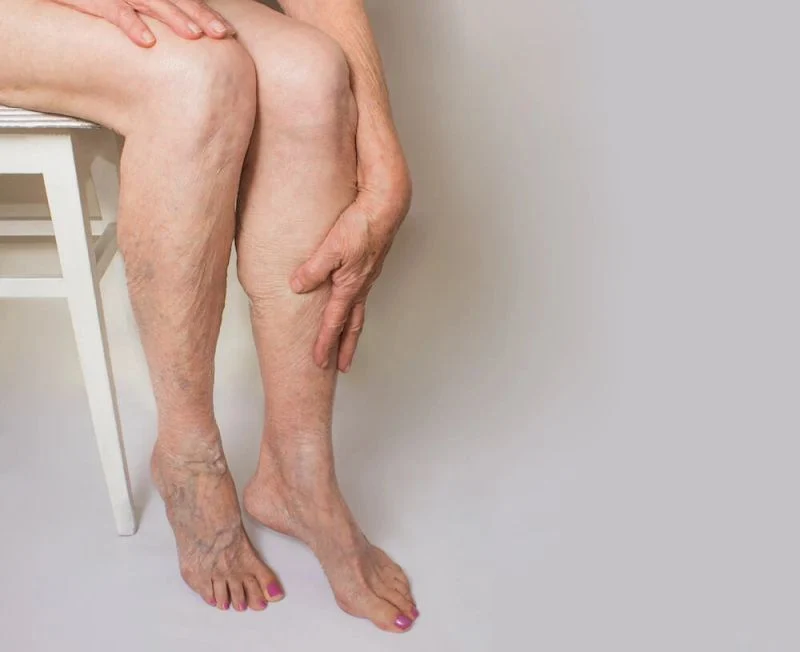
Ajigbotosho Barakat: Leg Strength as a Key to Healthy Aging
Ajigbotosho Barakat, President of Love Matters Network Charity Foundation, shared a post on LinkedIn:
“University of Denmark Research:
‘Two weeks without moving your legs, leg strength will decline by 10 years!
For the elderly, confidence lies not in the brain but in the legs.’
- As you age, you must always keep your feet and legs strong.
- When you grow older, you shouldn’t worry about gray hair, sagging skin, or wrinkles. Instead, you should take good care of your legs.
- Strong leg muscles are listed by the American Journal of Preventive Medicine as the most important muscles and a marker of longevity.
- Inactivity of the legs for two weeks will reduce leg strength by 10 years.
- Studies show that people of all ages who remain inactive for two weeks can lose one‑quarter of their leg muscle strength, equivalent to aging 20 to 30 years.
- If leg muscles are weak, even rehabilitation exercises will take a long time to restore strength.
- Regular exercise, such as walking, is very important.
- The entire body’s weight rests on the legs.
- The body uses the feet to bear its weight. 50% of a person’s weight is in the bones, and 50% of the bones are in the legs.
- The body’s largest and strongest joints and bones are in the legs.
- Strong bones, muscles, and flexible joints form an ‘iron triangle’ that supports the body’s most important loads.
- 70% of your activity energy is burned in your feet.
- In youth, your thighs are strong enough to lift a car!
- The legs and feet are the body’s ‘center of movement.’
- The legs carry 50% of the body’s nerves, 50% of the blood vessels, and 50% of the blood flow.
- A vast circulatory network connects the legs to the body.
- Those with healthy legs and feet have smooth blood circulation; those with strong leg muscles have a strong heart.
- Human aging starts from the feet and moves upward.
- With age, the brain’s commands to the legs become less accurate and slower than in youth.
- As people age, bone calcium will eventually be lost, so the elderly are prone to fractures.
- Fractures in the elderly can easily lead to complications, especially life‑threatening diseases like cerebral thrombosis.
- Statistics show that 15% of elderly people die within one year after a thigh fracture!
- For a 60‑year‑old man, exercising the legs is not too late.
- Legs and feet age over time, but exercising them is a lifelong mission.
Please forward to all old classmates, old colleagues, old comrades, old friends, and relatives.”
Stay updated on all scientific advances with Hemostasis Today.
-
Sep 30, 2026, 01:52Javed Anees: DADA2 – When a Young Stroke Is More Than a Stroke
-
Sep 30, 2026, 01:51How a Venous Thrombus Becomes Revascularized – ISTH
-
Sep 29, 2026, 22:45Victor Agunyego: Paracetamol – The Most Common Drug We Underestimate
-
Sep 29, 2026, 22:42Nova Sinclair: Advancing the Future of Hematology – Meet Our 2027 Organizing Committee
-
Sep 29, 2026, 22:41Lorenz Räber: Intracoronary Imaging in PCI – Why, When, How, and Which Modality?
-
Sep 29, 2026, 22:31Selma Turkovic: Pleased to Deliver the Opening Presentation at Kingston Hospital
-
Sep 29, 2026, 22:31Miguel Teran: Ultrasound and Simulation in Arterial Blood Sampling
-
Sep 29, 2026, 22:28Mohammad Refaei: Navigating Your Career in Hematology From Training to Practice
-
Sep 29, 2026, 22:27Matteo Foschi: 10 Clinical Pearls for Antithrombotic Therapy in Secondary Stroke Prevention