


Wolfgang Miesbach/LinkedIn
May 13, 2026, 15:10
Wolfgang Miesbach: Rethinking Bleeding Risk in Anticoagulation
Wolfgang Miesbach, Professor of Medicine at Frankfurt University Hospital, shared a post on LinkedIn:
“Rethinking Bleeding Risk in Anticoagulation.
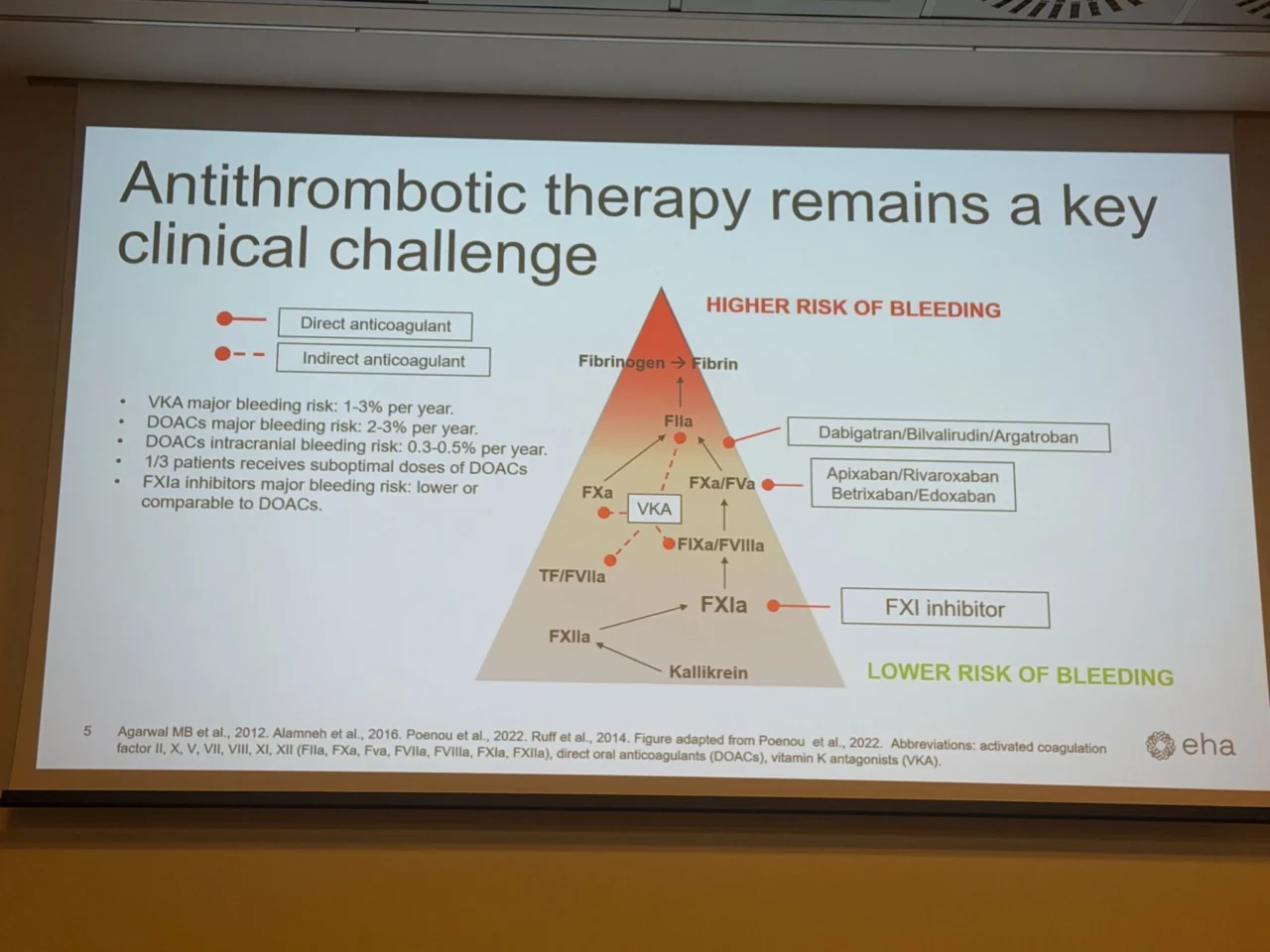
At the EHA‑SWG Scientific Meeting on Bleeding and Platelet Disorders, Mariantonietta Tripodo delivered a fantastic talk on bleeding risk in patients receiving antithrombotic therapy – from AF and VTE to prosthetic valves, LV thrombus and acute coronary syndromes:
- Antithrombotic therapy is used across many indications, so managing bleeding risk is a daily challenge in routine practice.
- Major bleeding (incl. ICH) remains a major limitation of VKAs and DOACs, and ‘fear‑driven’ underdosing in real life is still common.
- High‑risk patients (age, renal impairment, prior bleeding) live within a narrow therapeutic window, making individualized decisions essential.
- Targeting FXI could help decouple thrombosis from hemostasis, with early data suggesting relevant bleeding reduction while preserving efficacy.”
Other posts featuring Wolfgang Miesbach on Hemostasis Today.
-
Nov 17, 2026, 15:26Hereditary Hemorrhagic Telangiectasia: The Molecular Connection Between Vascular Malformations and Bleeding
-
Nov 17, 2026, 14:54Cindy Neunert: Beyond Platelet Counts – Addressing Fatigue and Whole-Person Care in ITP
-
Nov 17, 2026, 14:44Strengthening Haemophilia Diagnosis Through Hands-On Laboratory Training – IAHAD
-
Nov 17, 2026, 14:40Platelet Membrane Protrusions Beyond Their Role in Hemostasis – JTH
-
Nov 17, 2026, 14:10Wolfgang Miesbach: Aspirin vs Anticoagulants – Who Needs More Than Aspirin?
-
Nov 17, 2026, 14:08Chaza Alaji: Soluble Transferrin Receptor – A Key to Uncovering Hidden Iron Deficiency
-
Nov 17, 2026, 14:03Shadi Tabibian: Fibrinogen – From Molecular Structure to Clinical Decision Making
-
Nov 17, 2026, 13:54Gabrielle Sarlon: Breaking the Silence on Menstrual Bleeding During Anticoagulant Therapy
-
Nov 17, 2026, 13:47Ksenia Guznova Kats: Advanced Venous Stenting in May–Thurner Syndrome