

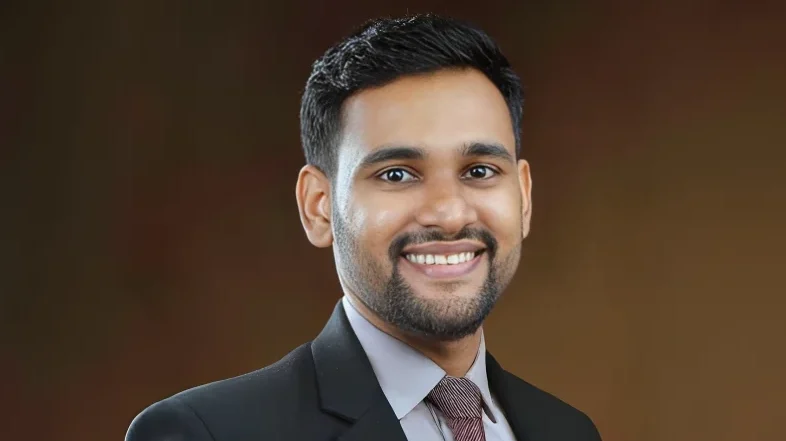
Arun V. J.: There is a Black Market of Blood, And We Are Afraid To Admit It
Arun V. J., The Leader of Transfusion Medicine at Malabar Medical College, shared a post on LinkedIn about a recent article by Halima Ismail et al., published in The Lancet Haematology, adding:
”There is a Black Market of Blood, And We Are Afraid To Admit It
When a patient urgently needs blood, the assumption is that a kind volunteer donated it. Screened. Safe. Ready.
In some parts of the world, that’s fiction.
There is a black market for blood.
Paid donors who lie about their history to pass screening. Middlemen brokering units outside hospital systems. Families pressured to “replace” blood — turning to racketeers when they can’t find a donor fast enough.
A 2025 paper in The Lancet Haematology identified illegal blood trade as a significant, under-reported factor contributing to preventable maternal and child mortality.
A peer-reviewed journal.
Why does this happen?
Because demand far exceeds safe supply. Nigeria faces a blood shortfall of over 73%. The NHS issued a red alert in June 2025 calling for 200,000 new donors.
This is not a developing-world problem. It is a global one.
When legal supply fails, informal supply steps in. Always.
Not all blood is equal.
Voluntary donors are the safest — no financial incentive to hide their history. Paid, professional donors are the most dangerous – they cannot afford to be deferred.
A patient receiving blood from a professional donor is receiving the cumulative risk of every undisclosed exposure that donor has ever had.
Then there’s plasma.
A $35.8 billion global market. Five countries supply 80% of the world’s plasma — all five permit paid donation. The US alone supplies 70% of global plasma, more in export value than coal and gold combined.
Wealthy nations with world-class healthcare cannot meet their own plasma needs. So they rely on the economic desperation of others.
We call this a supply chain.
The solution exists. 100% voluntary, non-remunerated donation. WHO has said this for decades. Countries that achieved it have safer blood and more stable supply.
But policy alone won’t get us there.
Voluntary blood donation needs to become culture – not a one-day campaign.
No patient should die waiting for blood.
That outcome starts with each of us.”
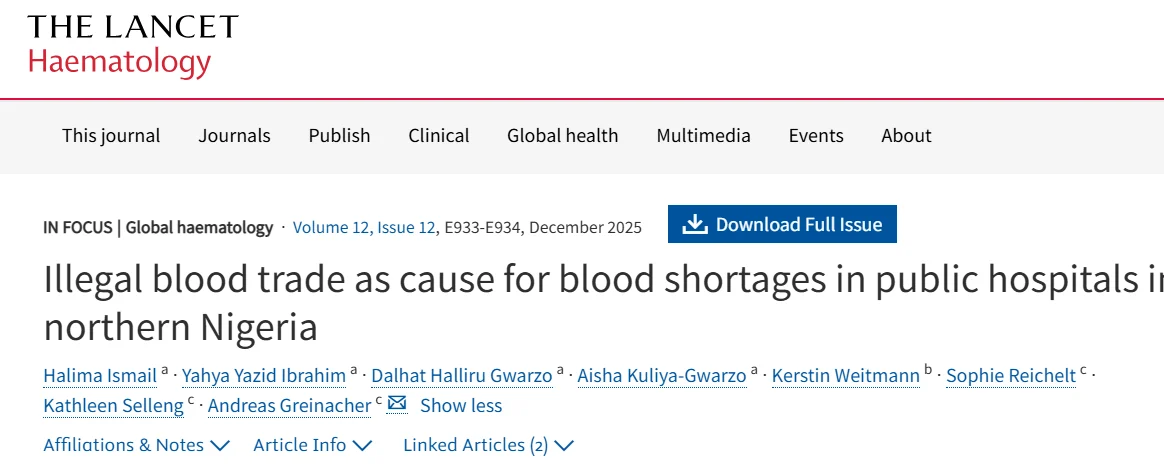
Title: Illegal blood trade as cause for blood shortages in public hospitals in northern Nigeria
Authors: Halima Ismaila, Yahya Yazid Ibrahima, Dalhat Halliru Gwarzoa, Aisha Kuliya-Gwarzoa, Kerstin Weitmannb, Sophie Reicheltc, Kathleen Sellengc, Andreas Greinacher
Stay updated on all scientific advances with Hemostasis Today.
-
Oct 5, 2026, 15:31Irma Bagdoniene: Multidisciplinary Management of High-Risk Familial Hypercholesterolaemia and CAD
-
Oct 5, 2026, 15:00Serena Williams and Pulmonary Embolism: From Personal Crisis to Lessons in Venous Thromboembolism
-
Oct 5, 2026, 14:55Marco Moscarelli: 3D Reconstruction Enhances Volumetric Assessment of Post-TAVI Thrombosis
-
Oct 5, 2026, 13:24Abdul Muqtadir Abbasi: Diagnostic Pearls for Evaluating Isolated Thrombocytopenia in Residents
-
Oct 5, 2026, 13:16Katerina Pavenski: Rethinking What ‘Normal’ Means for Iron Deficiency
-
Oct 5, 2026, 13:09Rick Matthews: Balancing Established VTE Partnerships with Innovative Interventional Technologies
-
Oct 5, 2026, 13:01Nawsherwan Mohammad: Recognizing TTP Before the ADAMTS13 Result Arrives
-
Oct 5, 2026, 12:51Bruno Pougault: The Hidden Challenges Behind Anti Xa Testing
-
Oct 5, 2026, 12:41Syed Huzaifa Khan: Rethinking CTRP12 as a Biomarker for In Stent Restenosis