

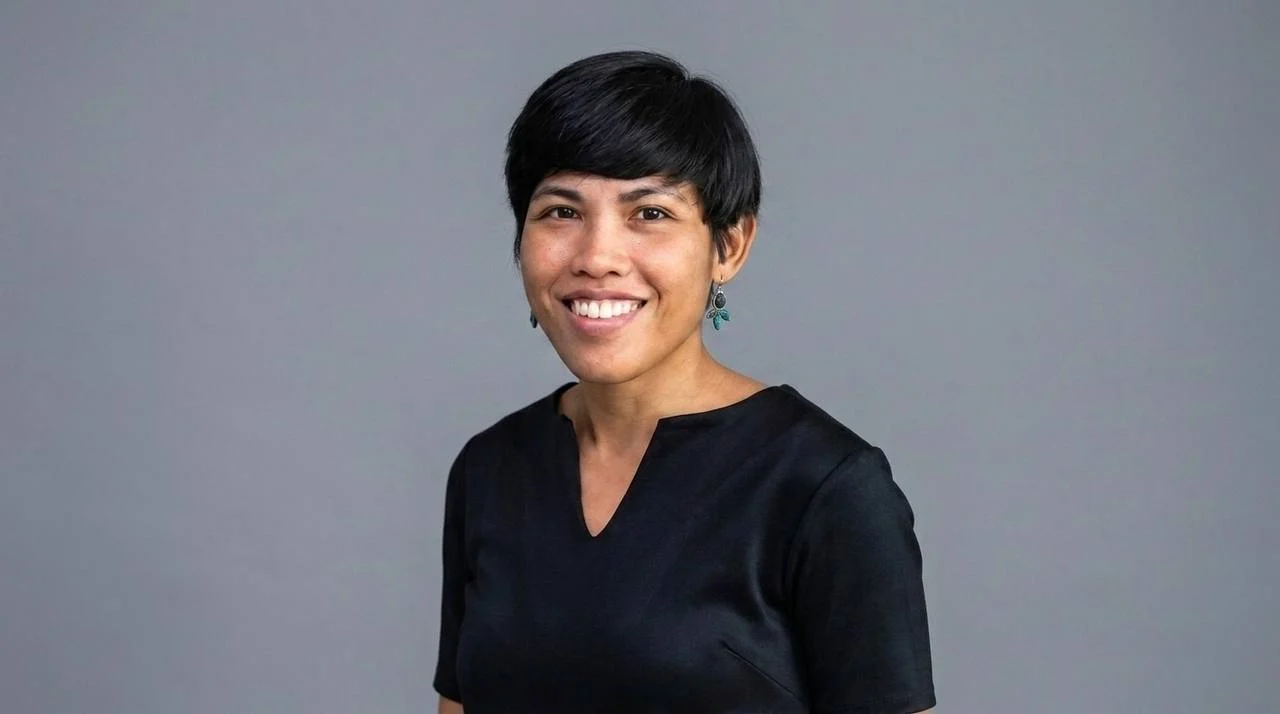
Filza Aslam: What Does a Patient Journey Partner Actually Do in Bleeding Disorders?
Filza Aslam, Patient Journey Partner at Roche, shared a post on LinkedIn:
” ‘What does a Patient Journey Partner actually do?’
It kept coming up since my last post, so here’s my answer.
The simplest way I can put it is that it’s a role about connecting all the pieces, so that an innovative treatment actually reaches the people who need it.
That means working across the whole ecosystem, from clinicians to patient advocates, so that those who decide what gets funded can see the value of investing in something that genuinely changes lives.
It’s customer-facing and strategic. But at its heart, it’s about closing the gap between what medicine can offer and what patients are actually able to access.
It never felt as real as it did at my first World Federation of Hemophilia congress last month in Kuala Lumpur.
I met a man with hemophilia who teared up a little when he saw a football at the Roche booth.
Growing up in Mauritania, football was the one thing he could never have.
He wasn’t emotional for his own sake, but because he wanted the next generation to grow up feeling differently.
That has stayed with me more than almost anything else from the week.
It wasn’t the only moment.
James, from the Hemophilia Association of Davao, gave a talk called ‘I Would Walk 500 Miles,’ a literal description of what patients in rural Philippines do just to reach care.
And Tatiana, a mother of a child with a rare bleeding disorder, shared something that’s been living rent-free in my head: rare needs data, data needs voices, and voices need courage.
That’s what this role is really about.
My job is to empower that chain, making sure the distance between where patients are and where care reaches keeps getting smaller.
May your June bring a little more courage, and stronger voices for those who need them.”

Stay updated with Hemostasis Today.
-
Oct 19, 2026, 19:44Where You Live Should not Determine Whether You Receive Care – World Federation of Hemophilia
-
Oct 19, 2026, 19:42Belen Bianco: Prevention, Early Suspicion and an Interdisciplinary Approach Save Lives
-
Oct 19, 2026, 19:40Christina Chrysohoou: Catheter-Based LAAC vs OAC for Stroke Prevention in Atrial Fibrillation
-
Oct 19, 2026, 19:38Matthew Flick: A Two-Day Research Meeting on Fibrinogen, Hemostasis and Thrombosis
-
Oct 19, 2026, 19:37Hayat Saeed: Excited to Share Our Publication on the FGL1–Hepcidin Axis in Iron Homeostasis and Disease
-
Oct 19, 2026, 19:08IPAW 2026 Comes to a Close, but the Work Continues – PPTA
-
Oct 19, 2026, 17:44Paul Riley: Moderating a Webinar on Anticoagulation Monitoring
-
Oct 19, 2026, 16:36Christopher Pittman: Blood Clot Prevention Cannot End at Hospital Discharge
-
Oct 19, 2026, 16:13Javier M. Floren: When Immune Cells Move With Their Environment