

Bruno Pougault: Pregnancy and Thrombosis – Balancing Evolutionary Protection Against Clinical Risk
Bruno Pougault, Global Marketing Hemostasis Product Manager at HORIBA, shared on LinkedIn:
“Pregnancy and Thrombosis: Balancing Evolutionary Protection Against Clinical Risk
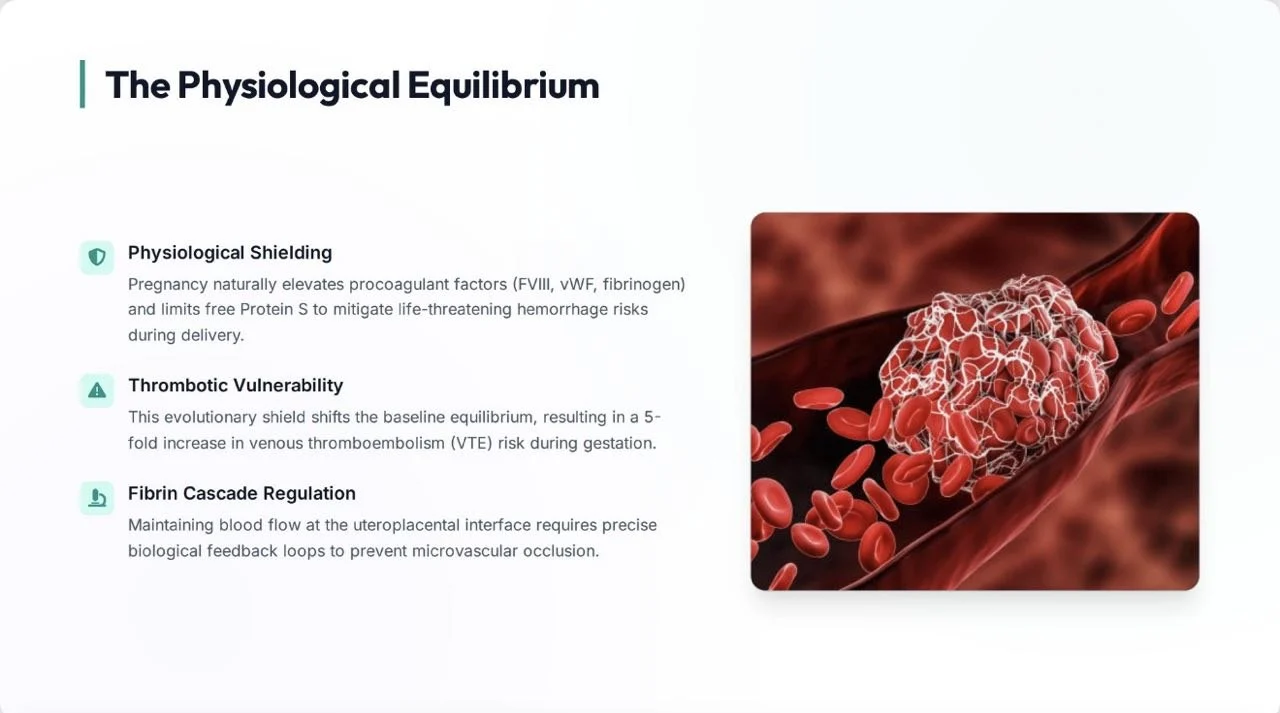
Why does pregnancy multiply a patient’s risk of Venous Thromboembolism (VTE) by 4 to 5 times?
From a physiological standpoint, it is a masterclass in evolutionary survival.
To protect the mother from lethal hemorrhage during placental delivery, the female body enters a state of profound hypercoagulability.
However, this protective mechanism pushes the hemostatic curve to a razor-thin edge, fulfilling all three pillars of Virchow’s Triad:
- Hypercoagulability: A systemic shift favoring clotting, driven by an increase in procoagulant factors (Fibrinogen, FVIII, VWF) paired with a physiological decline in natural anticoagulants like Protein S.
- Stasis: Mechanical compression of the inferior vena cava and pelvic veins by the gravid uterus severely impedes lower extremity venous return.
- Endothelial Alterations: Micro-vascular stress induced by rapid hemodynamic fluctuations during gestation and delivery.
The clinical stakes are high, and the window of maximum vulnerability is counterintuitive: the risk peaks not during the third trimester, but during the first 6 weeks of the postpartum period.
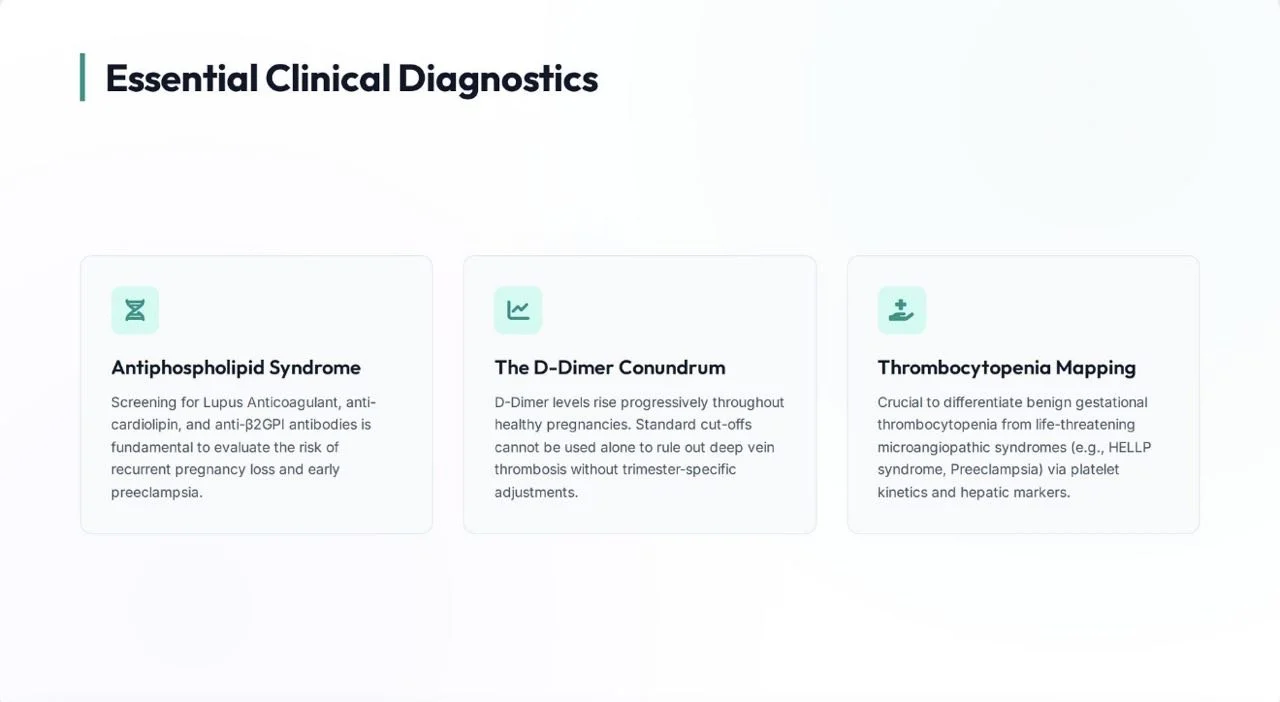
Evaluating underlying thrombophilia (such as Factor V Leiden, Prothrombin G20210A mutations, or Antiphospholipid Syndrome) without being misled by normal, pregnancy-induced biochemical baselines remains one of the most delicate challenges in laboratory medicine today.
Bridging Laboratory Insights and Bedside Decisions
Because this balance between life-saving hemostasis and life-threatening thrombosis remains a critical puzzle, it will be a focal point of global clinical discussion this summer.
The ISTH 2026 Congress (International Society on Thrombosis and Haemostasis), taking place in Paris from July 11–15, 2026, is dedicating multiple specialized sessions to
Hemostasis and Women’s Health.
Top global experts will present the latest clinical trials, long-term safety data on low-molecular-weight heparin (LMWH) prophylaxis, and emerging molecular biomarkers for early risk stratification.
If you are attending ISTH2026, these sessions are unmissable for anyone looking to refine their clinical protocols in obstetric hematology.
Let’s advance the science of maternal health together.
See you in Paris!”
Find more posts featuring Bruno Pougault on Hemostasis Today.
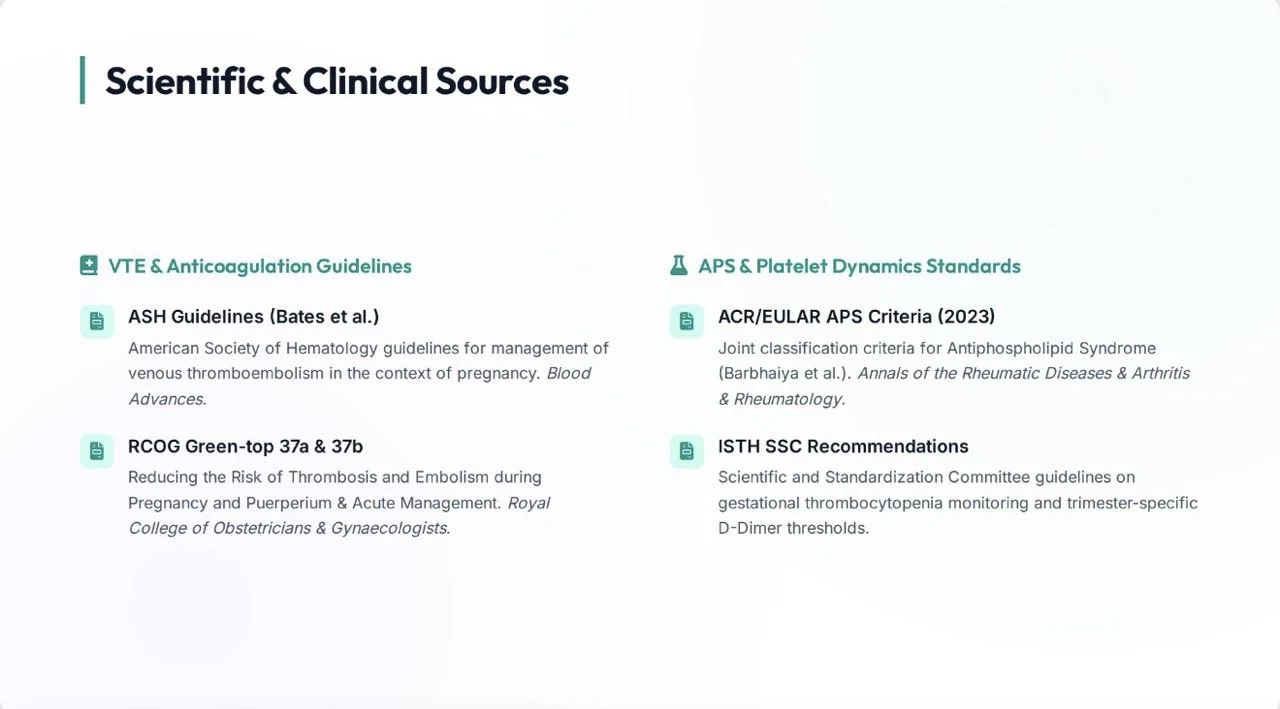

-
Nov 17, 2026, 10:41Elena Petkovic։ Highlights from the ISBT–WHO Plasma Management Workshop
-
Nov 17, 2026, 10:30Cheng-Hock Toh: Haematology Is Everywhere – But Is It Recognised?
-
Nov 17, 2026, 10:23Akshat Jain: The Importance of Knowing Your Sickle Cell Status
-
Nov 17, 2026, 10:12Caitlin Raymond: What Does Apheresis Really Cost?
-
Nov 17, 2026, 05:47Multidisciplinary Teams Kick Off SAHF MASAC ES 2026 with Pre-Symposium Workshops – South African Haemophilia Foundation
-
Nov 17, 2026, 05:41Boitumelo Malatji: South African Delegation Advances Advocacy Strategies at NNHF Southern Africa Workshop
-
Nov 17, 2026, 05:36Joining the PACTA Uganda Mental Health and Addiction Community Camp 2026 – Tackle Sickle Cell Africa
-
Nov 17, 2026, 05:30Nathan Connell: Women’s Hematology Summit 2027 to Address Hematologic Health Across the Lifespan
-
Nov 17, 2026, 05:25Mane Kurghinyan: Representing Armenia and HemAI Dynamics at the Falling Walls Lab Global Finale 2026