

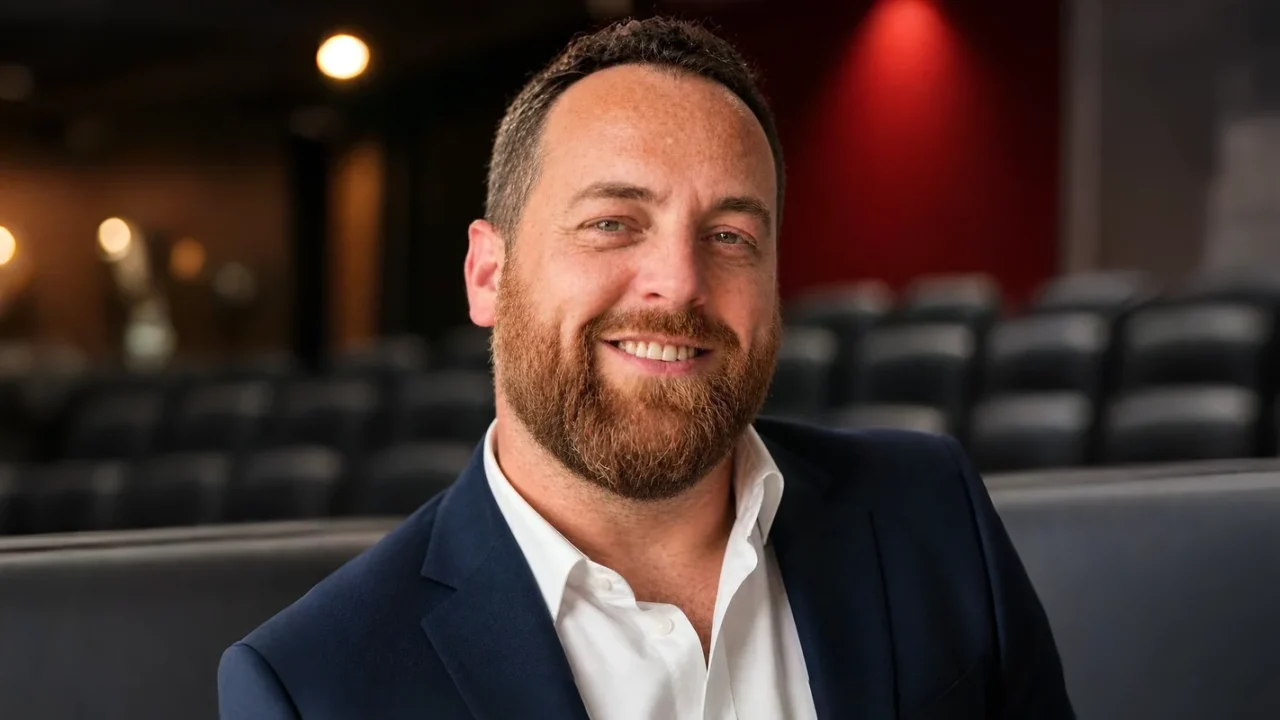
Loïc Lalet: The Missing Piece in Remote Stroke Intervention Is the Integrity of the Image
Loïc Lalet, CPO and R and D Director, Partner at CAREPROD Technologies, shared on LinkedIn:
”Remote stroke care is scaling on a single sentence: we have seen it work.
That is not the same as being ready to trust it, every day, on every patient, at distance.
Here is the gap I keep running into across the whole field, and why closing it is the real work of scaling.
I have been sitting with a feeling for a while, and reading a recent systematic review of remote endovascular robotics only sharpened it.
I might be one of the few people who thinks this particular part is critical. So I am going to say it plainly, at the risk of being the person in the room who raises the awkward hand.
Remote stroke intervention is now a race. That framing is fair.
The demonstrations are real. Catheters and guidewires have been driven across oceans. Platforms work.
Serious teams are doing serious work on the networking, the latency budgets, the credentialing, the licensing, and the reimbursement puzzles that stand between a demonstration and a service.
None of that is trivial, and I do not want to pretend it is.
But there is a question underneath the race that I almost never hear asked out loud, and the literature makes the silence visible.
The feed is everywhere in the story, and measured nowhere
That systematic review pulled together sixteen studies of remote endovascular teleoperation.
The fluoroscopic feed appears again and again across them. Of course it does. The image is the thing the interventionalist acts on.
It is the substrate of every decision at the table: advance, stop, redirect, deploy.
And yet, across those sixteen studies, not one measured or monitored the quality of that image once it had traveled through the network.
The review says it directly. The community reports latency, sometimes jitter, occasionally packet loss.
The picture itself, the diagnostic quality of what the operator actually sees, is treated as a given.
The review is even sharper on the number we all repeat.
The commonly cited safe latency threshold for coronary intervention, 250 milliseconds, comes from subjective operator ratings of how smooth the motion felt.
Not from any objective link between delay and a clinical task.
The authors write that no published work has rigorously quantified how transmission delays in the fluoroscopic video stream affect objective performance, and that no study has systematically evaluated the effect of delay on clinical outcomes.
That is not a small footnote. That is the foundation we are scaling on.
Why latency gets all the attention, and why that word is doing too much work
Here is the honest reason latency dominates the conversation. It is measurable.
We can measure it, we can predict it, and we can compensate for it inside the robot’s control loop with buffering and predictive control. In risk terms, latency is a well behaved variable.
It has a number, the number can be watched, and there is a lever to pull when it drifts.
That is a clean, satisfying answer to a risk assessment, and I understand why the field leaned into it.
But look closer at the word. ‘Latency’ is convenient, and it is rarely used the way it should be.
Most studies report the part that is easy to capture, the average transmission delay across the network.
That single number quietly hides the variables that actually hurt you.
Jitter, the variation in that delay from one frame to the next, is in many ways more dangerous than a higher but steady latency, because it breaks the rhythm the operator’s brain is relying on.
Packet loss is worse still, because it does not delay information, it deletes it.
The same review notes that jitter and packet loss are rarely analyzed and omitted in most studies.
So even the tractable, transmission side of the problem is only partly measured, hidden inside one comfortable word.
And none of that is yet the latency that matters most. The transmission delay is not the same as the delay between what the operator perceives and what the operator commands.
I will come back to that, because it is the real one. For now the point is about language.
When the field says latency is under threshold, it usually means one average number, for one part of the chain, measured on a good day.
That is not the same as saying the loop is safe.
The counter-arguments, and why none of them close the question
When I raise this, I get the same responses. Let me take them head on, because they deserve a real answer, not a shrug.
‘A keyframe or a still reference solves it.’ It does not.
A reference frame tells you what the anatomy looked like at a moment you chose.
It says nothing about whether the live stream you are acting on right now is intact. The problem is continuous and it is live.
‘A roadmap overlay solves it.’
Ask what the overlay is drawn on top of. It is superimposed on the live fluoroscopic feed itself, the one that has already been compressed, transformed, and transported, and whose reliability at that instant no one has verified.
The overlay does not replace the uncertain image. It sits on top of it, inherits its blind spots, and looks more authoritative while doing so.
If the live feed softens or drops at the wrong moment, the overlay keeps confidently tracing the known vessel while the thing you needed to see goes unseen.
The map is not the territory, and here the map is a reassuring layer painted over an unverified picture.
‘The latency work covers it.’ No. Latency is the timing of the signal. It is not the integrity of the signal.
You can have a perfectly punctual image that is no longer good enough to decide on. Two different questions, and only one is being answered.
‘There is already plenty of human robotic thrombectomy experience.’
Yes, on site, where the operator looks straight at the source image. That tells you nothing about a remote video chain.
And suppose someone claimed dozens of remote human cases.
Without measuring and monitoring, live, the quality of the image those procedures were actually performed on, it would still be an approximate result.
Success you cannot attribute to a verified signal is not evidence the signal was safe.
‘The surgeon will compensate.’ Compensate for what, exactly? You cannot compensate for a degradation you cannot see and were never told about.
Expecting a neurointerventionalist to mentally reconstruct detail that a codec dropped somewhere between two continents is not a safety argument. It is a hope.
‘We have seen it work, so it is not a problem.’ Prove it. I mean that seriously and without hostility. Show me the measurement.
Show me the objective evidence that the image the remote operator acted on was diagnostically sufficient at the moment of decision, and that you would have known if it were not.
If it is not a problem, it should be the easiest thing in the world to demonstrate. The fact that no study in the review does is the whole point.
Mechanical thrombectomy is where the stakes concentrate
Put the operator hundreds of miles from the patient, in a stroke, where minutes are brain.
Mechanical thrombectomy is the case that makes all of this urgent, and it is precisely the case the evidence has barely touched.
In that same review, remote teleoperated thrombectomy is essentially a single study, while the authors flag it explicitly as a significant gap for time sensitive interventions.
Most of the evidence base overall is still phantom or animal.
Two small human trials, six patients, coronary, with a hundred percent technical success that is real but tiny.
The field, by the authors own assessment, sits at a low technology readiness level with a high risk of bias across the board.
We are racing to scale the hardest, most time critical version of remote intervention on the thinnest evidence, and the one variable that carries the decision, the image, is the one nobody is measuring.
This is a risk analysis question, by design
A medical device is not judged by its best day. By design, it is subjected to risk analysis.
That is what ISO 14971 is for, that is what the EU MDR expects, that is the discipline the whole field already accepts for everything else in the chain.
So here is the uncomfortable question.
Whoever owns this video link, and it may be the robot manufacturer, the hospital, or the imaging vendor, on what basis is the integrity of that link kept outside real time risk analysis and filed under ‘pre-case quality check’?
A pre-case check confirms the picture was good before you started. It says nothing about the frame you are looking at during the intervention, which is the only frame that decides anything.
You would never accept ‘we tested the brake before the trip’ as a braking safety strategy. The image is the brake pedal of a remote intervention.
It has to be inside the live risk analysis, and it has to be inside the scope of the guidelines the field is now writing.
It is not an accessory, and it is not something to be kept out of scope until everything else is settled.
Put bluntly: how could a regulator ever accept that a video codec silently carries responsibility for a clinical decision?
Because that is the current arrangement. A compression algorithm decides what detail survives the trip, and no one is checking whether what survived was enough.
Demos run on disclaimers. Scale does not.
There is a detail here that is not a detail, and I know it from the inside. To this day, no telementoring platform, no remote proctoring system, no HIPAA compliant surgical collaboration software lets a remote expert actually own a medical decision made solely on the live video.
I can say that with some authority, because I have invented and deployed one of these platforms, and it has been used in hundreds of cath labs.
Why can none of them carry the decision? It is not a missing feature.
It is that none of them address the responsibility of a clinical decision taken on the only live reality the remote expert has, the video feed.
So these tools are excellent at what they are for. They let a distant expert observe, teach, and proctor.
What none of them permit, and none are cleared to permit, is for that remote expert to guide or otherwise aid the clinical decision on the basis of the live video.
For a demonstration they will do the job beautifully. But they operate, every single time, under a liability disclaimer, with the physician in the room retaining responsibility.
That arrangement is fine for a demo. It is not scale. Scale is not one more impressive transatlantic case.
Scale is being able to master the chain end to end, to demonstrate that it is good enough to carry a medical decision, and to answer the responsibility question honestly instead of signing it away in a waiver.
Until the video feed is measured, monitored, and owned to that standard, remote intervention scales on paperwork, not on proof.
Before we celebrate haptics, let us be honest about perception
There is real excitement right now about haptic feedback, and it is deserved.
At this year’s Hamlyn Centre for Robotic Surgery symposium, Prof. Katherine J. Kuchenbecker of the Max Planck Institute for Intelligent Systems gave a keynote titled Augmenting Surgical Perception that was, frankly, excellent.
It made a strong case for what force and vibration feedback give back to a teleoperated surgeon, and, importantly, it framed the whole challenge as augmenting perception, touch and sight together, not as a single sense in isolation.
That framing is the right one, and it leads somewhere the enthusiasm often skips. Haptic feedback only helps the brain if it arrives coherent with what the brain sees.
Our sensorimotor loop fuses touch and vision in time. A force cue that is out of step with the image is not neutral, it is misleading.
So before we bolt haptics onto remote intervention as the next differentiator, we have to get the perception loop right underneath it.
This is why, when I talk about latency, I am not really talking about network round trip time.
I am talking about the coherence between what the operator sees and what the operator commands.
The review itself calls for measuring exactly this, what it names true end to end latency, the delay from command transmission to robotic execution with video feedback.
That is the latency a human brain in the loop actually lives inside.
Make the seen, the commanded, and the felt agree in time, and you have the foundation on which haptic feedback can deliver.
Skip it, and you are adding a fourth sense to a loop that is not yet honest about its first two.
Where I stand
I am not writing this from the cheap seats. I work on this specific problem.
I look at it directly, and I treat the integrity of the video signal as an integral part of what telesurgery is, not a detail to be resolved later by someone else.
I am saying it out loud because I believe it can be solved, and because leaving it unspoken is the more dangerous choice.
Let me be equally clear about the teams getting attention for scaling remote surgery.
What they are building is brilliant, and I am not their competitor. I think they are missing one parameter, and it is not a small one.
Naming that gap is not an attack on the ambition. It is what has to happen for the ambition to be safe at scale.
I will be listening closely at Society of Robotic Surgery | SRS for who else is talking about this, and how. Maybe the room has moved further than I think.
Maybe I am wrong about how critical this is.
I would still rather be the one who said it out loud.
If putting my name to this makes me a contradictor in a field that would prefer to celebrate, I can live with that.
The patients on the other end of the picture deserve someone asking whether the picture can be trusted.”
Stay updated with Hemostasis Today.
-
Oct 2, 2026, 13:50Arnav Garcha: New Insights Into Platelet Transport in Arterial Flow
-
Oct 2, 2026, 13:49Alessandro Lucchesi: RiseMPN 2026 – Shaping the Future of MPN Treatment
-
Oct 2, 2026, 13:43Ronald Mahomane: Bangladesh Moves Toward Sustainable Hemophilia Treatment Access
-
Oct 2, 2026, 13:38Sathya-Prasad Burjonrappa: Pediatric Trauma and Deep Venous Thrombosis
-
Oct 2, 2026, 12:50Ravi C Dara: ADHAR 2026 – Red Cell Exchange in Sickle Cell Disease
-
Oct 2, 2026, 12:37David McIntosh: WeDonate Partners with Dr. Martens to Reward UK Blood Donors
-
Oct 2, 2026, 12:31Ahmed Salah El-Deen: HELLP Syndrome – An Obstetric Emergency
-
Oct 2, 2026, 12:28Swapnil Hiremath: Transitioning from Idiopathic Thrombocytopenia to Antiphospholipid Syndrome in Recurrent Severe Preeclampsia
-
Oct 2, 2026, 12:08Austin Camp: Learn How to Treat HIT from an ICU Pharmacist in 60 Seconds!