

The Evolving Treatment Landscape of Hemophilia: From Factor Replacement to Gene Therapy
Hemophilia A and Hemophilia B are X-linked inherited bleeding disorders caused by pathogenic variants in the F8 and F9 genes, resulting in reduced activity of coagulation Factor VIII (FVIII) or Factor IX (FIX), respectively.
The resulting impairment of thrombin generation leads to a characteristic bleeding phenotype, including hemarthroses, intramuscular hematomas and prolonged bleeding following trauma or surgical procedures.
Disease severity is determined by baseline factor activity and is classified as severe (<1%), moderate (1–5%), or mild (>5–40%). This classification broadly correlates with bleeding frequency and clinical phenotype.
The therapeutic landscape has evolved substantially beyond conventional factor replacement.
Extended-half-life factor concentrates, non-factor therapies, and gene therapy have expanded treatment options and reshaped the goals of care.
Contemporary hemophilia management increasingly emphasizes effective prophylaxis, prevention of recurrent bleeding, preservation of joint health, and individualized long-term treatment strategies.
Factor Replacement Therapy in Hemophilia
Targeted factor replacement remains a cornerstone of hemophilia management, evolving from early plasma-derived products to recombinant concentrates
- Standard Half-Life (SHL) Concentrates: Introduced in the 1990s, recombinant SHL products eliminated blood-borne viral transmission risks (HIV, HCV) associated with earlier plasma concentrates.Prophylactic administration typically requires intravenous (IV) infusions 2 to 3 times weekly for Hemophilia A and twice weekly for Hemophilia B, though dosing schedules vary based on individual pharmacokinetic profiles and bleeding phenotypes.
- Extended Half-Life (EHL) Concentrates: Developed via Fc-fusion, pegylation, or albumin fusion, EHL products prolong circulation time.They allow reduced IV infusion frequency (e.g., every 3–5 days for FVIII; every 7–14 days for FIX), improving adherence and patient flexibility.
- Clinical Limitations: Repeated IV access remains a significant burden, particularly in pediatric populations. Furthermore, neutralizing alloantibodies (“inhibitors”) develop in approximately 25–30% of severe Hemophilia A patients (and 3–5% in severe Hemophilia B), rendering conventional factor replacement ineffective and necessitating bypassing agents or alternative therapeutic strategies.
Beyond Factor Replacement The Rise of Factor-Independent Hemostasis
Subcutaneous non-factor therapies represent a major shift in hemophilia management, providing factor-independent hemostatic protection without the need for regular intravenous access.
Factor Mimetic Therapy: Emicizumab is a bispecific monoclonal antibody that mimics activated FVIII by bridging activated FIX and FX, thereby restoring thrombin generation.
Administered subcutaneously once weekly, every 2 weeks, or every 4 weeks, emicizumab substantially reduces bleeding in patients with Hemophilia A, with or without inhibitors. Next-generation FVIII mimetics, including Mim8 and NXT007, are being investigated to further enhance hemostatic efficacy and simplify prophylaxis.
Rebalancing Therapies: Rather than replacing the deficient coagulation factor, rebalancing agents enhance thrombin generation by reducing endogenous anticoagulant activity.
Current approaches include antithrombin inhibition with siRNA (fitusiran) and tissue factor pathway inhibitor (TFPI) inhibition with monoclonal antibodies (concizumab and marstacimab).
Clinical Considerations: Subcutaneous non-factor therapies reduce treatment burden and provide options across Hemophilia A and B, including patients with inhibitors.
However, their potent effects on coagulation require careful dosing, monitoring, and management of thrombotic risk.
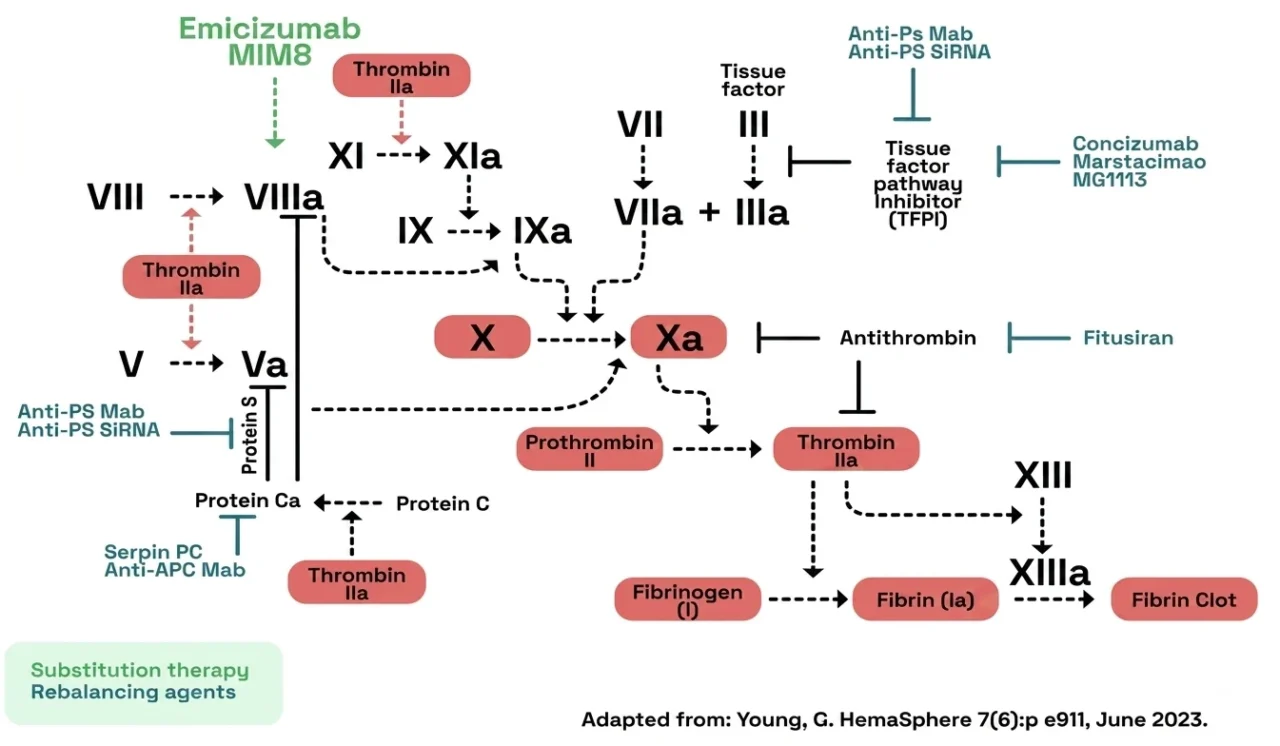
Figure 1. The coagulation cascade and the different substitution and replacement therapies
Gene Therapy Moving Toward Endogenous Factor Production
Gene therapy – defined as the introduction of genetic material to modify gene or protein expression for therapeutic benefit—has become an important therapeutic strategy in hemophilia over recent decades.
Adeno-associated virus (AAV)-based gene therapies represent a paradigm shift, offering the potential for sustained endogenous production of clotting factor after a single intravenous infusion that delivers a functional F8 or F9 transgene to hepatocytes.pmc.ncbi.nlm.nih
Three AAV-based gene therapies have received regulatory approval in Europe and North America: etranacogene dezaparvovec and fidanacogene elaparvovec for hemophilia B, and valoctocogene roxaparvovec for severe hemophilia A in adults without a history of inhibitors.
By enabling endogenous factor production, these therapies can substantially reduce bleeding rates and, in many patients, eliminate the need for regular prophylactic factor replacement.
However, gene therapy is not simply a one-time replacement for conventional prophylaxis.
Durability of factor expression, pre-existing anti-AAV immunity, hepatic toxicity, and variability in treatment response remain important clinical considerations.
Long-term follow-up shows more durable and stable expression in hemophilia B (with FIX levels maintained for over 10 years in some cohorts) than in hemophilia A, where FVIII levels often decline over time and predictability remains a challenge. The long-term persistence of therapeutic factor expression beyond the currently available follow-up period is still being defined, while next-generation vectors and strategies to overcome immune barriers are being investigated.
The central question is therefore shifting from whether gene therapy can provide sustained factor production to how durable, predictable and broadly accessible that benefit can become.
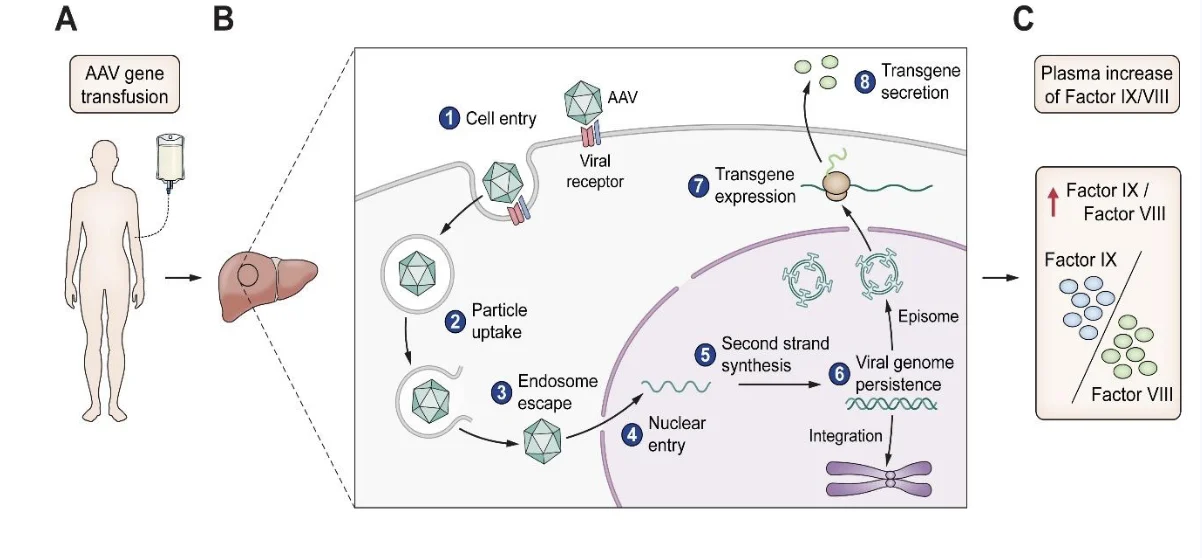
Figure 2. Mechanism of action and therapeutic application of AAV-based gene therapy for hemophilia
Key Clinical Considerations in Hemophilia Gene Therapy
- Eligibility and Immunity: Pre-existing anti-AAV neutralizing antibodies exclude a substantial proportion of patients from receiving current vector capsids.
- Hepatic Management: Immune-mediated capsid responses frequently cause transient transaminase elevations (observed in up to 80% of patients), requiring proactive hepatologic monitoring and prolonged, tailored immunosuppressive (corticosteroid) regimens
- Durability and Access: Long-term data suggest potential decline in FVIII expression over time in Hemophilia A, whereas FIX expression appears more stable. High upfront costs, complex infrastructure requirements, and regulatory hurdles currently restrict widespread global access.
From Bleeding Control to Sustained Hemostatic Protection
The management of hemophilia has undergone a remarkable transformation over the past century.
Hemophilia management has transitioned from managing bleeding crises to pursuing long-term, treatment-independent protection.
While factor mimetics and rebalancing agents have minimized treatment burden and overcome inhibitor barriers, gene therapy offers transformative, single-intervention control.
Future progress depends on refining gene-editing precision, managing immune responses, and expanding equitable global access to these advanced therapeutics.
FAQ
1.What is the primary genetic cause of Hemophilia A and B?
Hemophilia A and B are X-linked recessive disorders caused by mutations in the F8 or F9 genes, leading to a deficiency in Factor VIII or Factor IX, respectively.
2.Why was early plasma-derived factor replacement risky?
Early plasma-derived concentrates carried high risks of viral transmission, notably HIV and Hepatitis C (HCV), before viral inactivation techniques and recombinant factors were introduced.
3.What are Extended Half-Life (EHL) factor products?
EHL products are modified recombinant factor concentrates (using Fc-fusion, pegylation, or albumin fusion) that stay in circulation longer, reducing intravenous infusion frequency.
4.What are “inhibitors” in hemophilia care?
Inhibitors are neutralizing alloantibodies developed by up to 30% of severe Hemophilia A patients against infused Factor VIII, rendering standard factor replacement ineffective.
5.How does Emicizumab work without replacing Factor VIII?
Emicizumab is a bispecific monoclonal antibody that mimics Factor VIIIa by bridging activated Factor IX and Factor X to restore thrombin generation.
6.Can non-factor therapies be used in patients with inhibitors?
Yes. Because agents like Emicizumab and rebalancing drugs do not rely on missing factor proteins, they work effectively regardless of inhibitor status.
7.What is the mechanism of rebalancing agents?
Rebalancing agents target natural body anticoagulants (such as antithrombin or TFPI) to restore the overall balance of clot formation.
8.How is gene therapy delivered for hemophilia?
Current approved gene therapies use non-replicating Adeno-Associated Virus (AAV) vectors to deliver a functional copy of the F8 or F9 gene directly to hepatocytes.
9.What is the main short-term side effect of AAV gene therapy?
Transient transaminase elevation (liver enzyme spikes), which indicates an immune response to the vector and typically requires a short course of corticosteroids.
10.Does gene therapy provide a permanent cure?
While gene therapies demonstrate durable factor production lasting several years, ongoing monitoring is required to establish lifetime persistence and long-term durability.
Written by Rahma Muhammed Al-Nagahi Fahmy, Medical Student, Faculty of Medicine, Alexandria University, Alexandria, Egypt
Stay updated with Hemostasis Today.
-
Sep 29, 2026, 11:21Richard Davis: Rapid Rescue in Massive Pulmonary Embolism
-
Sep 29, 2026, 11:14Nissan Brown: Every Step Counts for the Hemophilia Community
-
Sep 29, 2026, 11:03Zain Khalpey: SINGLE AF Adds New Evidence to the Anticoagulation Debate
-
Sep 29, 2026, 10:54How Does Haemophilia Affect Motor Development in Infants? – EAHAD
-
Sep 29, 2026, 10:49Alison Davey: The Vital Role of Community Support in Bleeding Disorders
-
Sep 29, 2026, 10:36Abdul Muqtadir Abbasi: 5 Questions to Ask When the CBC Is Abnormal
-
Sep 29, 2026, 10:28Manu Morales Sánchez: DOACs in Intermediate Risk Atrial Fibrillation
-
Sep 29, 2026, 09:59William Sauer: Ablation in Patients With LAAO Devices
-
Sep 29, 2026, 03:53Nahrwan Masaoodi: Iron Deficiency Can Exist Without Anemia