

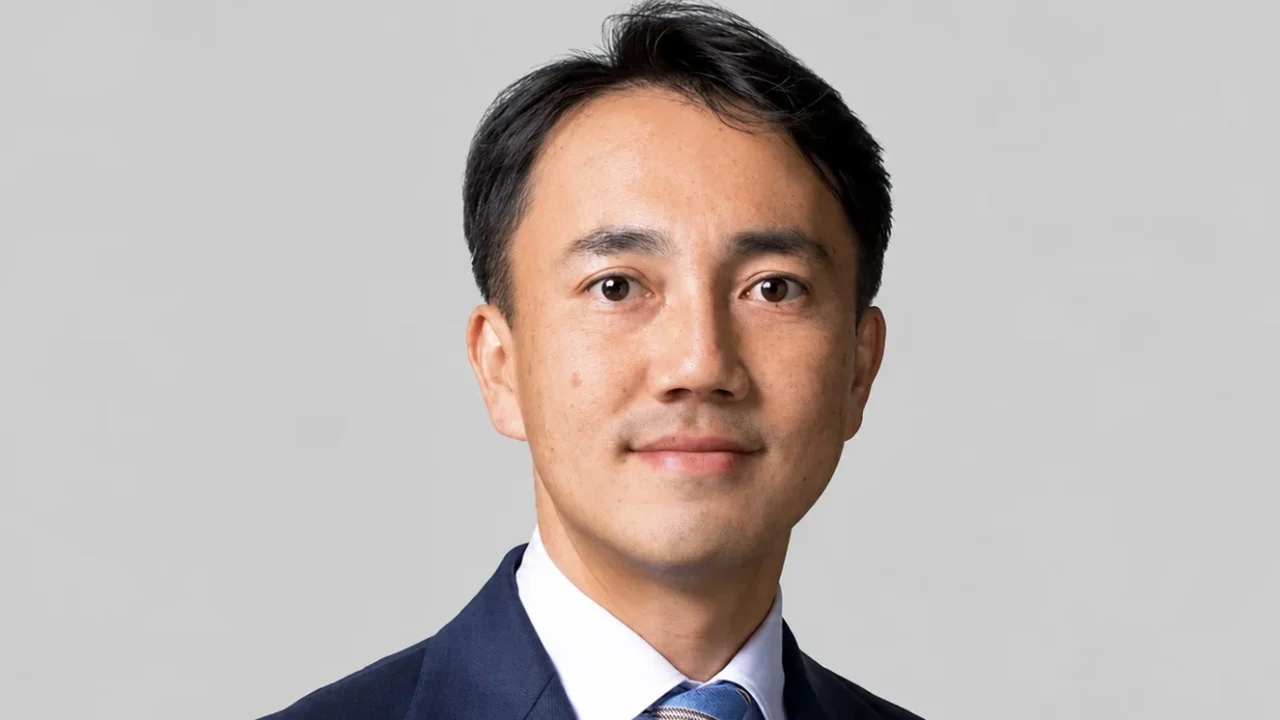
Mitsuaki Sawano: Can Cardiovascular Risk Prediction Models Developed in One Population be Reliably Applied to Another?
Mitsuaki Sawano, Senior Assistant Professor at Teikyo University, JACC Executive Associate Editor at American College of Cardiology, shared his post on X about a recent article he and his colleagues co-authored, published in Journal of Atherosclerosis and Thrombosis, adding:
“I’m delighted to share that our review has been published online in the Journal of Atherosclerosis and Thrombosis.
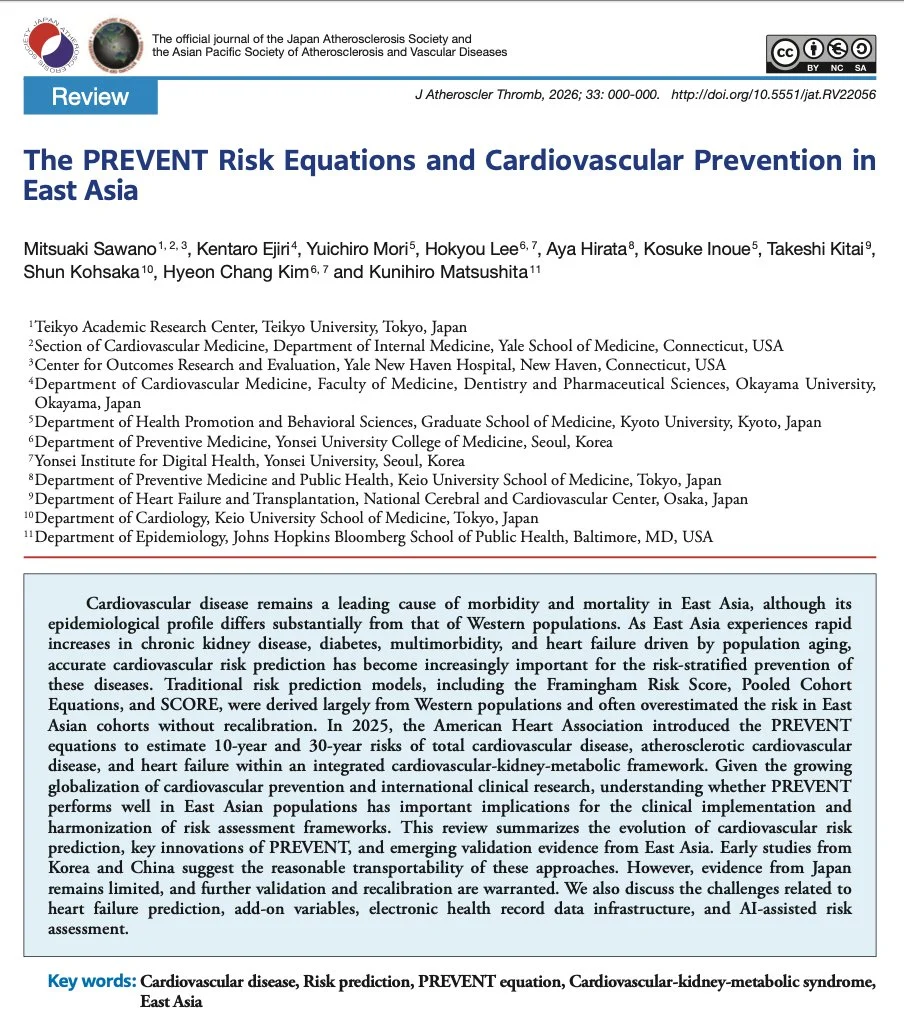
The PREVENT Risk Equations and Cardiovascular Prevention in East Asia
Authors: Mitsuaki Sawano, Kentaro Ejiri, Yuichiro Mori, Hokyou Lee, Aya Hirata, Kosuke Inoue, Takeshi Kitai, Shun Kohsaka, Hyeon Chang Kim, and Kunihiro Matsushita.
As cardiovascular prevention becomes increasingly global, one question is becoming increasingly important:
Can cardiovascular risk prediction models developed in one population be reliably applied to another?
This question is particularly relevant in East Asia, where cardiovascular disease remains a leading cause of morbidity and mortality, yet its epidemiology differs substantially from that of Western populations.
At the same time, rapid population aging and the growing burden of chronic kidney disease, diabetes, multimorbidity, and heart failure are making accurate risk prediction more important than ever for preventive cardiology.
In this review, we discuss:
- Why risk prediction models often require validation and recalibration before being implemented in new populations
- The evolution of cardiovascular risk assessment and how the field is moving toward more comprehensive prevention strategies
- Emerging validation data from East Asia, including encouraging evidence from South Korea and China
- The remaining evidence gap in Japan and the need for further external validation
- Future opportunities using electronic health records and AI to improve individualized cardiovascular risk assessment
Ultimately, this review is about more than one risk equation. As international clinical trials, prevention guidelines, and digital health continue to globalize, we need risk assessment frameworks that are both globally harmonized and locally validated.
Achieving that balance will be critical to delivering equitable, evidence-based cardiovascular prevention across diverse populations.
Many thanks to my outstanding co-authors from Japan and South Korea for this wonderful collaboration!”
“New Paper. Early Release
South Korea, USA, Japan‘s esteemed professors and I have compiled a comprehensive review, gently and thoroughly summarizing the new AHA cardiovascular risk prediction model ‘PREVENT‘ and its applicability to East Asia, from the development of existing risk scores!
‘The PREVENT Risk Equations and Cardiovascular Prevention in East Asia’ J Atheroscler Thromb.
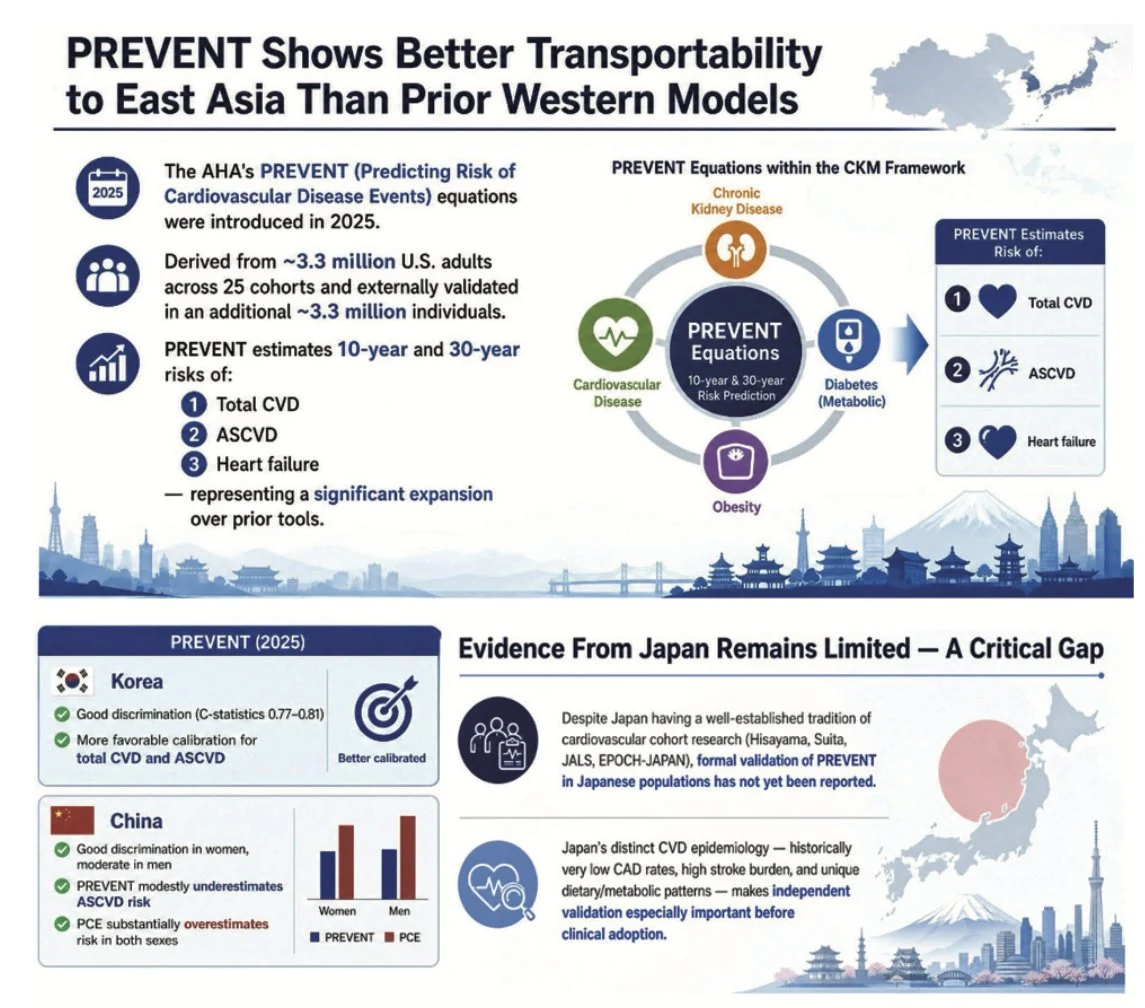
PREVENT advances one step beyond conventional ASCVD risk assessment, featuring:
- Total cardiovascular disease including heart failure
- 10-year and 30-year risks
- CKM perspective incorporating kidney function
- Prediction without using race as a new framework.
In validation targeting approximately 7.7 million people in Korea, it demonstrated good discriminatory ability for total CVD and ASCVD, along with generally appropriate calibration, and data supporting a certain degree of validity have been reported from China as well.
On the other hand, issues remain, such as overestimation of heart failure risk and the need for external validation and recalibration in countries including Japan.
It is an important theme for considering how to utilize risk scores derived from Europe and the US in East Asia, as well as common risk assessment foundations in international research and daily clinical practice.”
Title: The PREVENT Risk Equations and Cardiovascular Prevention in East Asia
Authors: Mitsuaki Sawano, Kentaro Ejiri, Yuichiro Mori, Hokyou Lee, Aya Hirata, Kosuke Inoue, Takeshi Kitai, Shun Kohsaka, Hyeon Chang Kim, Kunihiro Matsushita
Stay updated on all scientific advances with Hemostasis Today.
-
Oct 25, 2026, 19:55Giacomo Buso: LIPLEG Provides the Strongest Evidence to Date on Lipedema Treatment
-
Oct 25, 2026, 19:54Nicholas Lee: ASH Program Connects Trainees and Faculty With Mentors for Career Development
-
Oct 25, 2026, 19:53World Thrombosis Day Raises Blood Clot Awareness at Italian Airports
-
Oct 25, 2026, 19:49Tahsim Anwar: A Six-Year Analysis of Adverse Events in Therapeutic Apheresis
-
Oct 25, 2026, 19:37William Wallace: More than 1 in 3 People with Parkinson’s Were Low in B6
-
Oct 25, 2026, 19:36Andrés Felipe Escobar González: Individualized Treatment Strategies for HMB in BDUC
-
Oct 25, 2026, 19:34Christophe Nougier: Returning to Burundi for the WFH-Supported Twinning Project
-
Oct 25, 2026, 19:29Bogda Koczwara: Pre-Existing and New CVD in Patients With Cancer Are Associated With Higher Mortality
-
Oct 25, 2026, 19:23Özlem Turan: Advancing Care for Women and Girls With Bleeding Disorders at the European Parliament