

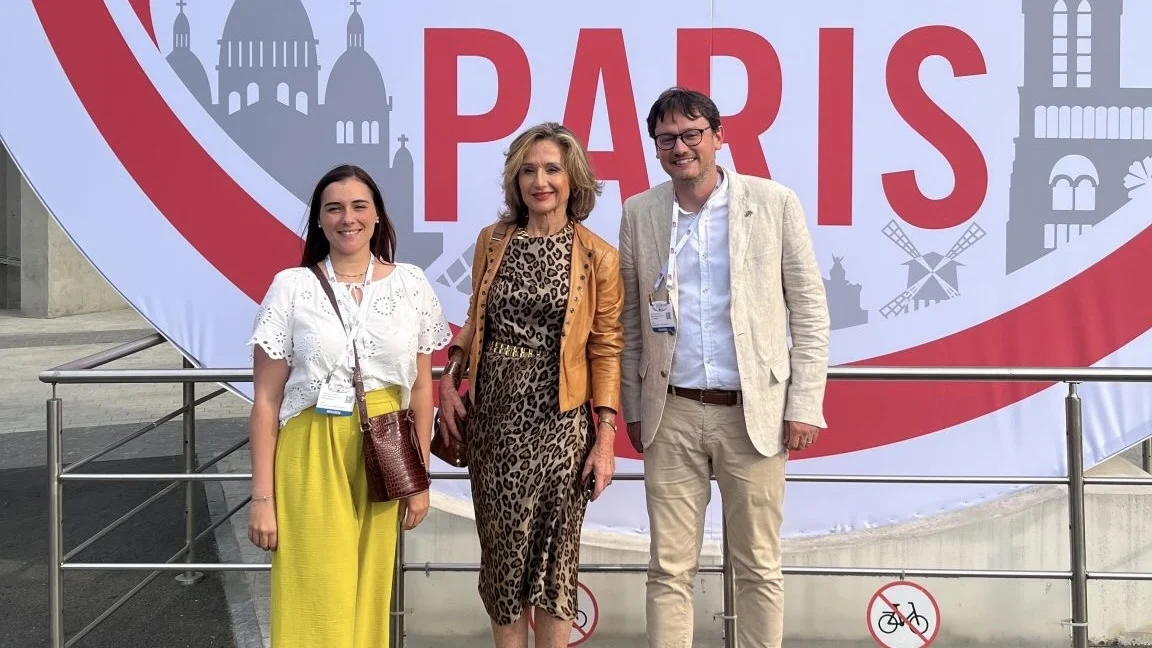
Françoise Dignat-George: The Rising Impact of Extracellular Vesicles Spotlighted at ISTH 2026
Françoise Dignat-George, Professor of Hematology and Immunology at Aix-Marseille University, Chief of the Hematology Department at Timone University Hospital, shared on LinkedIn:
”Extracellular vesicles: from potential to impact
At the ISTH 2026, extracellular vesicles were everywhere!
From the State of the Art to the joint sessions with ISEV, from the Expert Insight Sessions to the work of the SSC Vascular Biology, they have occupied a central place.
Why?
Because they connect disciplines: Haemostasis. Thrombosis. Inflammation. Angiogenesis. Vascular Biology, Immunology, Cancer,
Because they pave the way for a new generation of biomarkers, targeted therapies and personalized care.
Because they also illustrate a strong conviction: the innovations that transform hemostasis start from fundamental discoveries to reach the patient, thanks to a collaboration between researchers, clinicians, manufacturers and regulatory agencies.
To young researchers and clinicians: now is the time to take hold of these new tools.
Extracellular vesicles will help build the cardiovascular medicine of tomorrow.
Proud that the C2VN teams have contributed to this scientific dynamic.”
Stay updated with Hemostasis Today.
-
Nov 16, 2026, 15:35Jim Hoffman: Could Blood Purification Change the Fight Against Cancer?
-
Nov 16, 2026, 15:16How Do Artificial Hearts Affect Platelet Function? – Platelets Journal
-
Nov 16, 2026, 15:10Assessing Coagulation Activation in DOAC – Treated Patients – JTH
-
Nov 16, 2026, 15:00Davide Antonio Mei: Should Anticoagulation Continue After AF Ablation?
-
Nov 16, 2026, 14:55Danielle Boyle: Beyond Platelet Counts – Why Patient Stories Matter
-
Nov 16, 2026, 14:28Jan Sloves: The Future of Vascular Ultrasound
-
Nov 16, 2026, 13:49Bahman Rasouli: A Rare Vascular Manifestation of Recurrent Papillary Thyroid Carcinoma
-
Nov 16, 2026, 13:28Muhammad Danyal: Platelet Patterns in Hepatitis B and C
-
Nov 16, 2026, 12:52Frank Nocken: Alzheimer’s Research Expands Beyond Amyloid-Based Treatments