

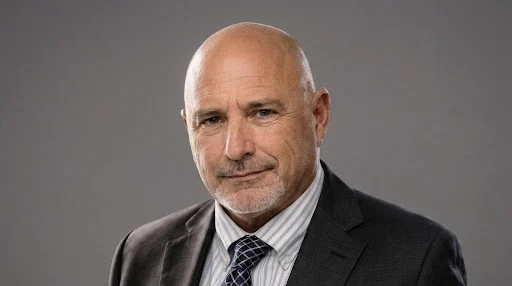
Jeff Parke: Why We Are Losing Viable Kidneys in Transit
Jeff Parke, Co-Founder of Cold Ischemia Foundation, shared a post on LinkedIn:
“There is a verse in Matthew that has never left me since my diagnosis. The axe is laid unto the root of the trees.
Not the branches. Not the leaves.
The root. Every tree that does not bring forth good fruit is cut down.
I think about that verse every time I watch another advocacy organization board a plane to Washington, plant a flag on Capitol Hill, snap a photo in front of a marble building, and call it a fight.
I have spent years reading the transplant literature nobody wants to read. I have studied cold ischemia until I understood it better than some of the clinicians managing it.
I have learned what happens to an organ in the minutes and hours between recovery and transplant, what oxygenated preservation can do that static cold storage cannot, what a BHOC – Biological Hemoglobin Oxygen Carrier actually means for a kidney sitting in a cooler on a tarmac somewhere over Ohio.
This is the root. This is where organs die before they ever reach the patient waiting for them. This is where the real war is being lost, in silence, without a hashtag.
And yet I watch National Kidney Foundation Dialysis Patient Citizens and NephCure make their pilgrimage to Washington year after year, waving banners about access and voice, and I ask myself: access to what, exactly, if the organ never arrives viable?
A voice that has never once said the words organ preservation technology, never once asked a congressional staffer why BHOC research remains underfunded, is not a voice.
It is an echo.
It is branch work.
It is leaf work.
It does not touch the root, and a tree that does not touch the root does not bear fruit, no matter how loud it rustles in the wind.
I do not say this from an ivory tower. I say it as a patient who nearly lost everything and refused to let ignorance be my legacy. I read the OPTN board minutes. I read the Centers for Medicare and Medicaid Services rule changes.
I read the studies on preservation solution chemistry that most advocates would not recognize if it was placed directly in front of them. Ninety percent of the advocacy world is content to repost, retweet, and rebrand.
They mistake visibility for depth and volume for value. Meanwhile, the organs keep degrading in transit, and nobody in the room asking for photo ops even knows the mechanism of the harm.
The only question left is whether the advocacy community wakes up and starts asking the hard questions about organ recovery, preservation, and oxygenated transport, or if it will keep admiring its own leaves while the root dies underneath – Michael / Christina Gilchrist Alexander Berrios Dawn P. Edwards”
Stay updated with Hemostasis Today.
-
Sep 20, 2026, 13:29Factor XI Deficiency and the Challenge of Unpredictable Bleeding – EHC
-
Sep 20, 2026, 13:18Cindy Howry: FDA Approves First Treatment for Ataxia-Telangiectasia
-
Sep 20, 2026, 13:08Mohammad Salar Amoli: When Routine Coagulation Tests Miss von Willebrand Disease
-
Sep 20, 2026, 12:55Stelios Andreadis։ Human Salivary Gland Organoids Offer New Potential for Regenerative Medicine
-
Sep 20, 2026, 12:43Obi Light Ogbonnia: The Power of Lived Experience in Sickle Cell Care
-
Sep 20, 2026, 12:34Sabrine Mekni: Advancing HSCT for Children With Fanconi Anemia
-
Sep 20, 2026, 12:11Giacomo Buso: Silent Atherosclerosis Begins Earlier Than Expected
-
Sep 20, 2026, 12:0310 Posts Not to Miss This Week
-
Sep 20, 2026, 11:27Edward Lee Carter: Prasugrel Dosing Matters in P2Y12 Inhibitor Comparisons After PCI