


Omid Khalafi: Immature Reticulocyte Fraction – The Earliest Sign That Bone Marrow Is Responding
Omid Khalafi, Technical Support Specialist and After Sale Service Manager at Pharmateb, shared a post on LinkedIn:
“Immature Reticulocyte Fraction (IRF)
The Earliest Sign That Bone Marrow Is Responding
When evaluating anemia or monitoring treatment, hemoglobin often changes too slowly to guide early clinical decisions.
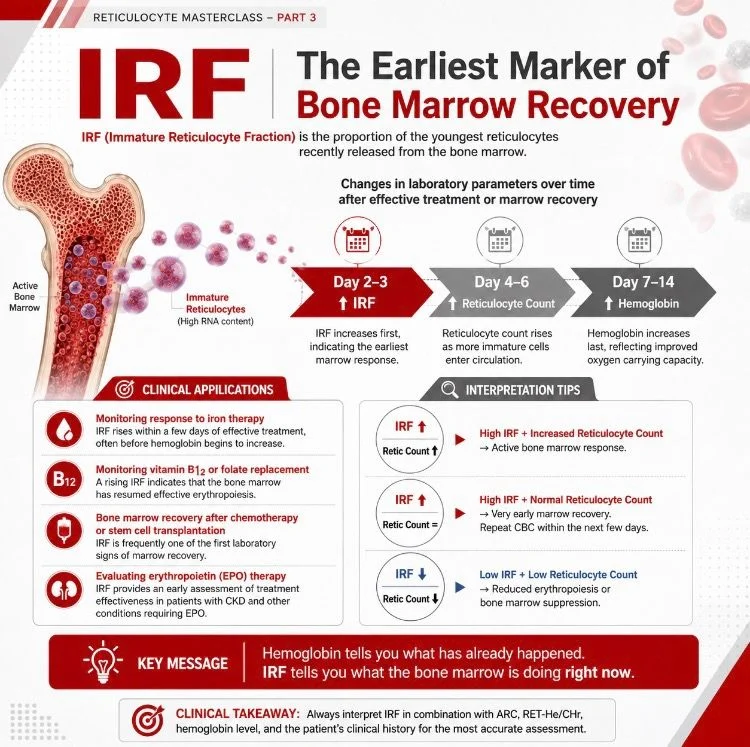
One of the earliest indicators of bone marrow recovery is the Immature Reticulocyte Fraction (IRF).
IRF represents the proportion of the youngest reticulocytes released from the bone marrow. These immature cells contain higher amounts of residual RNA and are detected by modern fluorescence-based hematology analyzers.
Why is IRF clinically important?
An increase in IRF usually occurs several days before a significant rise in reticulocyte count or hemoglobin.
This makes IRF an excellent early marker of erythropoietic activity.
Clinical Applications
- Monitoring response to iron therapy
Patients with iron deficiency anemia often demonstrate an increase in IRF within a few days after effective treatment, long before hemoglobin begins to rise.
- Monitoring vitamin B12 or folate replacement
A rising IRF indicates that the bone marrow has resumed effective erythropoiesis.
- Bone marrow recovery after chemotherapy or stem cell transplantation
IRF is frequently one of the first laboratory indicators that marrow function is returning.
- Evaluating erythropoietin (EPO) therapy
IRF provides an early assessment of treatment effectiveness in patients with chronic kidney disease and other conditions requiring EPO.
Interpretation Tips
• High IRF and Increased Reticulocyte Count: Active bone marrow response
• High IRF and Normal Reticulocyte Count: Very early marrow recovery; repeat CBC within the next few days.
• Low IRF and Low Reticulocyte Count: Reduced erythropoiesis or bone marrow suppression.
Key Message
Hemoglobin tells you what has already happened.
IRF tells you what the bone marrow is doing right now.
Understanding IRF allows clinicians and laboratory professionals to detect treatment response days earlier, improving clinical decision-making.
Whenever IRF is available, never interpret it in isolation. Combine it with the Absolute Reticulocyte Count (ARC), RET-He (or CHr), hemoglobin level, and the patient’s clinical history to obtain a more accurate picture of erythropoietic activity.”
Stay updated with Hemostasis Today.
-
Sep 21, 2026, 11:03Shaurav Bhattacharyya: Honoring the 2026 Lasker Award Winners
-
Sep 21, 2026, 10:41Jamshid Ullah: Recognizing Blood Disorders Through Laboratory Findings
-
Sep 21, 2026, 10:18Mana Alshehri: A New Step Toward Hemophilia B Gene Therapy in Adolescents
-
Sep 21, 2026, 09:52Afreenish Tasadaq: Contributing to Awareness about Bleeding Disorders
-
Sep 21, 2026, 08:49Andrea Bridges: When Support Becomes a Commitment to Give Back
-
Sep 21, 2026, 08:21Managing Thrombotic Risk in Pregnancy
-
Sep 21, 2026, 04:06Allison Lewin: How Gender Shapes the Way We Receive Medical Care
-
Sep 21, 2026, 03:49Jessica Lee: Walking Together for a Stronger Bleeding Disorders Community
-
Sep 21, 2026, 03:36Syed Asif Ali Shah: From Pakistan to Australia – A Clinical Haematology Milestone