


Aboo Shama Khan: Pulmonary Embolism – A Medical Emergency Every Nurse Must Recognize
Aboo Shama Khan, Assistant Nurse in Dubai, shared a post on LinkedIn:
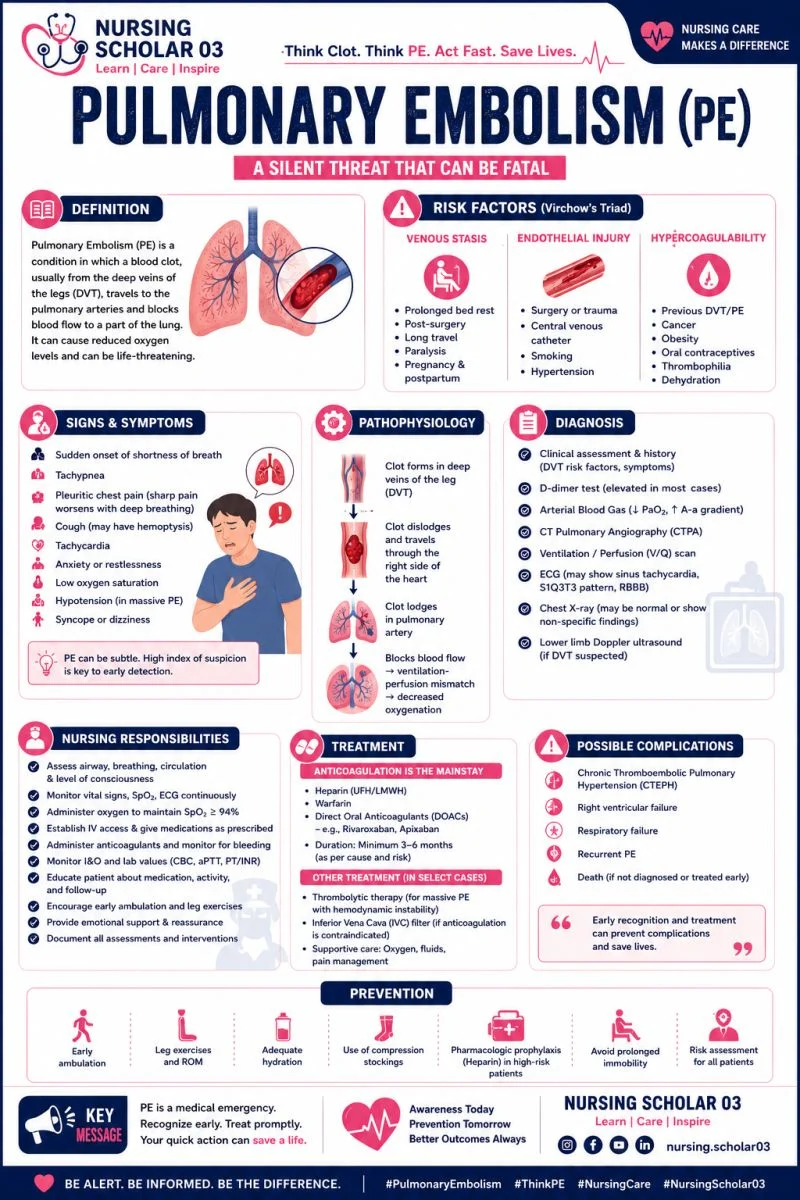
“Pulmonary Embolism (PE): A Medical Emergency Every Nurse Must Recognize
Pulmonary Embolism (PE) is a life-threatening condition caused by a blood clot – most commonly originating from a Deep Vein Thrombosis (DVT) – that travels to the pulmonary arteries and blocks blood flow to the lungs. Prompt recognition and timely intervention can significantly reduce morbidity and mortality.
Key Signs and Symptoms:
- Sudden onset of shortness of breath
- Sharp pleuritic chest pain
- Tachypnea and tachycardia
- Hypoxemia (low oxygen saturation)
- Cough, sometimes with hemoptysis
- Anxiety, restlessness, dizziness, or syncope
- Hypotension in massive PE
Risk Factors
- Previous DVT or PE
- Prolonged immobility or bed rest
- Recent surgery or trauma
- Pregnancy and postpartum period
- Active cancer
- Obesity
- Smoking
- Oral contraceptive use or hormone therapy
- Thrombophilia (hypercoagulable states)
Diagnosis
- Clinical assessment and risk stratification
- D-dimer testing
- CT Pulmonary Angiography (CTPA) – Gold standard imaging in most cases
- Arterial Blood Gas (ABG)
- ECG (may show sinus tachycardia or S1Q3T3 pattern)
- Chest X-ray (primarily to exclude other causes)
- Venous Doppler ultrasound if DVT is suspected
Treatment
- Oxygen therapy and hemodynamic support
- Anticoagulation (LMWH, UFH, DOACs, or Warfarin as appropriate)
- Thrombolytic therapy for selected high-risk patients with massive PE
- Inferior Vena Cava (IVC) filter when anticoagulation is contraindicated
Nursing Responsibilities
- Rapid assessment using the ABC approach
- Continuous monitoring of vital signs, ECG, and SpO₂
- Administer oxygen and prescribed medications promptly
- Monitor for bleeding during anticoagulant therapy
- Educate patients on medication adherence, mobility, hydration, and follow-up care
- Encourage early ambulation and preventive measures for DVT
Prevention Matters
Early mobilization, adequate hydration, compression stockings, pharmacological thromboprophylaxis in high-risk patients, and regular risk assessment are essential strategies to reduce the incidence of PE.
Key Takeaway:
Pulmonary Embolism is a medical emergency. Early recognition, rapid diagnosis, evidence-based treatment, and vigilant nursing care can save lives and improve patient outcomes.”
Stay updated with Hemostasis Today.
-
Sep 20, 2026, 09:51Ceasovschih Alexandr: A Closer Look at Lipid Disorders in CKM Syndrome
-
Sep 20, 2026, 09:05World Stroke Academy: Can Adjunct IAT Improve Tissue Reperfusion?
-
Sep 20, 2026, 06:46Neeraj Songara: From Donated Blood to Engineered Therapeutics
-
Sep 20, 2026, 06:24Louise St. Germain Bannon: Improving Awareness and Care for Women Across the Lifespan
-
Sep 20, 2026, 05:17Maxime Dely: When ABO Compatibility Isn’t Enough for Safe Transfusion
-
Sep 20, 2026, 04:54William Aird: What Does a Complete History and Physical Really Mean?
-
Sep 20, 2026, 04:34Hons Saurabh Kaushik: Why Uncontrolled LDL Can Be Harmful
-
Sep 20, 2026, 03:58Salih Ehsan: The Complexities of HbF and HbA2
-
Sep 20, 2026, 03:22The Voices of People Living With Bleeding Disorders – EHC