


Tareq Abadl: Kell System and Anti-K Alloimmunization
Tareq Abadl, Medical Lab Specialist, shared a post on LinkedIn:
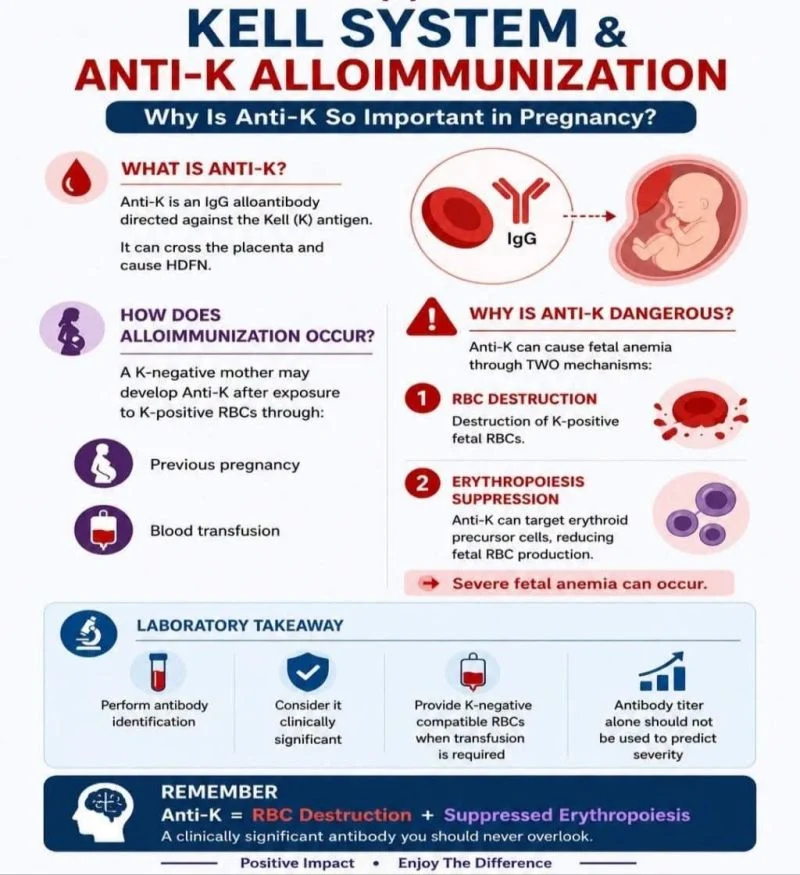
”Kell System and Anti-K Aloimunization
Why Is Anti-K So Important in Pregnancy?
What is anti-K
Anti-K is an IgG alloantibody directed against the Kell (K) antigen.
It can cross the placenta and cause HDFN.
How does alloimminization occur?
A K-negative mother may develop Anti-K after exposure to K-positive RBCs through:
- Previous pregnancy
- Blood transfusion
Why is anti-K dangerous?
Anti-K can cause fetal anemia through TWO mechanisms:
RBC Destruction
Destruction of K-positive fetal RBCs.
Erythropoiesis suppression
Anti-K can target erythroid precursor cells, reducing fetal RBC production.
Severe fetal anemia can occur.
Laboratory takeaway
When Anti-K is detected during pregnancy:
- Perform antibody identification
- Consider it clinically significant
- Provide K-negative compatible RBCs when transfusion is required
- Antibody titer alone should not be used to predict severity
Remember
Anti-K causes red blood cell destruction and suppression of red blood cell production.
A clinically significant antibody you should never overlook.”
Other posts featuring Tareq Abadl on Hemostasis Today.
-
Sep 25, 2026, 12:53Bastu Odoka: What Happened to Blood Donation?
-
Sep 25, 2026, 12:43Thomas Dayspring: Reshaping the Biology of Atherosclerotic Plaques with New Therapies
-
Sep 25, 2026, 12:14Garima Sharma: Community Clinical Linkages for Better Postpartum Cardiovascular Care
-
Sep 25, 2026, 10:49Shefina S: From Presenting to Hosting at TRANSCON 2026
-
Sep 25, 2026, 10:37Michelle Leona Cecil: Hemophilia Advocacy and the Power of Community
-
Sep 25, 2026, 10:13Michael Baria: Platelet Concentration and PRP Outcomes in Partial Rotator Cuff Tears
-
Sep 25, 2026, 09:49Haley Coleman: Volunteering to Support Hemophilia Awareness
-
Sep 25, 2026, 08:55Hitarth Mehta: BHMS Students Gain Practical Exposure to Haemophilia Diagnosis
-
Sep 25, 2026, 07:25Varun Capoor: How Therapeutic Apheresis and Transfusion Medicine Can Complement Clinical Management in SCD