


Wolfgang Miesbach: The Critical Need for Tailored Dosing in VWD
Wolfgang Miesbach, Professor of Medicine at Frankfurt University Hospital, shared a post on LinkedIn:
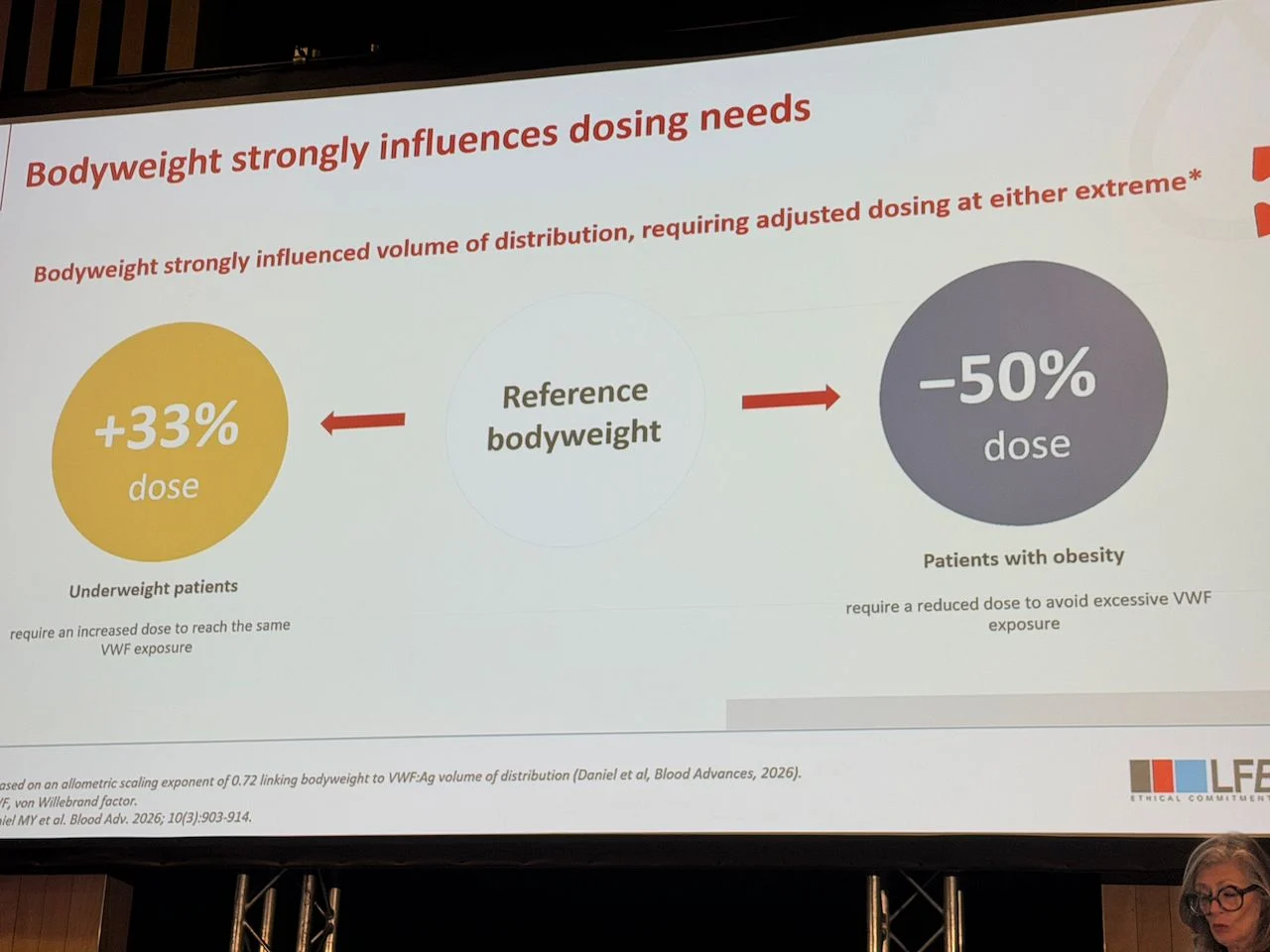
“Fascinating presentation by Prof. Sophie Susen at the LFB symposium during ISTH 2026, spotlighting the critical need for tailored dosing in von Willebrand disease (VWD)!
Perioperative VWD management is highly complex due to intricate VWF/FVIII dynamics and sheer clinical heterogeneity—truly a ‘kaleidoscope’ of rare subtypes.
Prof. Susen shared valuable insights on the first pharmacokinetic (PK) model developed specifically for pure VWF in this setting:
Bodyweight drives dosing needs: Underweight patients may need up to a 33% dose increase to hit target exposure, while patients with obesity may require a 50% dose reduction to prevent excessive VWF exposure.
Improved prediction accuracy: The novel population PK/PD model successfully integrates key covariates (VWD type, age, body weight, blood type, VWFpp) to predict VWF:Ag levels with high precision.
Fantastic to see decades of real-world evidence translating into actionable clinical tools.
Eagerly anticipating the prospective, multicenter WIL-PKPOP-CHIR validation study beginning enrollment later this year!”
Other posts featuring Wolfgang Miesbach on Hemostasis Today.
-
Sep 29, 2026, 12:02Hajra Malik: Bridging Language Gaps in Hematology With AI
-
Sep 29, 2026, 11:57Joan Montaner: Can Blood Test Identify Intracerebral Hemorrhage Within Minutes?
-
Sep 29, 2026, 11:43From Years Without Answers to Life With Hemophilia Care – WFH
-
Sep 29, 2026, 11:32Sara Al Dallal: Transforming Hemophilia Care Across the Gulf
-
Sep 29, 2026, 11:21Richard Davis: Rapid Rescue in Massive Pulmonary Embolism
-
Sep 29, 2026, 11:14Nissan Brown: Every Step Counts for the Hemophilia Community
-
Sep 29, 2026, 11:03Zain Khalpey: SINGLE AF Adds New Evidence to the Anticoagulation Debate
-
Sep 29, 2026, 10:54How Does Haemophilia Affect Motor Development in Infants? – EAHAD
-
Sep 29, 2026, 10:49Alison Davey: The Vital Role of Community Support in Bleeding Disorders