


Abdulmalik Alnuqydan: Why Do We Transfuse RBCs Less Than 7 Days Old to Newborns?
Abdulmalik Alnuqydan, Laboratory Specialist at Rafa Medical Complex, shared a post on LinkedIn:
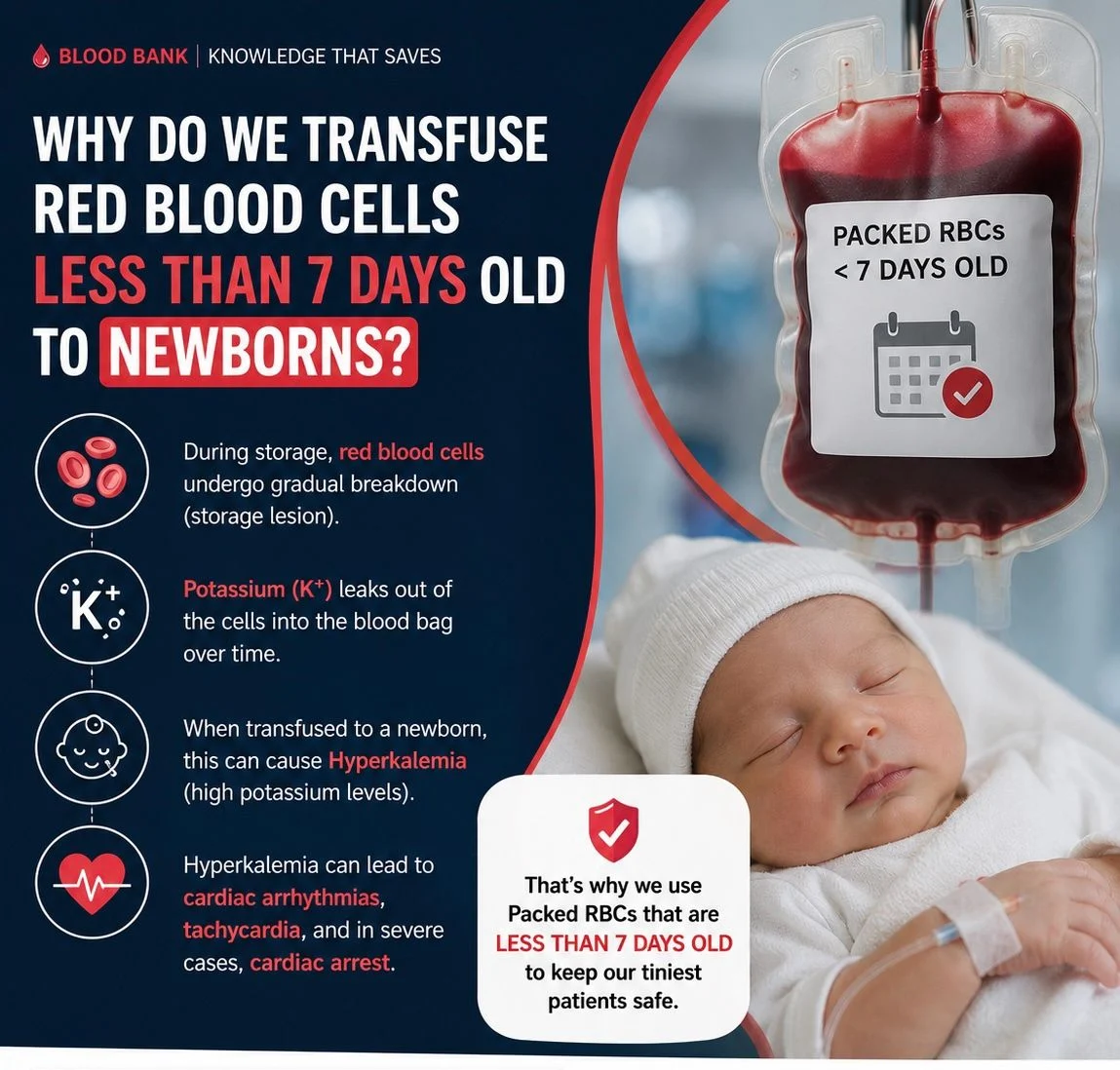
“Blood Bank Insights – Why are newborns often transfused with Packed RBCs that are less than 7 days old?
One of the key considerations in neonatal transfusion medicine is the age of stored red blood cells.
As Packed RBCs are stored, they undergo storage lesions – a series of biochemical and structural changes.
One important change is the gradual leakage of potassium (K⁺) from red blood cells into the storage solution due to membrane changes over time.
When older blood is transfused, especially in newborns who have a very small circulating blood volume and immature kidneys, the potassium load may increase the risk of hyperkalemia.
Severe hyperkalemia can lead to:
- Cardiac arrhythmias
- Tachycardia or other rhythm disturbances
- In rare but severe cases, cardiac arrest
For this reason, many neonatal transfusion protocols prefer fresh Packed RBCs (typically less than 7 days old) for situations such as exchange transfusions or large-volume transfusions, helping reduce the risk of potassium-related complications.
Key Takeaway:
Using fresher blood products is one of several strategies that can improve transfusion safety for our smallest patients.
Have you encountered neonatal transfusion protocols that specify the maximum storage age of RBC units? Share your experience in the comments.”
Stay updated with Hemostasis Today.
-
Sep 29, 2026, 12:02Hajra Malik: Bridging Language Gaps in Hematology With AI
-
Sep 29, 2026, 11:57Joan Montaner: Can Blood Test Identify Intracerebral Hemorrhage Within Minutes?
-
Sep 29, 2026, 11:43From Years Without Answers to Life With Hemophilia Care – WFH
-
Sep 29, 2026, 11:32Sara Al Dallal: Transforming Hemophilia Care Across the Gulf
-
Sep 29, 2026, 11:21Richard Davis: Rapid Rescue in Massive Pulmonary Embolism
-
Sep 29, 2026, 11:14Nissan Brown: Every Step Counts for the Hemophilia Community
-
Sep 29, 2026, 11:03Zain Khalpey: SINGLE AF Adds New Evidence to the Anticoagulation Debate
-
Sep 29, 2026, 10:54How Does Haemophilia Affect Motor Development in Infants? – EAHAD
-
Sep 29, 2026, 10:49Alison Davey: The Vital Role of Community Support in Bleeding Disorders