

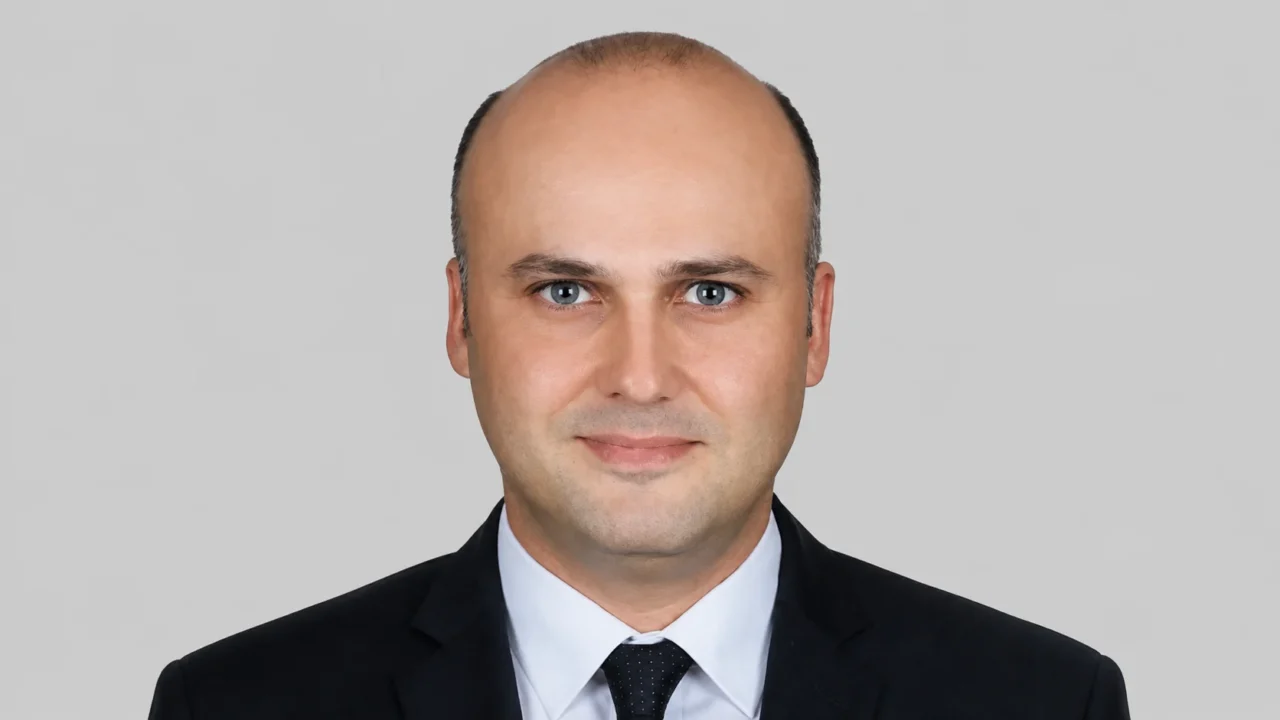
Soner Yilmaz: Blood Safety in Türkiye Through More Than 22.5 Million Blood Donations
Soner Yilmaz, Head of Microbiology Laboratory and Transfusion Center at Anadolu Medical Center, Deputy Chief Physician at Gülhane Training and Research Hospital, Manager at Serology Laboratory of Gulhane Regional Blood Center, shared a post on LinkedIn about a recent article he and his colleagues co-authored, published in Vox Sanguinis, adding:
“I am delighted to share the publication of the scientific work that has been the result of a long-term effort.
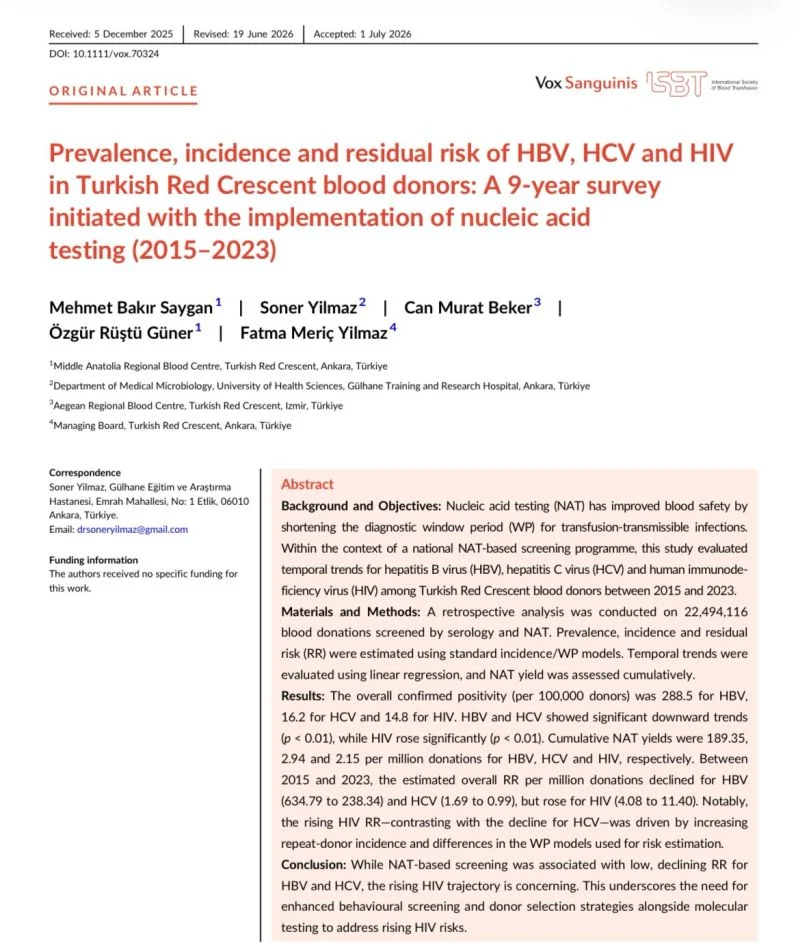
Our study, based on data from more than 22.5 million blood donations collected by the Turkish Red Crescent between 2015 and 2023, has been published in Vox Sanguinis.
For me, this study represents much more than an academic publication; it is a scientific reflection of the strong system that Türkiye has built over the years in blood safety and the dedicated efforts of the Turkish Red Crescent.”
Title: Prevalence, incidence and residual risk of HBV, HCV and HIV in Turkish Red Crescent blood donors: A 9-year survey initiated with the implementation of nucleic acid testing (2015-2023)
Authors: Mehmet Bakır Saygan, Soner Yilmaz, Can Murat Beker, Özgür Rüştü Güner, Fatma Meriç Yilmaz
Stayupdated on all scientific advances with Hemostasis Today.
-
Nov 16, 2026, 15:35Jim Hoffman: Could Blood Purification Change the Fight Against Cancer?
-
Nov 16, 2026, 15:16How Do Artificial Hearts Affect Platelet Function? – Platelets Journal
-
Nov 16, 2026, 15:10Assessing Coagulation Activation in DOAC – Treated Patients – JTH
-
Nov 16, 2026, 15:00Davide Antonio Mei: Should Anticoagulation Continue After AF Ablation?
-
Nov 16, 2026, 14:55Danielle Boyle: Beyond Platelet Counts – Why Patient Stories Matter
-
Nov 16, 2026, 14:28Jan Sloves: The Future of Vascular Ultrasound
-
Nov 16, 2026, 13:49Bahman Rasouli: A Rare Vascular Manifestation of Recurrent Papillary Thyroid Carcinoma
-
Nov 16, 2026, 13:28Muhammad Danyal: Platelet Patterns in Hepatitis B and C
-
Nov 16, 2026, 12:52Frank Nocken: Alzheimer’s Research Expands Beyond Amyloid-Based Treatments