

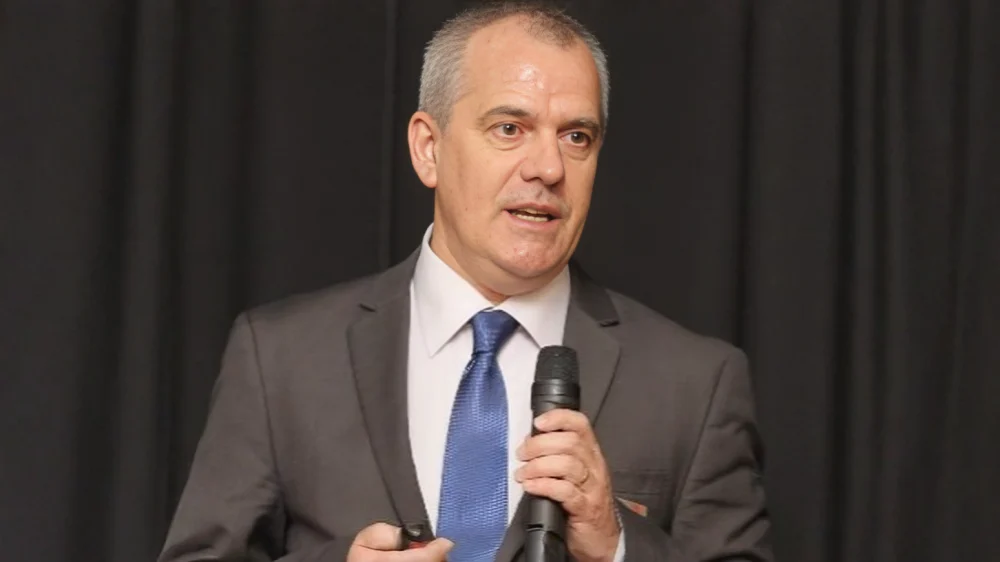
Robert John Nesbitt: Can We Prevent Stroke Without Increasing Bleeding Risk
Robert John Nesbitt, Account Manager for Original Events Unit at Kenes Group, shared a post on LinkedIn:
“Rethinking the Balance Between Thrombosis and Hemostasis
Preventing ischemic stroke has always involved a fundamental trade-off.
More intensive inhibition of thrombosis can also increase the potential for disrupting normal hemostasis.
For decades, antiplatelets and anticoagulants have formed the foundation of stroke prevention.
They have transformed outcomes for millions of patients – but bleeding remains one of the most important limitations of antithrombotic therapy.
The next generation of stroke prevention is beginning to ask a different question:
Can we prevent pathological thrombosis without unnecessarily interfering with the body’s ability to control bleeding?
That question extends well beyond atrial fibrillation.
This fourth edition of RAISE Insights explores the emerging concept of hemostasis-sparing stroke prevention and how next-generation antithrombotic strategies could reshape the treatment of patients at risk of ischemic stroke.
From antithrombotic potency to therapeutic precision
Traditional antithrombotic development has often focused on achieving greater inhibition of platelet activation or coagulation.
But more inhibition does not necessarily mean better prevention.
The challenge is finding the right balance between:
- Thrombotic protection and Preservation of normal hemostasis.
This is driving a shift toward more selective approaches that target pathways responsible for pathological thrombosis while minimizing unnecessary interference with physiological clotting.
Factor XI/XIa inhibition is one of the most advanced examples of this thinking – but it is only part of a broader evolution in antithrombotic development.
The bigger opportunity
The future of stroke prevention is unlikely to be defined by a single new drug class.
Multiple approaches are emerging:
- Factor XI/XIa inhibition – targeting coagulation pathways with the potential for a wider therapeutic window
- Next-generation antiplatelets – seeking more precise platelet inhibition while reducing bleeding complications
- Novel anticoagulant targets – exploring alternative points within the coagulation cascade
- Precision antithrombotic therapy – matching treatment to individual thrombotic and bleeding risk
- Combination strategies – integrating pharmacological, device-based, and procedural approaches where appropriate
Together, these developments suggest a shift away from the idea of a universally stronger antithrombotic.
The goal increasingly becomes:
The right treatment for the right patient at the right time.
Why this matters beyond atrial fibrillation
Atrial fibrillation has been one of the most important settings for innovation in stroke prevention.
But the need for safer and more effective antithrombotic strategies extends across the stroke spectrum.
Patients with:
- Previous ischemic stroke or TIA
- Atherosclerotic disease
- Coronary artery disease
- Peripheral arterial disease
- Small-vessel disease
- Multiple vascular risk factors
may face very different combinations of thrombotic and bleeding risk.
Future prevention strategies may therefore need to move beyond broad treatment categories toward increasingly individualized approaches.
The secondary prevention challenge
Despite major advances in stroke treatment and prevention, recurrent ischemic events remain a significant problem.
At the same time, intensifying antithrombotic therapy can increase bleeding risk.
This creates a persistent clinical dilemma:
- How do we prevent the next stroke without creating another serious complication?
The answer may not come from one mechanism.
It may come from better patient selection, biomarkers, risk prediction, and therapies designed to intervene more selectively in the processes driving thrombosis.
The role of precision medicine
The hemostasis-sparing concept connects directly with the broader transformation occurring across stroke prevention.
Artificial intelligence may help identify patients at particularly high thrombotic or bleeding risk.
Continuous monitoring may provide a more dynamic understanding of patient status.
Imaging and biomarkers may reveal underlying mechanisms of disease.
Genomic and real-world data may help identify populations most likely to benefit from specific therapies.
Next-generation antithrombotics may then provide clinicians with a broader range of therapeutic options.
The result could be a fundamentally different prevention model:
Risk identification – biological characterization – targeted intervention – continuous monitoring – treatment optimization.
The industry landscape
The search for safer antithrombotic therapy is creating opportunities across multiple sectors:
- Factor XI/XIa Inhibitors
- Next-Generation Antiplatelets
- Novel Anticoagulant Targets
- Biomarkers and Precision Medicine
- AI-Based Risk Prediction
- Imaging and Diagnostics
- Digital Monitoring
- Drug–Device Combination Strategies
For pharmaceutical companies, the opportunity is to develop therapies with improved efficacy and safety profiles.
For device companies, it is to provide alternatives or complements to long-term pharmacological treatment.
For technology companies, it is to help identify which patients require intervention – and when treatment should be intensified, maintained, or reconsidered.
Increasingly, competitive advantage may come from demonstrating how these technologies work together across the patient pathway rather than from any single product.
The clinical and regulatory challenge
A compelling mechanism is not enough.
New antithrombotic strategies must demonstrate meaningful clinical benefit while answering difficult safety questions.
How much reduction in ischemic stroke is clinically meaningful?
How should major bleeding be balanced against prevented ischemic events?
Which patients benefit most?
Can biomarkers identify patients with a favorable benefit–risk profile?
How should new therapies be compared with established standards of care?
Ultimately:
Will a wider therapeutic window translate into better long-term outcomes for patients?
These questions will determine which next-generation strategies ultimately influence clinical practice.
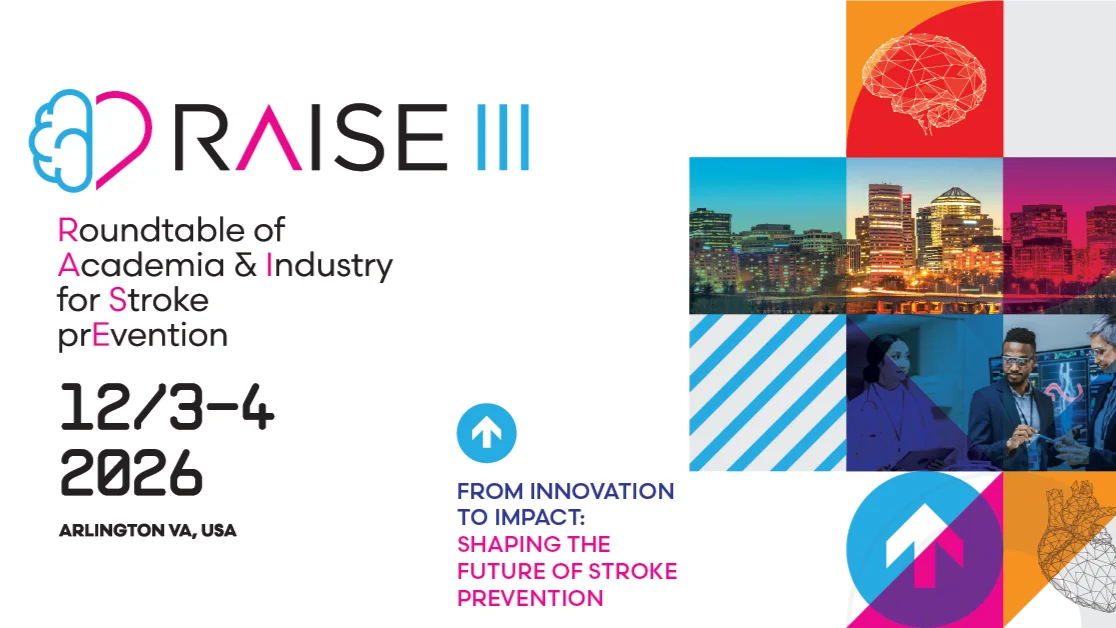
The bigger RAISE III connection
The scientific program of RAISE III is increasingly connected around one central idea:
The future of stroke prevention is not one technology. It is an ecosystem.
AI can help identify risk.
Wearables can provide continuous monitoring.
Diagnostics can reveal disease earlier.
New antithrombotic therapies can provide more targeted intervention.
Devices can offer alternative prevention strategies.
Real-world data can continuously evaluate what works in clinical practice.
The opportunity is to connect these advances into prevention pathways that are more predictive, personalized, and precise.
Why industry is paying attention
Hemostasis-sparing therapy represents more than another pharmaceutical development opportunity.
It has the potential to reshape how stroke prevention is designed.
The strategies that ultimately shape the next generation may not simply be those that deliver the strongest individual effect.
They may be those that demonstrate how their technology fits into a broader prevention pathway – combining efficacy, safety, patient selection, monitoring, and long-term management.
This is where pharmaceutical, device, diagnostic, digital health, and data companies increasingly intersect.
What comes next?
The Factor XI/XIa story is only one part of a much larger transformation.
The next generation of stroke prevention will likely involve multiple strategies competing – and potentially complementing one another – to achieve the same objective:
Prevent more ischemic events while causing fewer treatment-related complications.
Ultimately, clinical evidence will determine which approaches become part of routine care.
Not mechanism alone. Not technology alone. And not market enthusiasm alone.
Next edition preview
The Future of Stroke Prevention: From Risk Detection to Intervention
The first four editions of RAISE Insights have followed a connected journey:
AI identifies risk. Continuous monitoring detects hidden disease.
New therapeutic and procedural strategies provide intervention. Hemostasis-sparing approaches seek to make that intervention safer.
In our next issue, we step back and examine the bigger picture:
What will the fully connected stroke prevention ecosystem look like – and how will these technologies work together to prevent stroke before it happens?
Stay connected
RAISE Insights is a thought leadership series exploring the scientific themes, technologies, and partnerships shaping the future of stroke prevention in the lead-up to RAISE III 2026.
The future of stroke prevention will not be shaped by one company, one technology, or one specialty.
It will be built through collaboration across the entire prevention ecosystem.”
Stay updated with Hemostasis Today.
-
Oct 2, 2026, 09:20Anticoagulants, Blood Thinners, or Antithrombotic Medications? – World Thrombosis Day
-
Oct 2, 2026, 06:00Susan Wickersham: Gradual Shift towards Autologous Blood Transfusion is a Current Trend
-
Oct 2, 2026, 05:54Shamee Shastry: When Every Cell Reacts – The Hunt for Rare Blood
-
Oct 2, 2026, 05:49David Mclntosh: Expanding Plasma Protein Therapies in Underserved Regions
-
Oct 2, 2026, 05:38Dianne E. van der Wal: C-Terminal Endings Impact PAR1/PAR4 Peptide Potency in In Vitro Platelet Assays
-
Oct 2, 2026, 05:29Mohammed Alo: Your LDL Isn’t a Snapshot – It’s a Smoking Habit Measured in Years
-
Oct 2, 2026, 00:33Marwa Mostafa: Hemoglobinopathies – When Globin Genes Go Wrong
-
Oct 1, 2026, 23:46Behnood Bikdeli: Global Burden of Venous Thromboembolism
-
Oct 1, 2026, 23:46Sthanu Subramanian: Clinical Presentation, Risk Factors, Diagnosis, and Neuroimaging Findings in CVT