


Heba Youssef: Can Cefoperazone Cause Coagulopathy?
Heba Youssef, Clinical Nutrition Pharmacist at Helwan General Hospital, shared a post on LinkedIn:
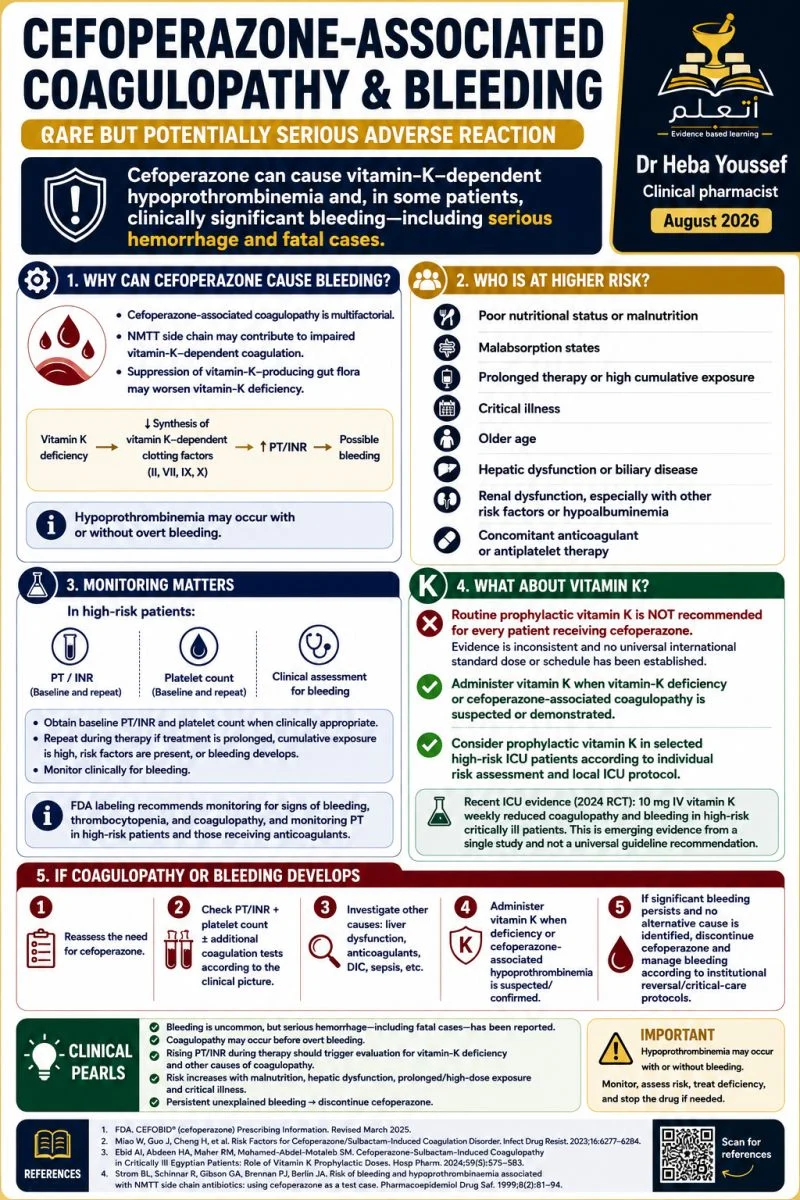
”Cefoperazone can cause a coagulopathy that’s easy to miss. Its NMTT side chain interferes with vitamin K-dependent clotting factors, and in some patients this is made worse by suppression of gut flora that normally produces vitamin K. The result, hypoprothrombinemia, can happen with or without visible bleeding, which is exactly why it needs active monitoring rather than waiting for symptoms.
Patients at higher risk include those with poor nutrition, malabsorption, liver or biliary disease, kidney dysfunction, prolonged or high-dose therapy, or concurrent use of anticoagulants. For these patients, checking baseline and repeat PT/INR and platelet counts is a simple but important safety step.
Giving vitamin K to every patient on cefoperazone isn’t routinely recommended, since the evidence doesn’t support one standard approach. But vitamin K should be given once deficiency or drug-related coagulopathy is suspected or confirmed. A 2024 randomized trial found that 10 mg IV vitamin K weekly reduced coagulopathy and bleeding in high-risk ICU patients, an encouraging finding, though still from a single study rather than an established guideline.
If PT/INR rises unexpectedly during cefoperazone therapy, check for vitamin K deficiency and other causes before blaming the drug alone. And if bleeding continues with no other explanation, that’s a clear signal to stop the drug and follow your institution’s protocol.
References:
- FDA. CEFOBID® (cefoperazone) Prescribing Information. Revised March
- Miao W, Guo J, Cheng H, et al. Risk Factors for Cefoperazone/Sulbactam-Induced Coagulation Disorder. Infect Drug Resist. 2023;16:6277–6284.
- Ebid AI, Abdeen HA, Maher RM, Mohamed-Abdel-Motaleb SM. Cefoperazone-Sulbactam-Induced Coagulopathy in Critically Ill Egyptian Patients: Role of Vitamin K Prophylactic Doses. Hosp Pharm.
- Strom BL, Schinnar R, Gibson GA, Brennan PJ, Berlin JA. Risk of bleeding and hypoprothrombinaemia associated with NMTT side chain antibiotics: using cefoperazone as a test case. Pharmacoepidemiol Drug Saf. ”
Other posts featuring Heba Youssef on Hemostasis Today.
-
Oct 2, 2026, 09:20Anticoagulants, Blood Thinners, or Antithrombotic Medications? – World Thrombosis Day
-
Oct 2, 2026, 06:00Susan Wickersham: Gradual Shift towards Autologous Blood Transfusion is a Current Trend
-
Oct 2, 2026, 05:54Shamee Shastry: When Every Cell Reacts – The Hunt for Rare Blood
-
Oct 2, 2026, 05:49David Mclntosh: Expanding Plasma Protein Therapies in Underserved Regions
-
Oct 2, 2026, 05:38Dianne E. van der Wal: C-Terminal Endings Impact PAR1/PAR4 Peptide Potency in In Vitro Platelet Assays
-
Oct 2, 2026, 05:29Mohammed Alo: Your LDL Isn’t a Snapshot – It’s a Smoking Habit Measured in Years
-
Oct 2, 2026, 00:33Marwa Mostafa: Hemoglobinopathies – When Globin Genes Go Wrong
-
Oct 1, 2026, 23:46Behnood Bikdeli: Global Burden of Venous Thromboembolism
-
Oct 1, 2026, 23:46Sthanu Subramanian: Clinical Presentation, Risk Factors, Diagnosis, and Neuroimaging Findings in CVT