


Waqas Ahmed: Iron-Enriched Yeast Offers a New Approach to Iron Deficiency
Waqas Ahmed, Associate Professor at University of Veterinary and Animal Sciences in Pakistan, shared a post on LinkedIn about a recent article he and his colleagues co-authored, published in Scientific Reports, adding:
”Anemia is among one of the most prevalent micronutrient deficiencies. One of the most common forms of anemia is iron deficiency anemia. Oral iron supplements are mainly used to treat iron deficiency but pose a few side effects such as gastrointestinal problems, poor compliance and dietary restrictions. Iron-enriched yeast Saccharomyces cerevisiae has been shown to increase iron bioavailability as it is converted into organic form making it more absorbable as compared to conventional iron supplements.
Glad to share recent research from one of my MPhil student is published in Scientific Reports. It was something new to be executed in UVAS.
I am grateful to my colleagues Dr. Azmat Ullah Khan and Professor Muhammad Nawaz sahb for kind support and cooperation in the matter.”
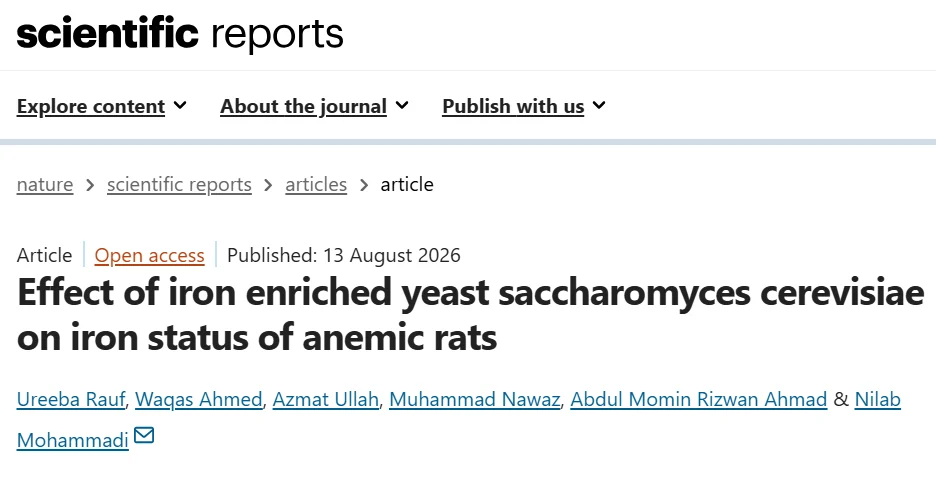
Title: Effect of iron enriched yeast saccharomyces cerevisiae on iron status of anemic rats
Authors: Ureeba Rauf, Waqas Ahmed, Azmat Ullah, Muhammad Nawaz, Abdul Momin Rizwan Ahmad, Nilab Mohammadi
Stay updated with Hemostasis Today.
-
Nov 16, 2026, 15:35Jim Hoffman: Could Blood Purification Change the Fight Against Cancer?
-
Nov 16, 2026, 15:16How Do Artificial Hearts Affect Platelet Function? – Platelets Journal
-
Nov 16, 2026, 15:10Assessing Coagulation Activation in DOAC – Treated Patients – JTH
-
Nov 16, 2026, 15:00Davide Antonio Mei: Should Anticoagulation Continue After AF Ablation?
-
Nov 16, 2026, 14:55Danielle Boyle: Beyond Platelet Counts – Why Patient Stories Matter
-
Nov 16, 2026, 14:28Jan Sloves: The Future of Vascular Ultrasound
-
Nov 16, 2026, 13:49Bahman Rasouli: A Rare Vascular Manifestation of Recurrent Papillary Thyroid Carcinoma
-
Nov 16, 2026, 13:28Muhammad Danyal: Platelet Patterns in Hepatitis B and C
-
Nov 16, 2026, 12:52Frank Nocken: Alzheimer’s Research Expands Beyond Amyloid-Based Treatments