


Anupriya Ak: Blood Groups and Transfusion Compatibility
Anupriya Ak, Registered Nurse – OPD at uniCare Medical Centre, shared on a post LinkedIn:
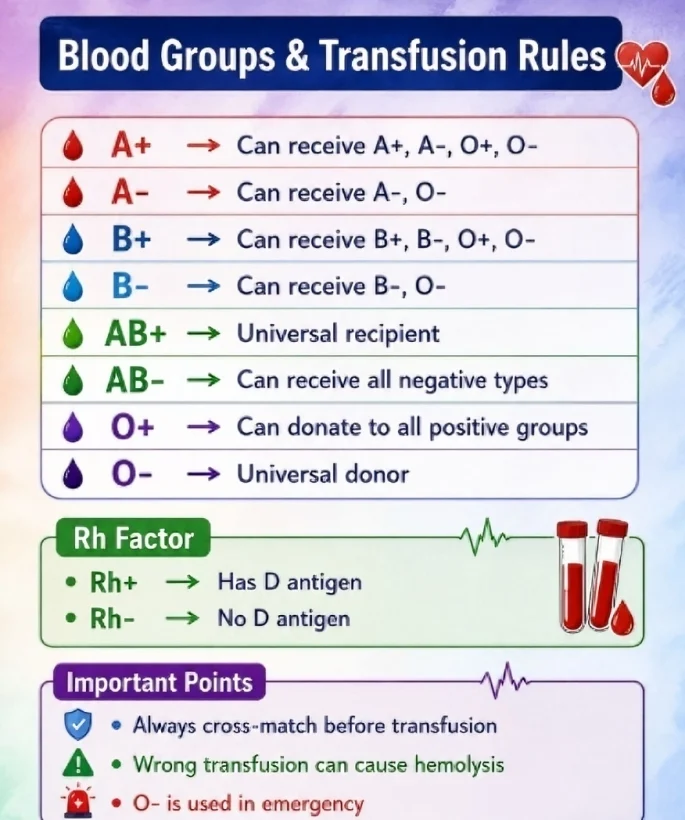
”Blood Groups and Transfusion Compatibility.
Understanding ABO and Rh blood group systems is a fundamental part of safe clinical practice. Accurate blood grouping and compatibility testing are essential to prevent potentially life-threatening transfusion reactions.
- ABO System: Blood is classified as A, B, AB, or O based on the presence of A and/or B antigens on RBCs.
- Rh System: The presence of the D antigen determines whether a person is Rh-positive or Rh-negative.
- RBC Compatibility: O − RBCs are considered the universal donor for emergency RBC transfusion, while AB+ is the universal recipient. However, group-specific, crossmatched blood is preferred whenever possible.
- Pre-transfusion Testing: ABO/Rh typing, antibody screening, and crossmatching help ensure compatibility between donor blood and the recipient.
- Nursing Responsibility: Correct patient identification, verification of blood products, baseline vital signs, close monitoring during transfusion, and prompt recognition of transfusion reactions are critical for patient safety.
Common transfusion reactions may include fever, chills, rash, dyspnea, chest/back pain, hypotension, or hemoglobinuria. Any suspected reaction should be managed immediately according to institutional transfusion protocol.
Safe blood transfusion is a multidisciplinary responsibility — accurate identification, proper compatibility testing, and vigilant monitoring can save lives.”
Stay updated with Hemostasis Today.
-
Oct 19, 2026, 19:44Where You Live Should not Determine Whether You Receive Care – World Federation of Hemophilia
-
Oct 19, 2026, 19:42Belen Bianco: Prevention, Early Suspicion and an Interdisciplinary Approach Save Lives
-
Oct 19, 2026, 19:40Christina Chrysohoou: Catheter-Based LAAC vs OAC for Stroke Prevention in Atrial Fibrillation
-
Oct 19, 2026, 19:38Matthew Flick: A Two-Day Research Meeting on Fibrinogen, Hemostasis and Thrombosis
-
Oct 19, 2026, 19:37Hayat Saeed: Excited to Share Our Publication on the FGL1–Hepcidin Axis in Iron Homeostasis and Disease
-
Oct 19, 2026, 19:08IPAW 2026 Comes to a Close, but the Work Continues – PPTA
-
Oct 19, 2026, 17:44Paul Riley: Moderating a Webinar on Anticoagulation Monitoring
-
Oct 19, 2026, 16:36Christopher Pittman: Blood Clot Prevention Cannot End at Hospital Discharge
-
Oct 19, 2026, 16:13Javier M. Floren: When Immune Cells Move With Their Environment