


Nathan Connell: FDA Approves Rusfertide for Polycythemia Vera
Nathan Connell, Clinical Chief of Hematology at Brigham and Women’s Faulkner Hospital, shared a post on LinkedIn:
“On Friday, the FDA approved rusfertide, the first-in-class hepcidin mimetic for the treatment of erythrocytosis in adults with polycythemia vera (PV).
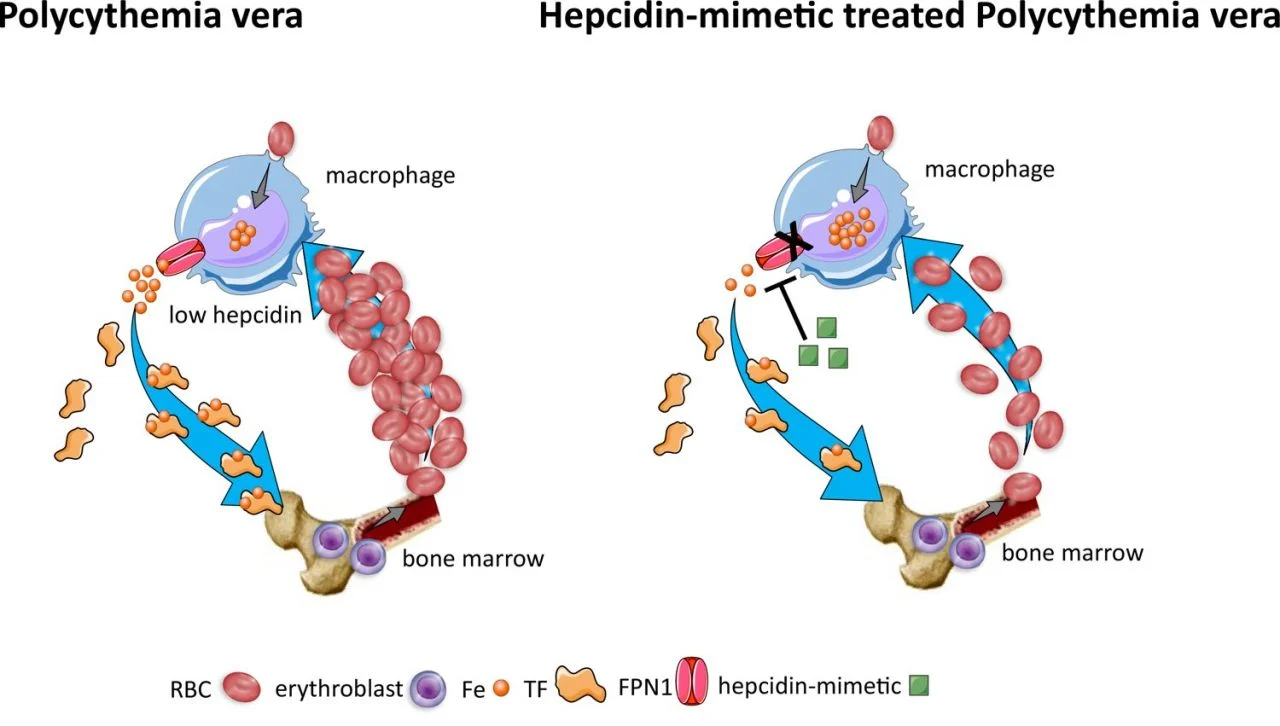
What makes this approval particularly interesting is the biology. Although erythrocytosis in PV is driven by constitutive JAK2 signaling, erythropoiesis remains dependent on iron.
Rusfertide mimics the activity of hepcidin, targeting ferroportin and restricting the movement of iron into the circulation.
The resulting reduction in iron availability for erythropoiesis provides a fundamentally different way to control hematocrit, one based on regulating iron trafficking rather than directly suppressing the malignant clone.
In the phase 3 VERIFY trial, which enrolled 293 patients requiring frequent phlebotomy despite standard-of-care therapy, 76.9% of patients receiving rusfertide avoided meeting criteria for phlebotomy during weeks 20–32, compared with 32.9% receiving placebo. Treatment also reduced phlebotomy burden and improved hematocrit control.
For patients living with PV and the cumulative burden of repeated phlebotomy, this creates an entirely new therapeutic axis.
It is also an elegant example of translational hematology: understanding the physiology that sustains a malignant phenotype can identify therapeutic vulnerabilities downstream of the initiating mutation.
Important questions remain, including how rusfertide will be integrated with cytoreductive therapies and, importantly, whether improved hematocrit control via this mechanism ultimately translates into reductions in thrombosis or changes in disease trajectory.
Those outcomes have not yet been established.
Nevertheless, this is a meaningful advance for patients with polycythemia vera and a fascinating validation of the hepcidin–ferroportin axis as a therapeutic target.”
Other posts featuring Nathan Connel on Hemostasis Today.
-
Oct 20, 2026, 01:43Oliver Weingärtner: Deprescribing of Lipid Lowering Drug after MI is Associated with Cardiovascular Events
-
Oct 19, 2026, 19:44Where You Live Should not Determine Whether You Receive Care – World Federation of Hemophilia
-
Oct 19, 2026, 19:42Belen Bianco: Prevention, Early Suspicion and an Interdisciplinary Approach Save Lives
-
Oct 19, 2026, 19:40Christina Chrysohoou: Catheter-Based LAAC vs OAC for Stroke Prevention in Atrial Fibrillation
-
Oct 19, 2026, 19:38Matthew Flick: A Two-Day Research Meeting on Fibrinogen, Hemostasis and Thrombosis
-
Oct 19, 2026, 19:37Hayat Saeed: Excited to Share Our Publication on the FGL1–Hepcidin Axis in Iron Homeostasis and Disease
-
Oct 19, 2026, 19:08IPAW 2026 Comes to a Close, but the Work Continues – PPTA
-
Oct 19, 2026, 17:44Paul Riley: Moderating a Webinar on Anticoagulation Monitoring
-
Oct 19, 2026, 16:36Christopher Pittman: Blood Clot Prevention Cannot End at Hospital Discharge