


Sumyea Kabir: Wet Hijama and Blood Donation Why Deferral Matters
Sumyea Kabir, Assistant Professor at Zainul haque Sikder Women’s Medical college and Hospital, shared a post on LinkedIn:
“Hijama and Blood donation: why does wet cupping require deferral?
Today, a potential blood donor came for donation and mentioned that he regularly undergoes wet Hijama (wet cupping). His last session had been only 5 days earlier.
The important point was not simply that ‘blood had been removed.’
The concern was that wet Hijama involves skin penetration and blood exposure, which has implications for donor and recipient safety.
What should we do?
According to the current JPAC Whole Blood and Component Donor Selection Guidelines, a donor should not donate if less than 4 months have passed after a treatment involving:
- Skin piercing
- Drawing blood specifically including wet cupping
- Certain invasive complementary procedures
Therefore, a donor who underwent wet Hijama 5 days ago should be deferred, rather than accepted simply because he feels completely well.
Why 4 months?
The deferral is primarily a blood-safety precaution.
Wet cupping may involve:
- Blood exposure
- Potential exposure to blood-borne infections if infection-control practices are inadequate
- Multiple skin punctures/incisions
- Uncertainty regarding the sterility and infection-control standards of the setting where the procedure was performed
The JPAC guidance explains that the waiting period helps allow time for a newly acquired infection to become detectable by the screening methods used by blood services.
An important distinction
Hijama may be practiced as a traditional or complementary therapy.
But blood removed during wet Hijama is not a blood donation.
A blood donation is collected under controlled conditions from an eligible donor, followed by appropriate testing, processing and quality assurance before the components can be used for another patient.
For transfusion services, donor selection is not about judging the donor’s choice of therapy.
It is about asking:
‘Is it safe for this person to donate today?’
Sometimes the safest answer is:
‘Not today please come back after the appropriate deferral period.’
That is not rejecting the donor.
That is protecting both the donor and the recipient.
Reference:
Joint Professional Advisory Committee (JPAC), Whole Blood and Components Donor Selection Guidelines Complementary and Alternative Medicine (CAM), WB DSG Edition 203, Release 81, updated 11 August 2026.
The guideline specifically includes wet cupping and specifies a 4 month deferral after treatments involving skin piercing or drawing blood.”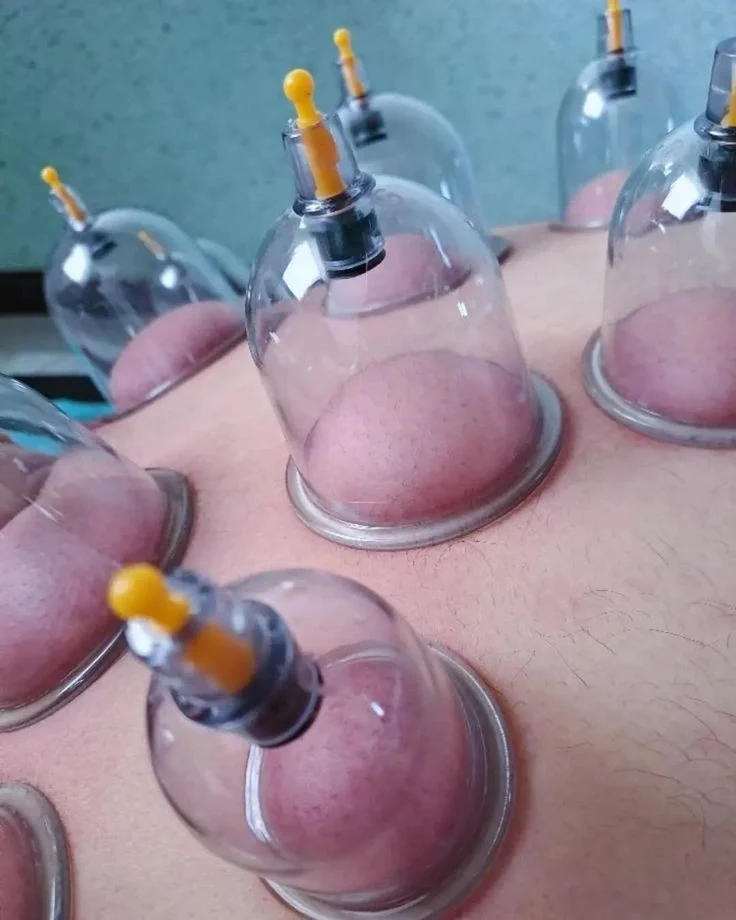
Stay updated with Hemostasis Today.
-
Sep 10, 2026, 16:53Flora Peyvandi: A New Approach to Coagulation with Bispecific Antibodies
-
Sep 10, 2026, 16:52Francisco Chacón-Lozsán: Perhaps We Are Treating ‘Sepsis’ When We Should Be Treating an Immune Phenotype
-
Sep 10, 2026, 16:46Aswin K Mohan: HLA Beyond Histocompatibility – Redefining Immune Recognition in Modern Medicine
-
Sep 10, 2026, 16:40Satyam Arora: Pediatric Apheresis – When Every Millilitre Matters
-
Sep 10, 2026, 16:39Marco Moscarelli: When CT Reveals Thrombosis After TAVI
-
Sep 10, 2026, 16:23Antonio Paul: When a Low Platelet Count Does Not Mean Weak Clotting
-
Sep 10, 2026, 16:12Balancing Thrombosis and Bleeding in Antiphospholipid Syndrome
-
Sep 10, 2026, 16:07Miguel Teran: Why ROTEM Will Redefine Major Bleeding Management
-
Sep 10, 2026, 16:04Isaac Okello: Where Skyline Meets Savannah – Quiet Moments at GASCDO in Nairobi