

Alexsander Santiago: When Was Your ECMO Anticoagulation Target Last Challenged?
Alexsander Santiago, Health Education Coordinator at Terapia Intensiva em Foco, shared a post on LinkedIn:
”When was your ECMO anticoagulation target last challenged?
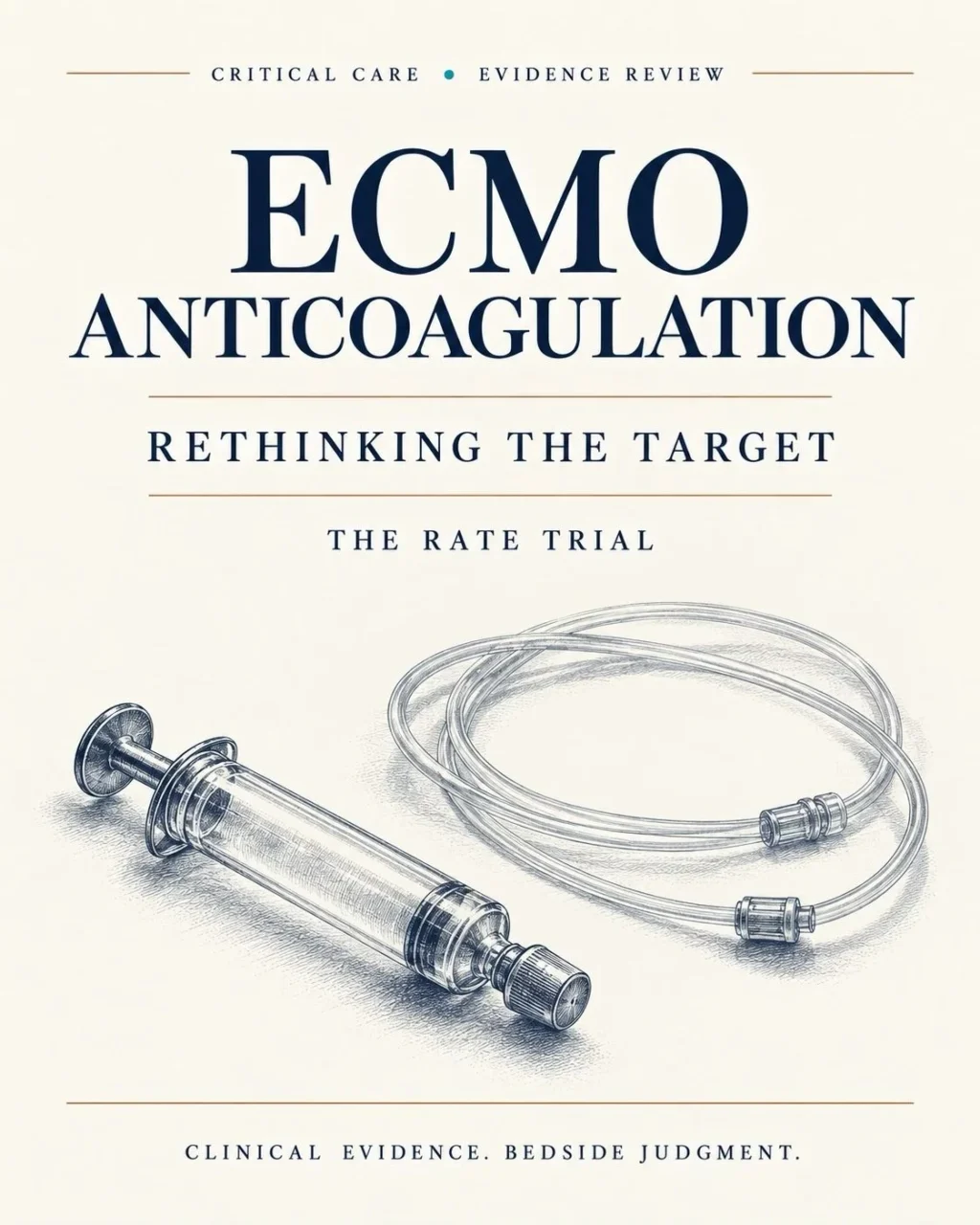
RATE gives that question a randomized evidence base.
The Lancet trial enrolled 330 adults across seven Dutch ICUs; 320 were analyzed. It included VV and VA ECMO, excluding patients with a separate vital indication for full-dose anticoagulation.
Three strategies:
- Standard unfractionated heparin: aPTT two to two and a half times the baseline.
- Lower-target unfractionated heparin: aPTT one and a half to two times the baseline.
- Therapeutic subcutaneous low-molecular-weight heparin.
The primary composite combined severe bleeding and severe thromboembolism during ECMO with mortality at six months.
It occurred in 81 percent, 72 percent and 75 percent, respectively.
Both alternatives met noninferiority within the prespecified 7.5-percentage-point margin.
Bleeding was numerically lower; a statistically significant reduction was not demonstrated. RATE, The Lancet, 2026.
My reading: this supports a serious review of anticoagulation defaults, with careful attention to who the evidence applies to.
Noninferiority for a composite does not establish equivalent protection against every component.
Therapeutic LMWH also represents a distinct strategy, making ‘less heparin’ an incomplete description of the trial.
For an ECMO programme, I would bring four questions to the protocol review:
- Which patients match the trial population?
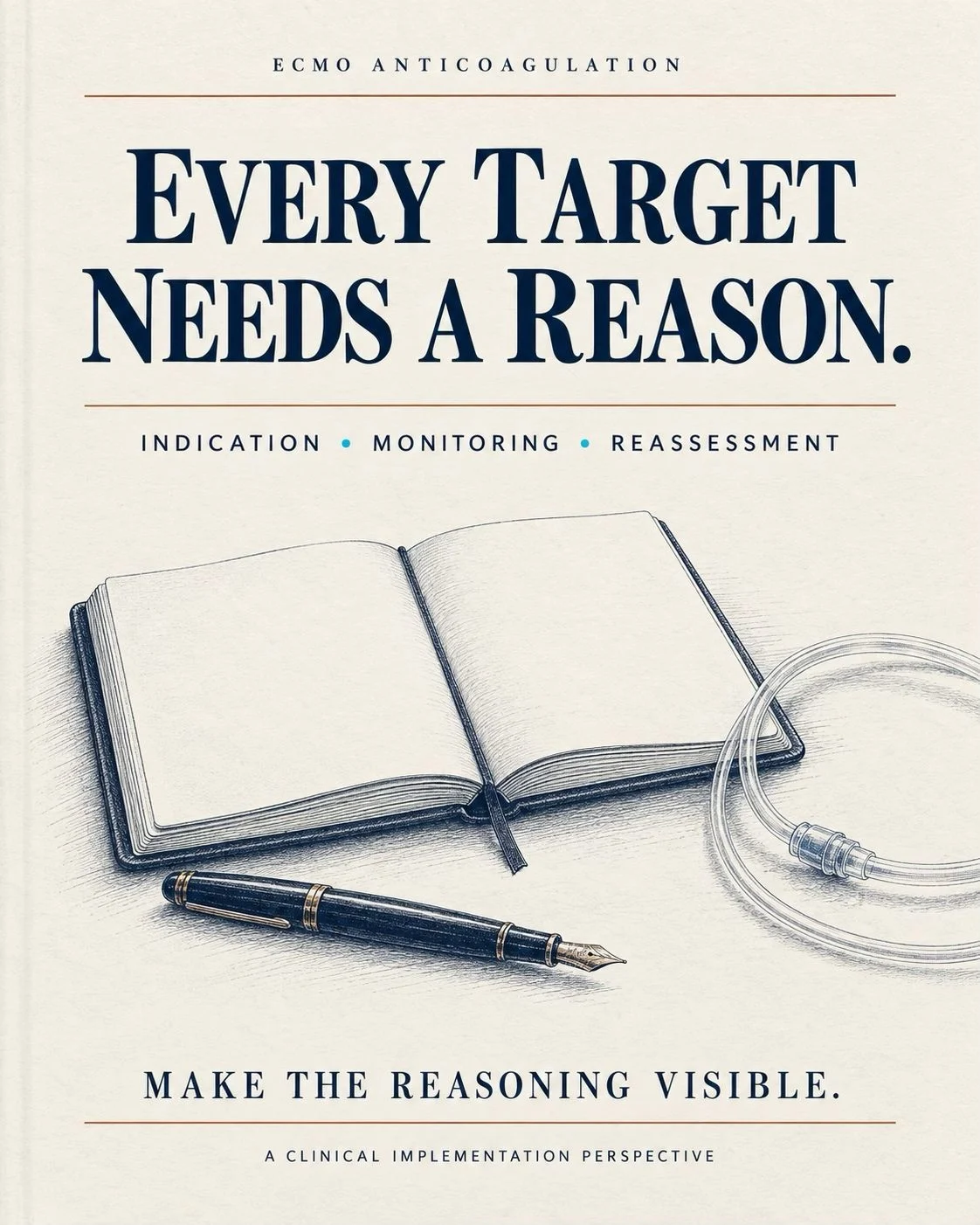
- What justifies the target for this patient today?
- Which findings should trigger reassessment?
- How will we review bleeding, thrombosis and circuit exchanges separately?
A revised target needs explicit exceptions, shared bedside judgment and an audit of what happens after implementation.
The useful institutional change would be to make the reasoning behind each target visible, with reassessment built into routine care.
What would RATE change first in your unit: the default target, patient selection or monitoring?”
Stay updated with Hemostasis Today.
-
Sep 10, 2026, 16:53Flora Peyvandi: A New Approach to Coagulation with Bispecific Antibodies
-
Sep 10, 2026, 16:52Francisco Chacón-Lozsán: Perhaps We Are Treating ‘Sepsis’ When We Should Be Treating an Immune Phenotype
-
Sep 10, 2026, 16:46Aswin K Mohan: HLA Beyond Histocompatibility – Redefining Immune Recognition in Modern Medicine
-
Sep 10, 2026, 16:40Satyam Arora: Pediatric Apheresis – When Every Millilitre Matters
-
Sep 10, 2026, 16:39Marco Moscarelli: When CT Reveals Thrombosis After TAVI
-
Sep 10, 2026, 16:23Antonio Paul: When a Low Platelet Count Does Not Mean Weak Clotting
-
Sep 10, 2026, 16:12Balancing Thrombosis and Bleeding in Antiphospholipid Syndrome
-
Sep 10, 2026, 16:07Miguel Teran: Why ROTEM Will Redefine Major Bleeding Management
-
Sep 10, 2026, 16:04Isaac Okello: Where Skyline Meets Savannah – Quiet Moments at GASCDO in Nairobi