


Ocima Richard Draza: A Guide to Stroke Types and Complications
Ocima Richard Draza, Nurse at Canadian Specialist Hospital, shared a post on LinkedIn:
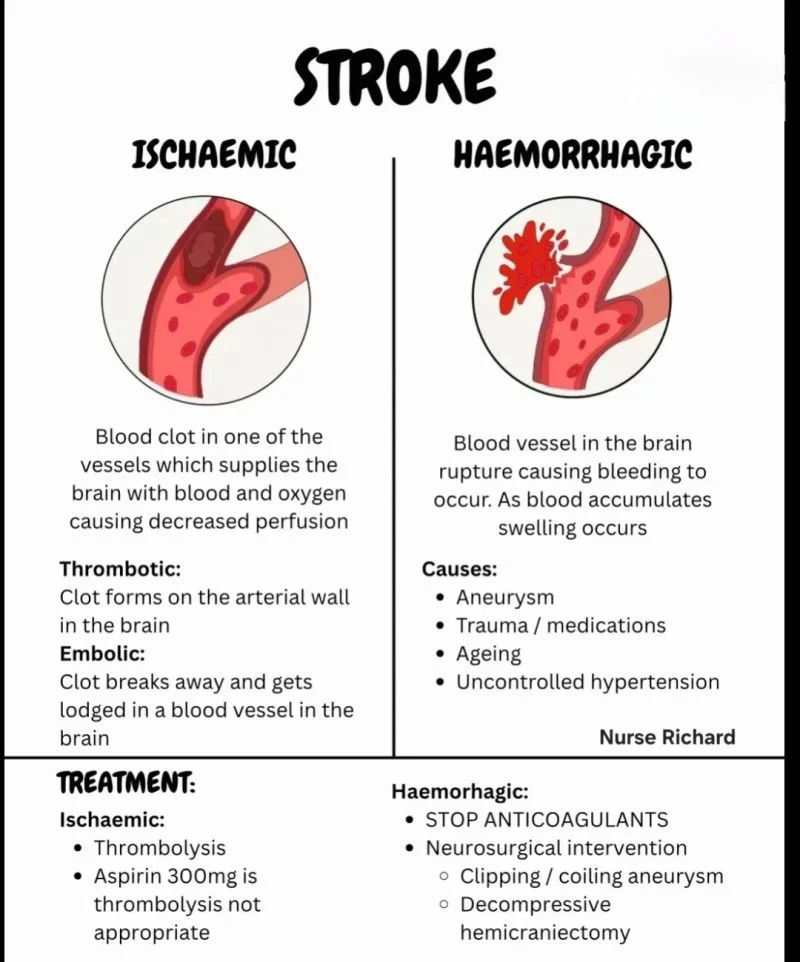
“Stroke
What is a stroke?
A stroke is caused by disruption of blood flow to the brain, leading to cell death as a result of a lack of oxygen and glucose
There are two major types:
1. Ischaemic stroke
A thrombus or embolus blocks a cerebra artery, this leads to the brain tissue becoming ischaemic, triggering the ischaemic cascade: cell membrane failure, calcium influx, inflammation, and neuronal death.
2. Haemorrhaaic stroke
A cerebral blood vessel ruptures, leading to bleeding into the brain tissue or spaces arouno the brain, this can cause raised intracranial pressure, reduced perfusion, risk of herniation
Types:
- Intracerebral haemorrhage (ICH): bleeding into brain parenchyma
- Subarachnoid haemorrhage (SAH): bleeding into subarachnoid space, often occuring as a result of aneurysm rupture
Complications to monitor
- Cerebral oedema: when brain cells are starvec of oxygen, they lose their ability to regulate ior & fluid movement, this leads to water shifting into brain cells causing them to swell
- Seizures: Damage can lead to irritation of the brain tissue, making seizures more likely,especially in large bleeds
- Aspiration pneumonia: upto 50% of patients can experience dysphagia following stroke increasing the risk of aspiration
- Venous thromboembolism (DVT/PE): due ta venous stasis as a result of immobility
- Urinary retention or incontinence.”
Stay updated with Hemostasis Today.
-
Sep 12, 2026, 16:28Abdulrahman Al Raizah: Mitapivat for Transfusion-Dependent Thalassemia – The ENERGIZE-T Phase 3 Trial
-
Sep 12, 2026, 16:14Pierre F. Saboret: IPF and Long Term Prognosis Thrombosis and Haemostasis
-
Sep 12, 2026, 15:50Dalip Kumar: ED to Mental Health Unit Transfer Completeness Following Intentional Overdose
-
Sep 12, 2026, 15:15Ali Saad Al-shammari: LAAC vs Medical Therapy for Stroke Prevention in AF
-
Sep 12, 2026, 14:33A New Approach to Transfusion Support – ISBT
-
Sep 12, 2026, 14:32Aref Bin Abdulhak: Diminishing Benefit of IVUS-Guided PCI Over Time – A 23-RCT Meta-Analysis
-
Sep 12, 2026, 14:27Advice to My Younger Self Living With VWD – Haemophilia Foundation Australia
-
Sep 12, 2026, 14:18Arun V J: A Love Letter to Transfusion Medicine Through Greek Mythology
-
Sep 12, 2026, 14:09Mick Thompson: 2026 AHA/ACC Pulmonary Embolism Guidelines and the Evolving Role of Mechanical Thrombectomy