

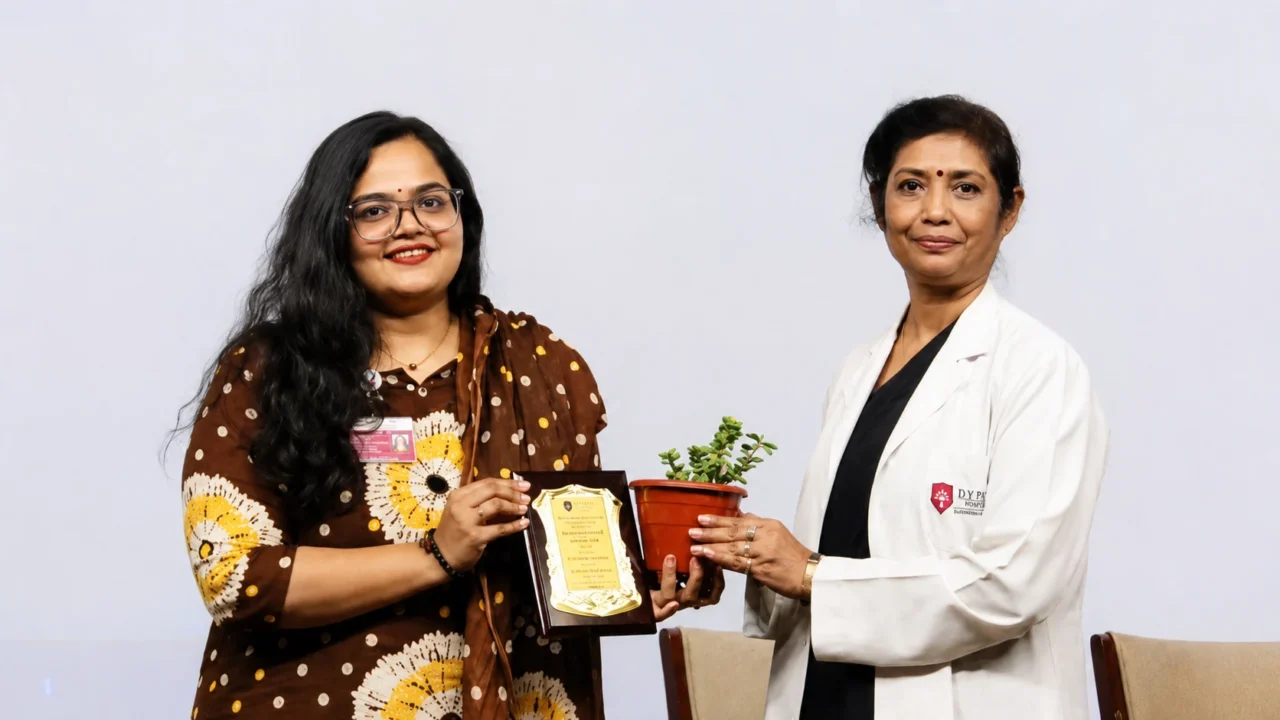
Ruchi Punamia: Beyond the Blood Bank and The Clinical Impact of Apheresis
Ruchi Punamia, Assistant Professor at D Y Patil Hospital, Author and Founder of The Blood Blog, shared a post on LinkedIn:
“Apheresis Awareness Day 2026
What does a Transfusion Medicine consultant do?
If you ask this question, the usual answer is:
‘They manage the blood bank.’
And yes – blood banking is the foundation of our specialty.
But sometimes, Transfusion Medicine takes us far beyond the blood bank.
Into the ICU.
To the bedside.
Beside an apheresis machine.
And right into the heart of clinical decision-making!!
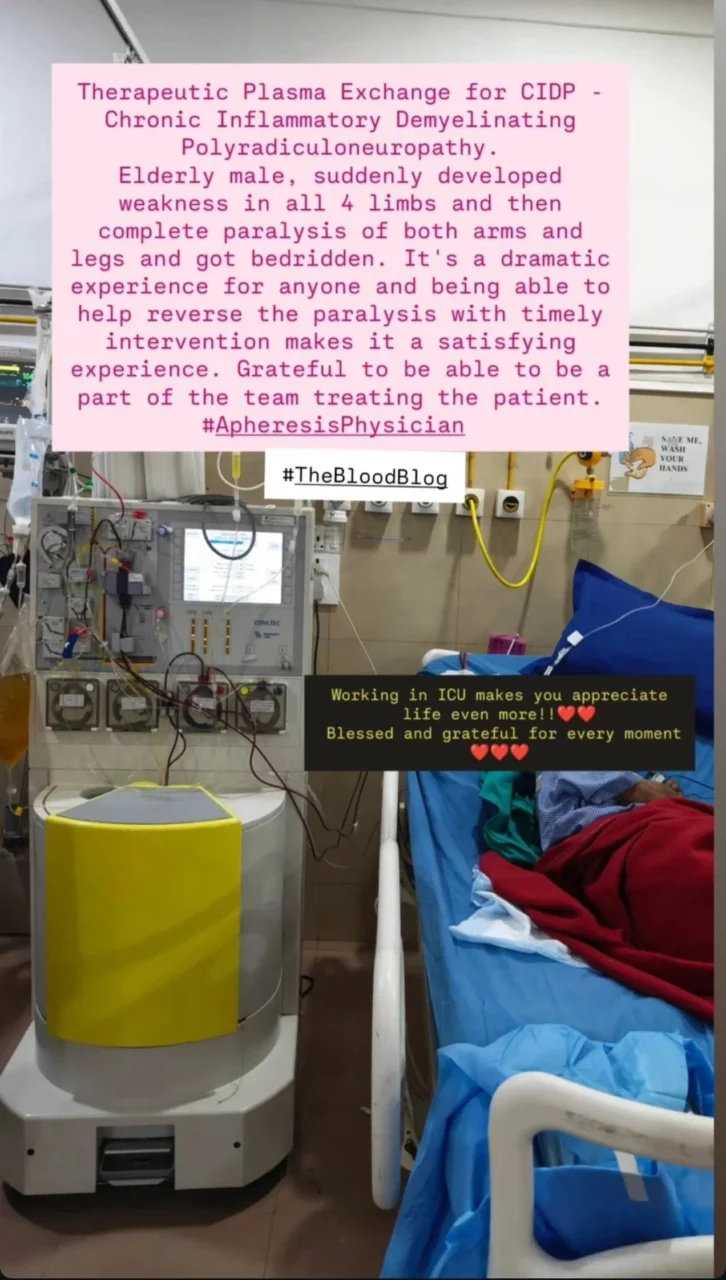
Today, on Apheresis Awareness Day, I am reminded of a clinical experience from our apheresis unit that stayed with me.
The case
An elderly gentleman presented with dramatic neurological deterioration, with severe weakness involving all four limbs and profound loss of power and muscle tone.
From being functional, he became bedridden and almost completely dependent.
For him and his family, it was understandably frightening.
He was diagnosed with chronic inflammatory demyelinating polyradiculoneuropathy (CIDP) and, as part of his multidisciplinary management, Therapeutic Plasma Exchange (TPE/PLEX) was undertaken.
During PLEX, plasma was removed and replaced with an appropriate replacement fluid, while the cellular components were returned to the patient.
But PLEX is much more than connecting a patient to a machine!
The machine performs the separation.
The apheresis team decides why, when and how that separation should be used.
And that distinction matters.
The outcome
Following TPE and ongoing multidisciplinary management, this patient showed remarkable clinical improvement, with substantial recovery of power and improvement in muscle tone.
Watching movement return to a patient who had become profoundly weak is an experience that stays with you.
Because behind every procedure sheet, every exchanged volume and every number on the monitor is a person hoping to get back to their life.
The realisation
This is what ‘Beyond the Blood Bank’ means to me.
It is truly multidisciplinary medicine.
And the patient remains at the centre.
Go to the bedside.
Talk to treating physicias.
Understand their patients.
Discover where your expertise can change a clinical decision.
Because there is a profound difference between providing a laboratory service and providing clinical care.
On Apheresis Awareness Day, I am grateful for the science.
Grateful for the technology.
Grateful for the multidisciplinary team.
And most importantly, 𝐠𝐫𝐚𝐭𝐞𝐟𝐮𝐥 𝐟𝐨𝐫 𝐭𝐡𝐞 𝐩𝐫𝐢𝐯𝐢𝐥𝐞𝐠𝐞 𝐨𝐟 𝐜𝐨𝐧𝐭𝐫𝐢𝐛𝐮𝐭𝐢𝐧𝐠 𝐭𝐨 𝐚 𝐩𝐚𝐭𝐢𝐞𝐧𝐭’𝐬 𝐣𝐨𝐮𝐫𝐧𝐞𝐲 𝐭𝐨𝐰𝐚𝐫𝐝𝐬 𝐫𝐞𝐜𝐨𝐯𝐞𝐫𝐲.
Happy Apheresis Awareness Day 2026 to all the teams advancing this remarkable field.”
Stay updated with Hemostasis Today.
-
Sep 16, 2026, 16:06Katrina Louise Manalaysay: In Your 20s, You Might be Given the Opportunity to Donate Blood for the First Time
-
Sep 16, 2026, 15:45Matthew Hazell: A Brilliant Explanation of Phenotype vs Genotype Using a LEGO House
-
Sep 16, 2026, 15:23Ahmad Al-Ramahi: Presenting the Military Pharmacists Blood Training Course at the FIP World Congress
-
Sep 16, 2026, 15:21HIT Reimagined: Can 12-Lipoxygenase Inhibition Stop Immune Thrombosis?
-
Sep 16, 2026, 14:06Kalyan Roy: Celebrating Apheresis, Advancing Care, Saving Lives
-
Sep 16, 2026, 13:38Andrew Zapfel: Advancing Sickle Cell Disease Care and Research
-
Sep 16, 2026, 13:30Thirunavukkarasu Angappan: Why Plasma-Derived Factor VIII Still Matters for Inhibitor Patients
-
Sep 16, 2026, 13:22Matthew Hazell: New BSH Guidance for Fetal, Neonatal and Paediatric Transfusion
-
Sep 16, 2026, 13:21Sophia Delicou: Mediterranean Network for Haemoglobinopathies and Regional Collaboration