


Thirunavukkarasu Angappan: Why Plasma-Derived Factor VIII Still Matters for Inhibitor Patients
Thirunavukkarasu Angappan, Vice President – Operations and Manufacturing at PopVax, shared a post on LinkedIn:
“Factor VIII Has a Bodyguard. For Some Hemophilia A Patients, It’s the Only One That Works.
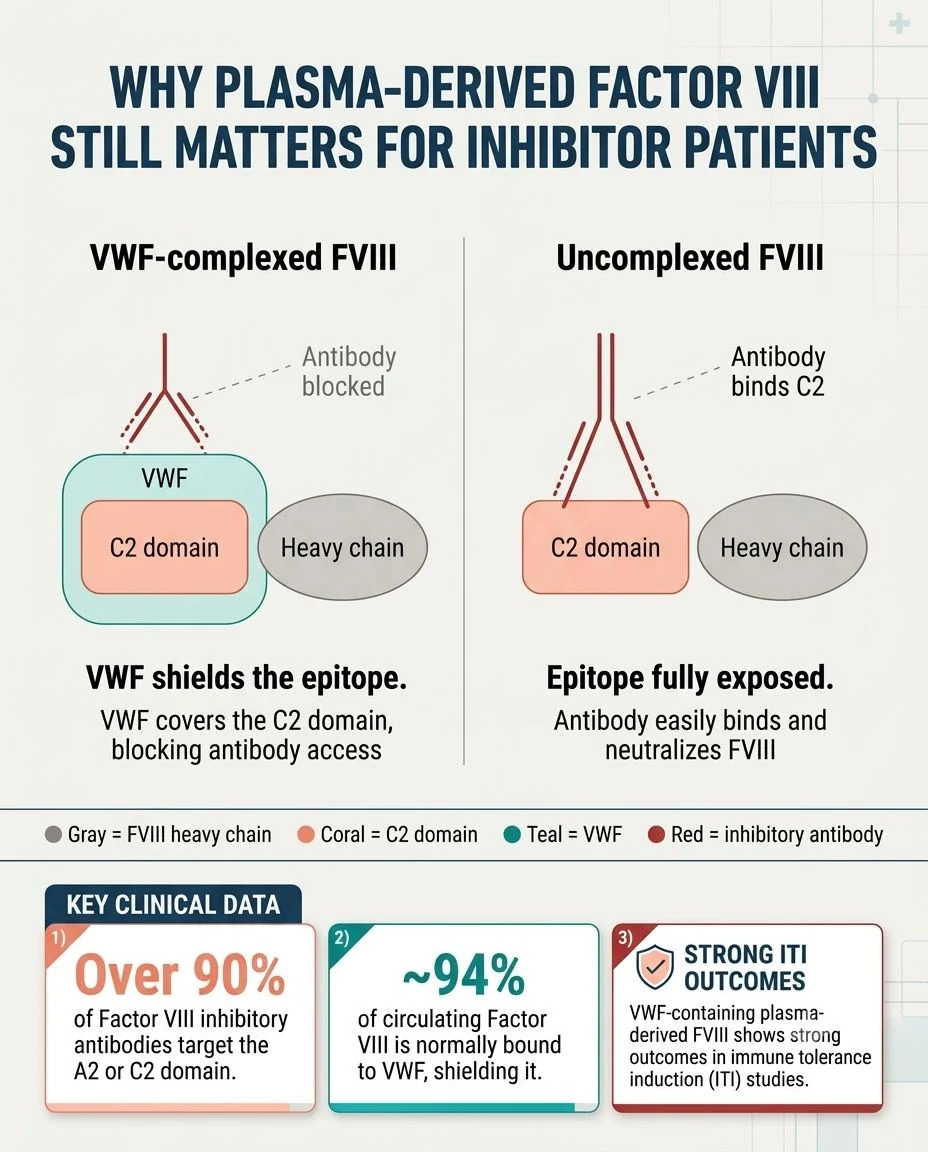
Most Factor VIII inhibitor antibodies don’t attack the whole protein. They attack one specific spot — and that spot happens to be where von Willebrand factor (VWF) sits.
Over 90% of inhibitory antibodies to Factor VIII bind to just two regions: the A2 domain or the C2 domain, disrupting the specific functions tied to each.
- Here’s the mechanical detail that matters clinically: under normal conditions, about 94% of circulating Factor VIII is bound to VWF, and VWF physically covers part of the Factor VIII light chain — including much of that same C2 domain where inhibitory antibodies attack.
- Multiple structural studies confirm this isn’t incidental — the same amino acid residues on Factor VIII’s C2 domain that bind VWF also overlap with where inhibitory antibodies bind and where Factor VIII binds to platelet phospholipid surfaces. When VWF occupies that site first, it can physically block or reduce the antibody’s ability to attach.
- This is why immune tolerance induction (ITI) outcomes differ by product type in a way that isn’t just statistical noise. As per Kreuz’s clinical review, VWF plays a documented role in the success of immune tolerance induction specifically because of this epitope-shielding effect, not simply because plasma-derived and recombinant products are chemically different.
- This mechanism has real clinical stakes. As per Oldenburg et al.’s multicentre international study, VWF-containing plasma-derived Factor VIII concentrate showed strong outcomes in both primary and rescue immune tolerance induction across a large, international patient cohort.
- The reason plasma-derived Factor VIII still matters for inhibitor patients isn’t habit, and it isn’t just because the studies say so — it’s a specific, structural interaction at the C2 domain that recombinant protein alone doesn’t replicate the same way.
If VWF’s epitope-shielding effect is central to why immune tolerance induction succeeds, should recombinant Factor VIII manufacturers be exploring VWF-fusion or VWF-co-formulated products specifically for inhibitor patients, rather than leaving that mechanism to plasma-derived concentrates alone?”
Stay updated with Hemostasis Today.
-
Sep 16, 2026, 16:06Katrina Louise Manalaysay: In Your 20s, You Might be Given the Opportunity to Donate Blood for the First Time
-
Sep 16, 2026, 15:45Matthew Hazell: A Brilliant Explanation of Phenotype vs Genotype Using a LEGO House
-
Sep 16, 2026, 15:23Ahmad Al-Ramahi: Presenting the Military Pharmacists Blood Training Course at the FIP World Congress
-
Sep 16, 2026, 15:21HIT Reimagined: Can 12-Lipoxygenase Inhibition Stop Immune Thrombosis?
-
Sep 16, 2026, 14:42Ruchi Punamia: Beyond the Blood Bank and The Clinical Impact of Apheresis
-
Sep 16, 2026, 14:06Kalyan Roy: Celebrating Apheresis, Advancing Care, Saving Lives
-
Sep 16, 2026, 13:38Andrew Zapfel: Advancing Sickle Cell Disease Care and Research
-
Sep 16, 2026, 13:22Matthew Hazell: New BSH Guidance for Fetal, Neonatal and Paediatric Transfusion
-
Sep 16, 2026, 13:21Sophia Delicou: Mediterranean Network for Haemoglobinopathies and Regional Collaboration