

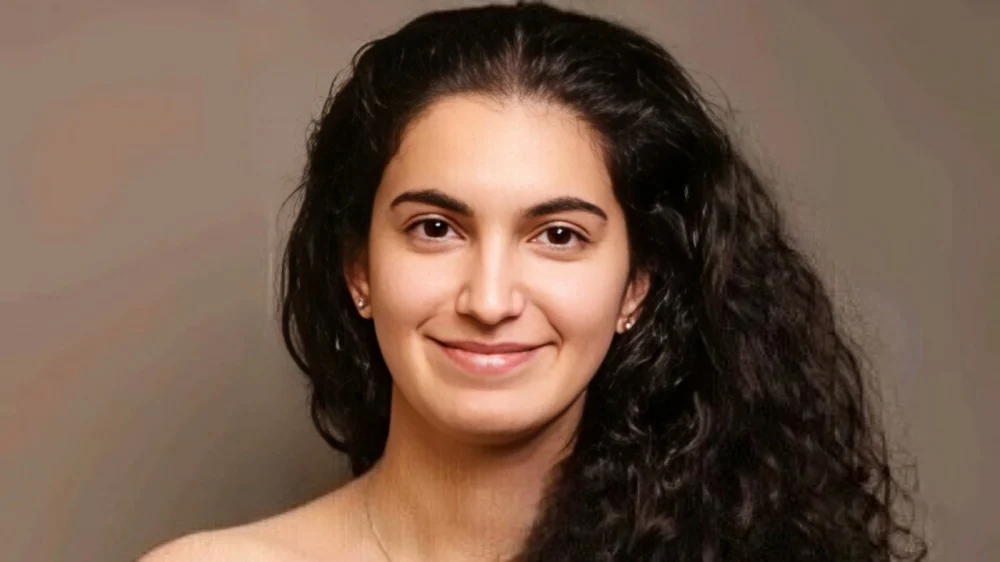
Fatma Al Arbawi: Studying Blood Clot Mechanics to Understand Aspirin Resistance and Thrombosis
Fatma Al Arbawi, Researcher at Dartmouth Hitchcock Medical Center and Clinics, Research Assistant at Geisel School of Medicine at Dartmouth, shared a post on LinkedIn:
“Why does aspirin fail for patients dealing with consistent blood clotting?
And what can a blood clot’s physical behavior under flow tell us about the disease driving it?
These two questions drove my work this spring and summer.
I spent the past six months at the Wyss Institute at Harvard University in the Ingber Lab running assays, building image analysis software, and working with microfluidics to study blood clots.
Months 1-3: Image analysis
I analyzed blood samples from patients with myeloproliferative neoplasm (MPN), a condition associated with greater clotting risk and, in many patients, resistance to aspirin. The goal was to give the lab a much clearer picture of clot mechanics to work from as they investigate the aspirin resistance problem in this patient population.
I built software that extracts several mechanobiological parameters from confocal and fluorescence images of clots, focusing on structural features to understand more about the pathways through which they formed.
Months 4-6: Microfluidic chip
I designed a chip to measure how individual blood clots deform under flow, using samples from mesothelioma patients, who are at higher risk for deep vein thrombosis (DVT). Reaching the correct geometry and shear rates or flow conditions took several design iterations.
The chip will be used for patient testing, where we aim to answer whether the deformation rate of clots under hydrodynamic shear can indicate which mechanical phenotypes are worth focusing on in the search for better DVT biomarkers.
These two tools were built on the idea that a clot’s mechanical signature can lead us to biomarkers for their formation.
Thank you to Navaneeth Krishna Rajeeva Pandian, Kostyantyn Shcherbina, and Abidemi Junaid for training me on the experimental procedures, the amazing mentorship, and for feedback on my designs;
Adama Marie Sesay for all of the feedback and support while creating these tools;
Tom Ferrante and Susan Marquez for the advising on the most optimal equipment, assays, and techniques to incorporate;
And Donald Ingber, for the invaluable feedback and mentorship throughout the iterations of the projects.
Thank you also to Dartmouth Center for Career Design for funding my fellowship at the Wyss and making this opportunity possible!
Next step: I’m entering my senior year at Dartmouth College this fall and applying to masters programs to go deeper into mechanobiology.”
Stay updated with Hemostasis Today.
-
Sep 30, 2026, 22:28Recent Mechanical Risk Factors and Young-Onset Cryptogenic Ischemic Stroke – American Heart Association International
-
Sep 30, 2026, 22:22Expert Consensus on Inferior Vena Cava Thrombosis – Thrombosis and Haemostasis Journal
-
Sep 30, 2026, 22:21Markus Abeln: How Platelets, Coagulation, Glycosylation, and Complement Regulate Placental Blood Flow
-
Sep 30, 2026, 22:17Sudhir Kumar: Stroke is a Medical Emergency – and Every Minute Matters
-
Sep 30, 2026, 22:15Luisa Medeiros Visentini: Our Research on Cognitive Impairment After CVT Cited in the International Journal of Stroke
-
Sep 30, 2026, 21:50Jagat Narula: Connecting Cardiovascular Health and Sickle Cell Disease on World Heart Day 2026
-
Sep 30, 2026, 21:38John Kastelein: Exploring the Biology of Cardiovascular Disease at BioCentury Grand Rounds Europe
-
Sep 30, 2026, 21:36Mark Murphy: Irish Heart Foundation Meets With Senator Teresa Costello on World Heart Day
-
Sep 30, 2026, 21:34Sadashiva Pai: How Pancreatic Cancer Uses Blood Clotting to Evade Immune Attack