

Mira Kassouf: Reactivating An Embryonic Gene To Treat α-Thalassemia
Mira Kassouf, Principal Investigator at University of Oxford, shared a post on LinkedIn about a recent article she and her colleagues co-authored, published in Nature Genetics, adding:
”Very excited to see our work now published in Nature Genetics!
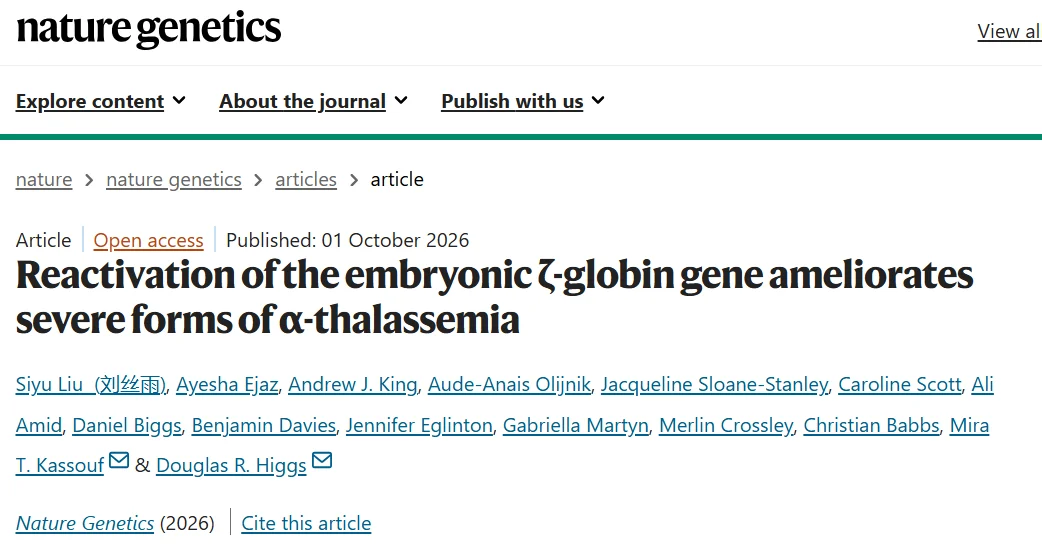
‘Reactivation of the embryonic ζ-globin gene ameliorates severe forms of α-thalassemia’
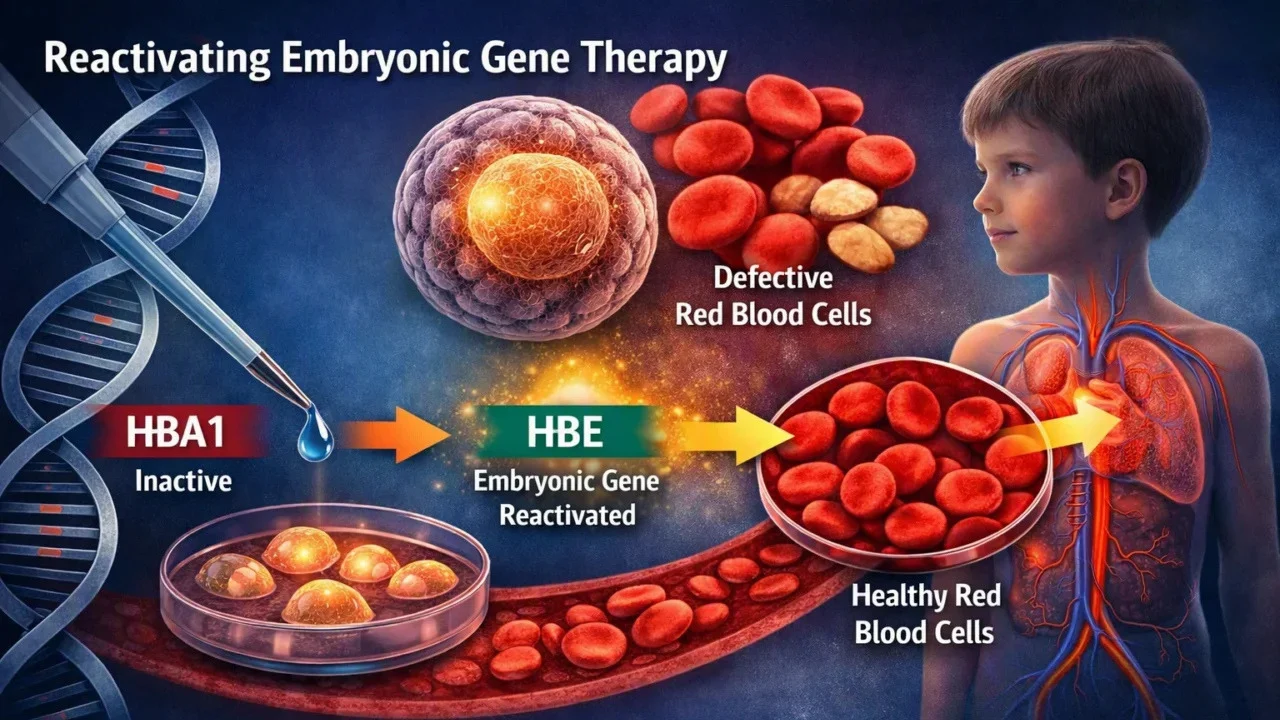
This work started with a fundamental question: how is an embryonic gene switched off during development, and could we switch it back on?
Using the α-globin locus as our model, we identified key regulatory DNA elements that silence the embryonic ζ-globin (HBZ) gene. By precisely editing these elements, we were able to reactivate ζ-globin in mouse models and, importantly, in primary erythroid cells from patients with severe α-thalassaemia.
The work provides proof-of-principle for an exciting therapeutic concept: rather than replacing a missing or defective adult gene, could we unlock a functional gene that our genome already contains but has switched off during development?
This has been a fantastic team effort, led by Siyu Liu, and made possible by the contributions of many colleagues and collaborators. I am particularly grateful to the patients and families who contributed samples to this research.
The next phase of this work will focus on advancing the approach towards a regulatory-ready stage, addressing the efficacy, safety and delivery requirements needed to support future clinical translation and, ultimately, its development as a therapy for severe α-thalassaemia.
A huge congratulations and thank you to everyone involved!”
Title: Reactivation of the embryonic ζ-globin gene ameliorates severe forms of α-thalassemia
Authors: Siyu Liu, Ayesha Ejaz, Andrew J. King, Aude-Anais Olijnik, Jacqueline Sloane-Stanley, Caroline Scott, Ali Amid, Daniel Biggs, Benjamin Davies, Jennifer Eglinton, Gabriella Martyn, Merlin Crossley, Christian Babbs, Mira T. Kassouf, Douglas R. Higgs
Stay updated on all scientific advances with Hemostasis Today.
-
Nov 20, 2026, 17:27Adam Bryant: Great Science, Valuable Connections and a Wonderful Haematology Community at Blood 2026
-
Nov 20, 2026, 17:25Gurpreet Kaurr: Scientific Discussions, New Perspectives and Inspiration at HAEMATOCON 2026
-
Nov 20, 2026, 17:24Bispecific FVIIIa-Mimetic Antibodies in Haemophilia A – CRH French Reference Center for Hemophilia Lyon
-
Nov 20, 2026, 17:23Khalid Rehman: Psychosocial Burden Among Caregivers of Patients with Beta-Thalassemia Major in Pakistan
-
Nov 20, 2026, 17:20Dhinesh Selvaraju: Caplacizumab Becomes the First FDA-Approved Treatment for Pediatric aTTP
-
Nov 20, 2026, 17:19Paris Margaritis: Presenting Preclinical Data on GENV-HEM at the WFH Workshop
-
Nov 20, 2026, 17:18WFH Opens Public Comment on Draft Guidelines for Hemostatic Agents and Prophylaxis
-
Nov 20, 2026, 17:18Ketan Asawale: Consensus on the Management of Cancer-Associated Thrombosis in India
-
Nov 20, 2026, 17:16Ajay Samkaria: The Evolution of Hemostasis Diagnostics with the ACL TOP 70 Series