

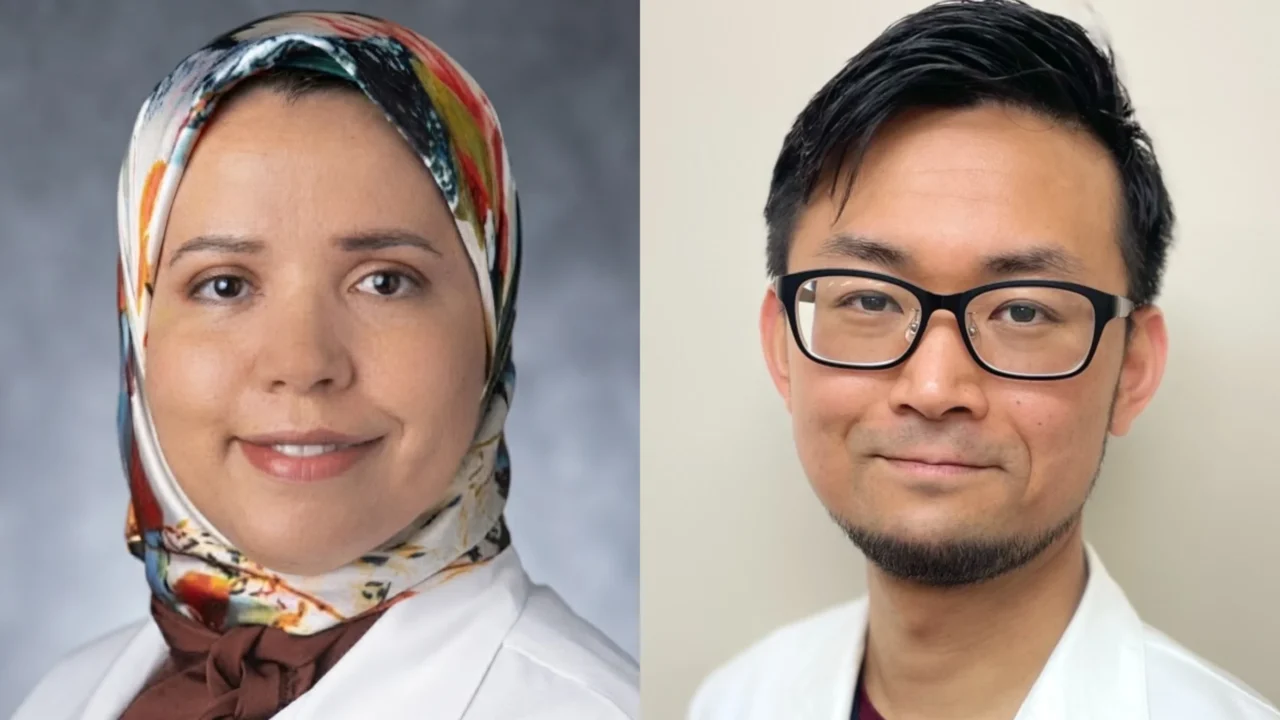
Khaoula Mazouzi: The Potential of Haemoglobin Vesicles as an Oxygen Carrier
Khaoula Mazouzi, Editorial Fellowship at Journal of Immunotherapy and Precision Oncology, shared a post on LinkedIn about a recent article by Kazuya Sakai et. al, published in BMJ Open, adding:
“What if blood could be manufactured in a lab!
Some scientific advances make you stop and rethink what could become possible in medicine.
This is one of them.
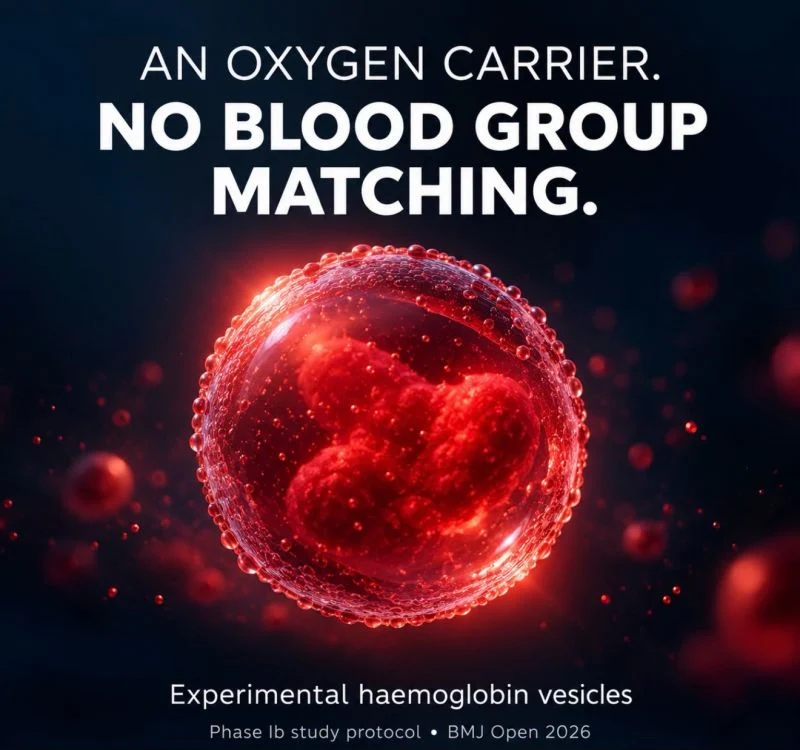
Researchers in Japan are developing haemoglobin vesicles: purified human haemoglobin encapsulated within liposomes, designed to carry oxygen as an alternative to red blood cell transfusion in emergencies.
The possibility of an oxygen carrier that does not require blood group matching is extraordinary, especially where compatible blood cannot reach a patient in time.
The 2026 BMJ Open publication describes a phase Ib protocol evaluating safety and pharmacokinetics at increasing doses in healthy volunteers.
It is an important step, with clinical efficacy still to be established.
But imagine the potential: severe haemorrhage, remote communities, disaster settings, and hospitals facing blood shortages.
Having practiced oncology in a resource-constrained setting, I find the question of access particularly powerful.
An innovation’s greatest value may be in the lives it could save where options are currently limited.
My first reaction was: this is mind-blowing.
If this technology ultimately delivers safe, effective, widely accessible oxygen support, I believe it could represent a Nobel Prize worthy achievement.
Deep respect to the researchers Kazuya Sakai and the team from Nara Medical University l whose persistence is bringing this possibility closer to patients.”
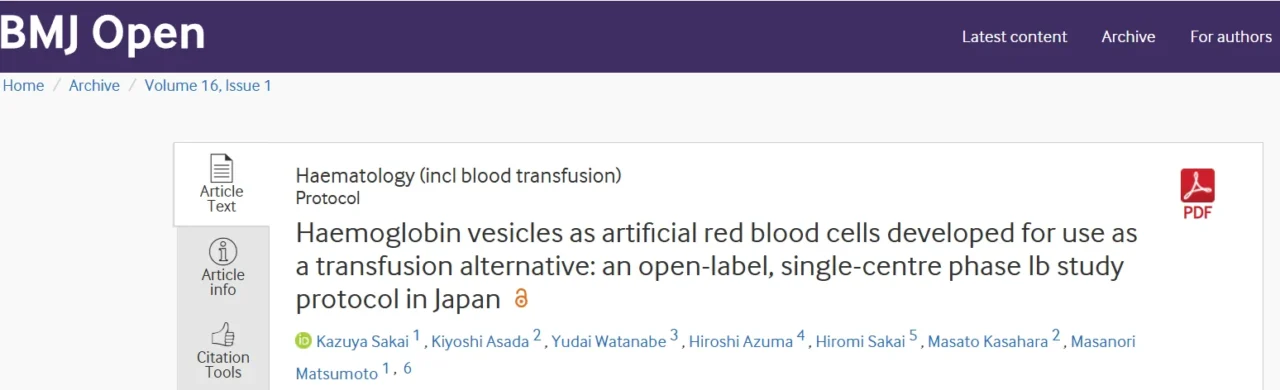
Title: Haemoglobin vesicles as artificial red blood cells developed for use as a transfusion alternative: an open-label, single-centre phase Ib study protocol in Japan
Authors: Kazuya Sakai, Kiyoshi Asada, Yudai Watanabe, Hiroshi Azuma, Hiromi Sakai, Masato Kasahara, Masanori Matsumoto
Stay updated on all scientific advances with Hemostasis Today.
-
Oct 5, 2026, 15:31Irma Bagdoniene: Multidisciplinary Management of High-Risk Familial Hypercholesterolaemia and CAD
-
Oct 5, 2026, 15:00Serena Williams and Pulmonary Embolism: From Personal Crisis to Lessons in Venous Thromboembolism
-
Oct 5, 2026, 14:55Marco Moscarelli: 3D Reconstruction Enhances Volumetric Assessment of Post-TAVI Thrombosis
-
Oct 5, 2026, 13:24Abdul Muqtadir Abbasi: Diagnostic Pearls for Evaluating Isolated Thrombocytopenia in Residents
-
Oct 5, 2026, 13:16Katerina Pavenski: Rethinking What ‘Normal’ Means for Iron Deficiency
-
Oct 5, 2026, 13:09Rick Matthews: Balancing Established VTE Partnerships with Innovative Interventional Technologies
-
Oct 5, 2026, 13:01Nawsherwan Mohammad: Recognizing TTP Before the ADAMTS13 Result Arrives
-
Oct 5, 2026, 12:51Bruno Pougault: The Hidden Challenges Behind Anti Xa Testing
-
Oct 5, 2026, 12:41Syed Huzaifa Khan: Rethinking CTRP12 as a Biomarker for In Stent Restenosis