

Kian Haseli: Electrophysiological PIEZO1 Analysis Advances Diagnosis in Hereditary Xerocytosis
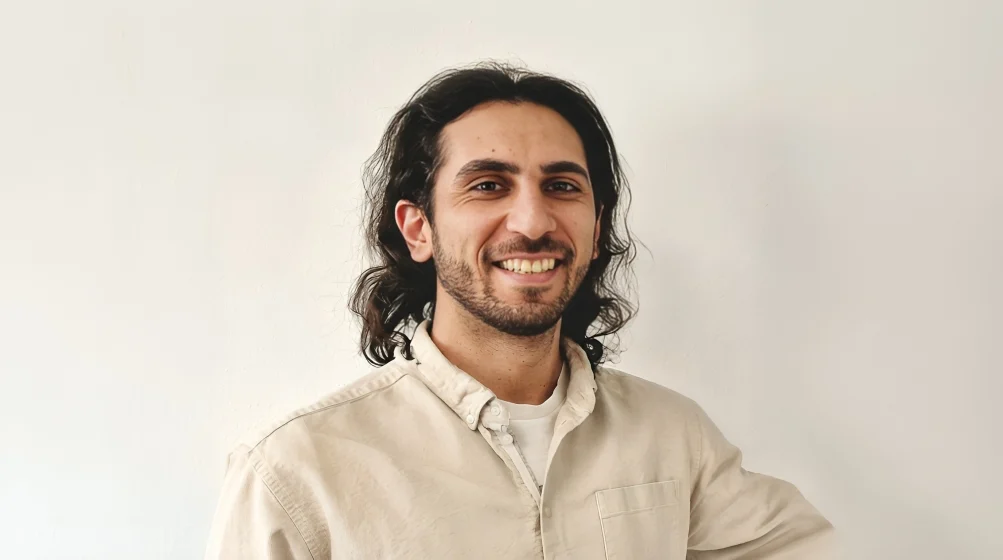
Kian Haseli, PhD student at Rigshospitalet, shared a post on LinkedIn: about a recent article by Kian Haseli et al, published in Blood Red Cells and Iron, adding:
“The first paper of my PhD is now finalized and published in Blood Red Cells and Iron (Blood Journals Portfolio). Therefore, I am allowing myself to be a bit proud of this one!
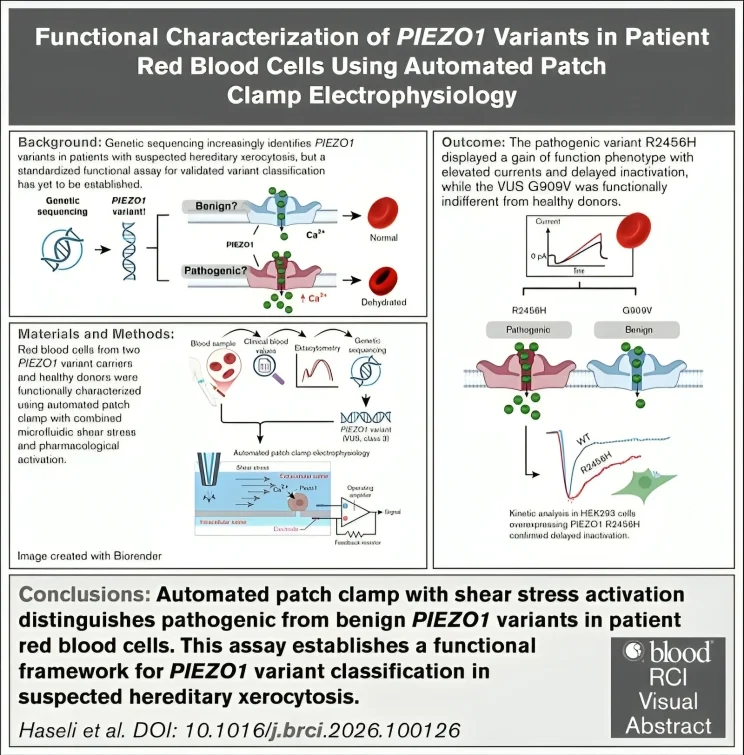
Some patients go through genetic testing, get a result back showing a change in a gene, and are told that nobody knows whether it explains their symptoms. In rare blood diseases that is a common outcome.
Hereditary xerocytosis is a rare inherited red blood cell disorder where the red blood cells dehydrate, become stiff, and gets destroyed. The main cause is a disruption of a protein called PIEZO1, a pressure sensor in the cell membrane that normally opens like a mechanical “straw”, when the cell is squeezed through a capillary. This protein uses charged atoms (ions) to regulate the water balance in the cells so they do not pop like waterballoons when they circulate in our blood vessels. In xerocytosis, PIEZO1 opens too easily, or shuts off too slowly – causing the cells to shrink and die way too early.
This is the part that still sounds like science fiction to me: we take a single human red blood cell (about 8 micrometers across) – notoriously difficult to work with, seal it onto a small hole in a chip, and record the tiny tiny electrical current going through the protein channel in the cell membrane. In this way we can directly test whether the protein from a patient’s blood is functioning properly.
For the rest of my PhD, I am now taking it further, across many more variants, and testing how well it might complement the diagnostic tools already in use.
Who knows? Maybe this method can give rise to new ways we diagnose rare red blood cell diseases or test pharmaceuticals for diseases, such as Sickle Cell Disease or Thalassemia.
This work was an important and most valuable collaborative effort between Danish Red Blood Cell Center, University of Copenhagen and Sophion Bioscience.
I want to thank my supervisors Andreas Glenthøj, Kim Boddum, Bo Hjorth Bentzen, Jesper Petersen and co-author David Van Assche, and to the patients and healthy volunteers who gave blood (but no sweat and tears) for it.”
Title: Automated patch clamp supports functional PIEZO1 variant classification in red blood cells in hereditary xerocytosis
Authors: Kian Haseli, Bo Hjorth Bentzen, Jesper Brix Petersen, Jens Helby, David Van Assche, Andreas Glenthøj, Kim Boddum
Stay updated on all scientific advances with Hemostasis Today.
-
Oct 8, 2026, 03:50Olfat Berro: Redefining the Future of Haemophilia A
-
Oct 8, 2026, 03:35Tasnia Tarana: Heavy Menstrual Bleeding When the Cause Is Not in the Uterus
-
Oct 8, 2026, 03:20Sthanu Subramanian: Leukopenia in Sepsis A Marker of Severe Disease
-
Oct 7, 2026, 16:44Amor Salah: 2026 NCS/SCCM Guidelines for Managing Antithrombotic-Associated ICH
-
Oct 7, 2026, 16:04NETs in Thrombosis: From Mechanism to Therapeutic Target
-
Oct 7, 2026, 15:28Amir Samimi: Prognostic Value of Platelet Count in Resected HNSCC
-
Oct 7, 2026, 15:21Eloïse Laouenan: Bridging Immunity and Thrombosis in MVTE
-
Oct 7, 2026, 15:10Uthra Sundaram: Honouring Donors During International Plasma Awareness Week
-
Oct 7, 2026, 15:04Daniel Victor Ortigoza: Should Frail Older Patients With AF Switch From VKA to DOACs?