


Jim Hoffman: How NETs Contribute to Gallstone Formation and Growth
Jim Hoffman, Former Technical Advisor at Cygnus Technologies, LLC, shared Nestor de la Cruz Munoz’s post on LinkedIn, adding:
“Perhaps if we were to prognostically track chronic low-grade and worsening NETosis dysregulation, we could help prevent the formation of unwanted crystals and stone formation in our soft tissue with the timely assistance of blood purification to remove elevated circulating NETs.
NETs are elevated in the circulation and tissues in response to numerous pathological conditions, including post-acute long COVID and diabetes.
Here is a NET removal therapy that should be trialed for reducing the risk of crystal or stone formation and other serious life-threatening complications such as ischemic thrombosis leading to heart attacks, strokes and other organ blood circulation failures, since NETs are also found in the chemical makeup of organized thromboses and this extracellular chromatin is thought to, likewise, help facilitate microclot and biofilm formations.
‘The presence of gallstones (cholelithiasis) is a highly prevalent and severe disease and one of the leading causes of hospital admissions worldwide. Due to its substantial health impact, we investigated the biological mechanisms that lead to the formation and growth of gallstones.
We show that gallstone assembly essentially requires neutrophil extracellular traps (NETs). We found consistent evidence for the presence of NETs in human and murine gallstones and describe an immune-mediated process requiring activation of the innate immune system for the formation and growth of gallstones.
Targeting NET formation via inhibition of peptidyl arginine deiminase type 4 or abrogation of reactive oxygen species (ROS) production, as well as damping of neutrophils by metoprolol, effectively inhibits gallstone formation in vivo.
Our results show that after the physicochemical process of crystal formation, NETs foster their assembly into larger aggregates and finally gallstones. These insights provide a feasible therapeutic concept to prevent cholelithiasis in patients at risk.’ Reviewed by Herrmann et al. 2025
A large UK Biobank study found that adults who survived COVID-19 even with mild illness, have a significantly higher risk of developing various digestive diseases, including GERD, GI dysfunction, peptic ulcers, gallbladder disease, liver disease, and pancreatic disease.”
Nestor de la Cruz Munoz, Medical Director of Bariatric and Metabolic Surgery at HCA Healthcare, shared a post on LinkedIn:
“The Gallbladder Is Not One Disease
It’s a Spectrum. Here’s Why That Matters for Your Patients.
Most people think of ‘gallbladder trouble’ as a single problem: you get gallstones, they hurt, you have surgery. But in practice, gallbladder and bile duct disease is a connected spectrum of conditions that behave very differently and the difference between a routine recovery and a life-threatening emergency often comes down to how early the right decision is made.
After years of operating on this full range of disease, I want to lay out how these conditions relate to one another, because understanding the spectrum is the single best way for patients, and referring clinicians, to know when ‘watch and wait’ is reasonable and when the clock is ticking.
It starts with gallstones — and most of them stay quiet.
Gallstones are remarkably common, affecting roughly 10–15% of adults in the United States (Patel and Jepsen, American Family Physician, 2024).
The reassuring part: nearly 80% are found incidentally and never cause symptoms (Patel and Jepsen, American Family Physician, 2024). Asymptomatic stones carry only about a 2% annual risk of becoming symptomatic, which is why, for most people who have never had an attack, the right answer is simply observation, not surgery (Abraham et al., American Family Physician, 2014).
This is where good counseling matters. Finding stones on an ultrasound done for another reason is not, by itself, a reason to operate.
Biliary colic is the first warning shot.
When a stone intermittently blocks the cystic duct, the result is biliary colic: steady, moderate-to-severe pain in the right upper quadrant or upper abdomen, often after a fatty meal, lasting one to several hours before easing (Abraham et al., American Family Physician, 2014).
This is the body signaling that the disease has turned symptomatic and once symptoms begin, the risk of recurrence and complications rises over time (Lammert and Wittenburg, Seminars in Liver Disease, 2024).
For uncomplicated, symptomatic gallstone disease, laparoscopic cholecystectomy is the definitive treatment, and it is one of the safest major operations in all of medicine, with mortality in the range of 0.1–0.7% (Portincasa and Wang, Yamada’s Textbook of Gastroenterology, 2022).
It’s worth noting the nuance here: the recent C-GALL randomized trial suggests that carefully selected patients with uncomplicated symptoms can be managed conservatively for a period of time, which makes a shared, informed conversation about risks and preferences part of good care (Ahmed et al., BMJ, 2023).
Acute cholecystitis is where timing becomes everything.
When obstruction persists, the gallbladder becomes inflamed (acute cholecystitis) presenting with sustained right upper quadrant pain, fever, and nausea (Gallaher and Charles, JAMA, 2022).
This is no longer a ‘schedule it when convenient’ situation. The evidence is clear that early laparoscopic cholecystectomy, performed within the first one to three days, produces dramatically better outcomes than waiting: in one analysis, composite postoperative complications were 11.8% with early surgery versus 34.4% with delayed surgery, with shorter hospital stays and lower costs (Gallaher and Charles, JAMA, 2022).
For most patients, the gallbladder should come out during that same admission.
When stones escape into the bile duct, the stakes rise again.
If a stone passes out of the gallbladder and lodges in the common bile duct (choledocholithiasis) it can obstruct bile flow, cause jaundice, and set the stage for ascending cholangitis, a true emergency requiring urgent antibiotics and drainage (Lammert and Wittenburg, Seminars in Liver Disease, 2024).
Here, a thoughtful, risk-stratified approach matters. The American Society for Gastrointestinal Endoscopy provides a practical framework: patients at high risk (a visualized duct stone, ascending cholangitis, or a markedly elevated bilirubin with a dilated duct) go straight to ERCP, while intermediate-risk patients are best clarified with MRCP, endoscopic ultrasound, or intraoperative cholangiography before committing to an invasive procedure (Buxbaum et al., ASGE Guideline, 2019).
The goal is to clear the duct and remove the gallbladder; not one or the other.
Gallstone pancreatitis and why the gallbladder still has to come out.
A stone obstructing the pancreatic outflow can trigger acute biliary pancreatitis. Even after the pancreatitis settles, the source problem remains. For mild gallstone pancreatitis, same-admission cholecystectomy is recommended to prevent a recurrence that could be far more severe than the first episode (Buxbaum et al., ASGE Guideline, 2019).
Sending a patient home to ‘recover and come back later’ is how preventable second events happen.
And then there’s biliary dyskinesia: pain without stones.
Finally, some patients have classic biliary-type pain, a normal ultrasound with no stones, and a reduced gallbladder ejection fraction on a CCK-HIDA scan (biliary dyskinesia) (Richmond, JAMA Surgery, 2024).
This is the most nuanced corner of the spectrum. Cholecystectomy is the most common treatment in the US, but the supporting data are weaker than for stone disease, and symptom relief is less reliable (Richmond, JAMA Surgery, 2024).
Honest expectation-setting, careful patient selection, and exclusion of other causes are essential here. This is a diagnosis that rewards a surgeon who will tell patients what we do and don’t know.
The thread that ties it all together.
Across this entire spectrum, two principles hold:
- Asymptomatic disease usually deserves patience; symptomatic and complicated disease rewards timely action. The difference between an elective operation and an emergency is often just a matter of recognizing where a patient sits on the spectrum.
- Laparoscopic cholecystectomy remains the definitive treatment for most of these conditions: safe, minimally invasive, and durable (Baron et al., New England Journal of Medicine, 2015).
The gallbladder may be a small organ, but the diseases it generates range from trivial to life-threatening. Treating them well means treating them as what they are: a connected spectrum, where the right move depends entirely on where the patient stands.
If you or someone you care for is navigating gallbladder or bile duct disease, or has been told to ‘just keep an eye on it’, understanding this spectrum is the first step toward the right decision at the right time.
Real science. Real surgery. Real results.
For the full clinical guide on this topic—including expanded data, surgical insights, and patient‑facing recommendations—you can read the complete article on my website.”
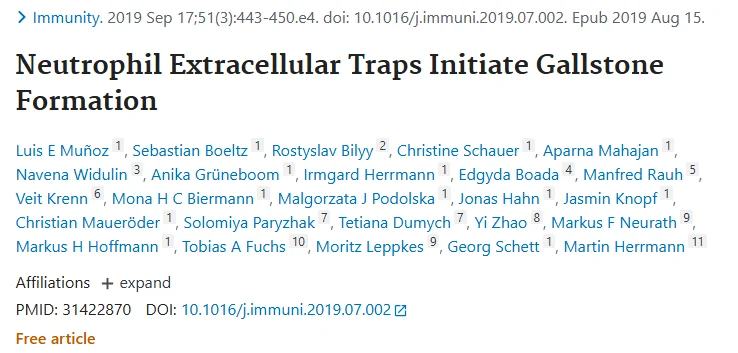
Title 1: Neutrophil Extracellular Traps Initiate Gallstone Formation
Authors: Luis E. Muñoz, Sebastian Boeltz, Rostyslav Bilyy, Christine Schauer, Aparna Mahajan, Navena Widulin, Anika Grüneboom, Irmgard Herrmann, Edgyda Boada, Manfred Rauh, Veit Krenn, Mona H. C. Biermann, Malgorzata J. Podolska, Jonas Hahn, Jasmin Knopf, Christian Maueröder, Solomiya Paryzhak, Tetiana Dumych, Yi Zhao, Markus F. Neurath, Markus H. Hoffmann, Tobias A. Fuchs, Moritz Leppkes, Georg Schett, Martin Herrmann
Read the Full Article on Immunity
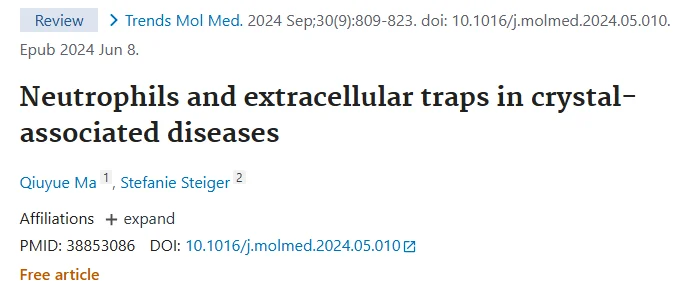
Title 2: Neutrophils and extracellular traps in crystal-associated diseases
Authors: Qiuyue Ma, Stefanie Steiger
Read the Full Article on Trends in Molecular Medicine
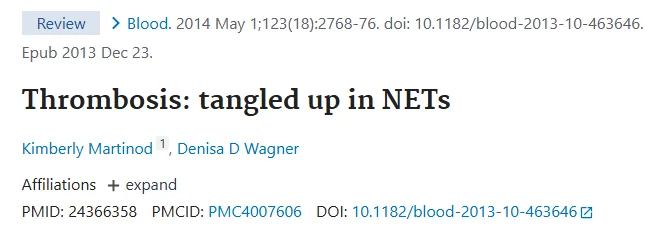
Title 3: Thrombosis: tangled up in NETs
Authors: Kimberly Martinod, Denisa D Wagner
Read the Full Article on Blood
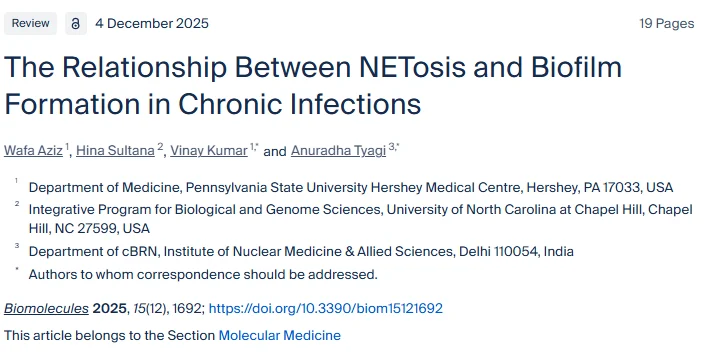
Title 4: The Relationship Between NETosis and Biofilm Formation in Chronic Infections
Authors: Wafa Aziz, Hina Sultana, Vinay Kumar, Anuradha Tyagi
Read the Full Article on Biomolecules
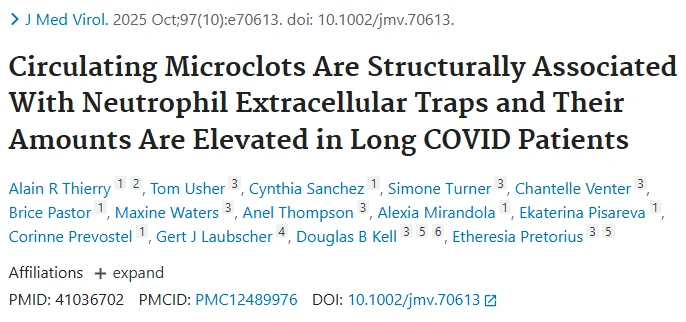
Title 5: Circulating Microclots Are Structurally Associated With Neutrophil Extracellular Traps and Their Amounts Are Elevated in Long COVID Patients
Authors: Alain R. Thierry, Tom Usher, Cynthia Sanchez, Simone Turner, Chantelle Venter, Brice Pastor, Maxine Waters, Anel Thompson, Alexia Mirandola, Ekaterina Pisareva, Corinne Prevostel, Gert J. Laubscher, Douglas B. Kell, Etheresia Pretorius
Read the Full Article on Journal of Medical Virology
Other posts featuring Jim Hoffman on Hemostasis Today.
-
Oct 19, 2026, 03:54Jennifer Trowbridge: How Mutant Blood Stem Cells Use Inflammation to Drive Their Own Expansion
-
Oct 19, 2026, 03:39Wyenona Hicks: Catching Up With Old Friends and New Colleagues at AABB 2026
-
Oct 19, 2026, 03:33Developing a Non-Invasive Treatment for Life-Threatening PE – University of Michigan College of Engineering
-
Oct 19, 2026, 03:28Nicolas Hubacz: The Organized Chaos of Mitochondria
-
Oct 19, 2026, 03:02Neda Horvacki: Using ROTEM to Refine Transfusion Decisions in Acute Trauma
-
Oct 19, 2026, 02:45Diego Escarraman Martinez: MATTERs Study – When a Cohort Gave Us Major Clues about TXA in Trauma
-
Oct 19, 2026, 02:35Brian O Mahony: Promoting Physical Activity and Sport in Haemophilia Care
-
Oct 19, 2026, 02:35Malusi Mtetwa: Tranexamic Acid – What Does the Evidence Tell Us?
-
Oct 19, 2026, 02:34Rishabh Mishra: Does the Evidence Support Tranexamic Acid Formulations in Skincare?