

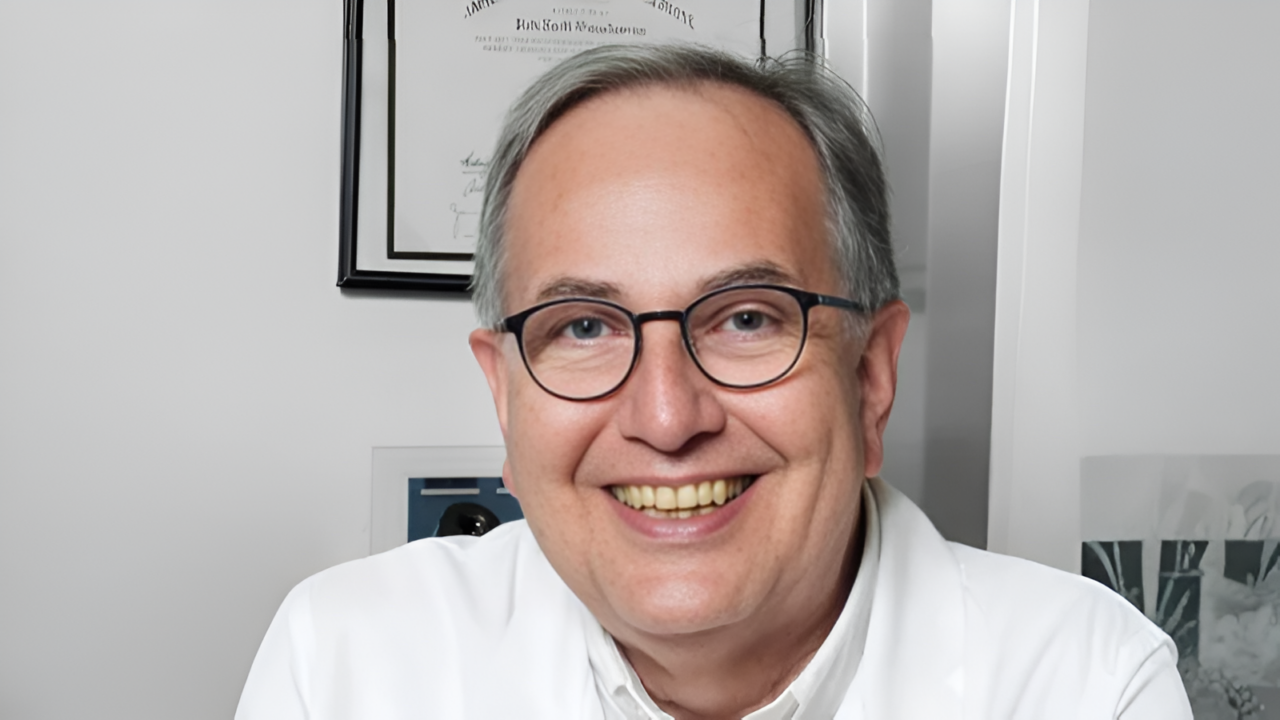
Pall T. Onundarson: Anticoagulation Guidelines Under the Influence of Pharmaceuticalisation
Pall T. Onundarson, Professor Emeritus of Hematology at University of Iceland, shared a post on LinkedIn about a recent article by John Abraham et al., published in Sociology of Health and Illness, adding:
“Corruption in British healthcare systems is described in this interesting British sociological study about ‘biomedicalisation’ and ‘pharmaceuticalisation’ using the case of oral anticoagulants as an example, written by John Abraham (University of Brighton and Sussex, UK) and Gowree Balendran (Keele Universtiy, Newcastle, UK).
They don´t object to new drugs or innovation – but in the case of OACs argue that warfarin should have been made first choice and DOACs a second line choice – and that outside influence, namely money, led to the NICE guidelines favoring DOACs over warfarin.
The study argues that NICE may actively promote novel drug ‘pharmaceuticalisation’ through permissive regulation, industry influence, expert conflicts of interest, and an emphasis on patient choice and innovation over cost-effectiveness.
They refer to evidence suggesting that this approach can produce a net loss in population health by diverting NHS resources from more cost-effective treatments.
The authors recommend strengthening independent cost-effectiveness assessment, restricting pharmaceutical industry involvement and conflicts of interest on clinical guidelines, and protecting NICE’s independence from commercial and political pressures.
They warn that raising cost-effectiveness thresholds under the UK–US trade agreement risks further prioritising pharmaceutical innovation over public health.”
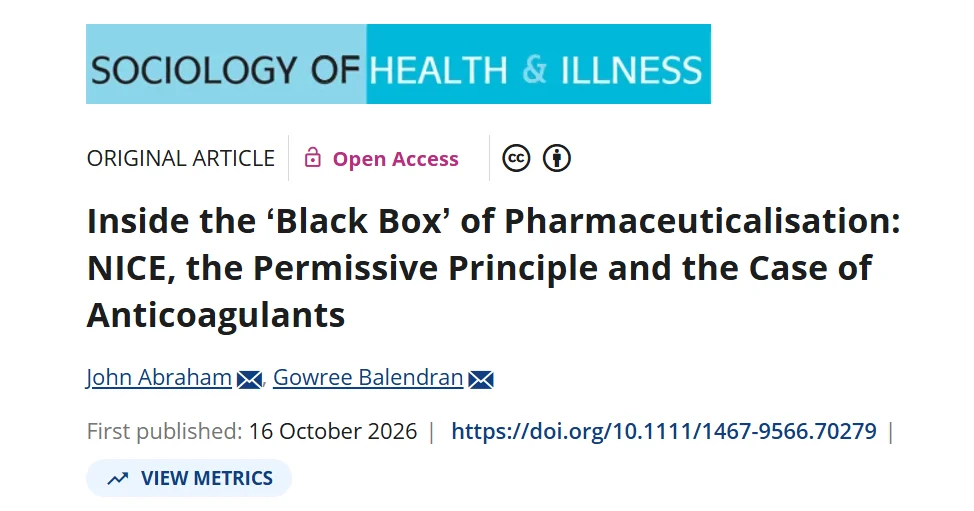
Title: Inside the ‘Black Box’ of Pharmaceuticalisation: NICE, the Permissive Principle and the Case of Anticoagulants
Authors: John Abraham, Gowree Balendran
Other posts featuring Pall T. Onundarson on Hemostatis Today.
-
Oct 30, 2026, 14:27Isabella Presch: From Innovation to Accessibility in Cell and Gene Therapy
-
Oct 30, 2026, 14:00Abdul Mannan: A Negative PCR Does Not Exclude β-Thalassaemia
-
Oct 30, 2026, 13:53Matteo Foschi: Can Thrombolysis Safely Treat Stroke After Cardiac Procedures?
-
Oct 30, 2026, 13:42Wolfgang Miesbach: Gene Therapy-Associated Leukaemia With Clonal Persistence Over 16 Years
-
Oct 30, 2026, 12:47Louise St. Germain Bannon: Turning Thrombosis Awareness into Stroke Prevention
-
Oct 30, 2026, 12:36Aryabhatta Sadhu: Sickle Cell Crisis Recognising When Treatment Must Change
-
Oct 30, 2026, 12:22Fabrice Cognasse: The Future of Blood Banks From Transfusion Support to Precision Medicine
-
Oct 30, 2026, 12:09Carmelo Gurnari: Clonal Dynamics in the Bone Marrow During Sepsis and Emergency Haematopoiesis
-
Oct 30, 2026, 11:49Advancing Global Care for Hemophilia and Bleeding Disorders – World Federation of Hemophilia