

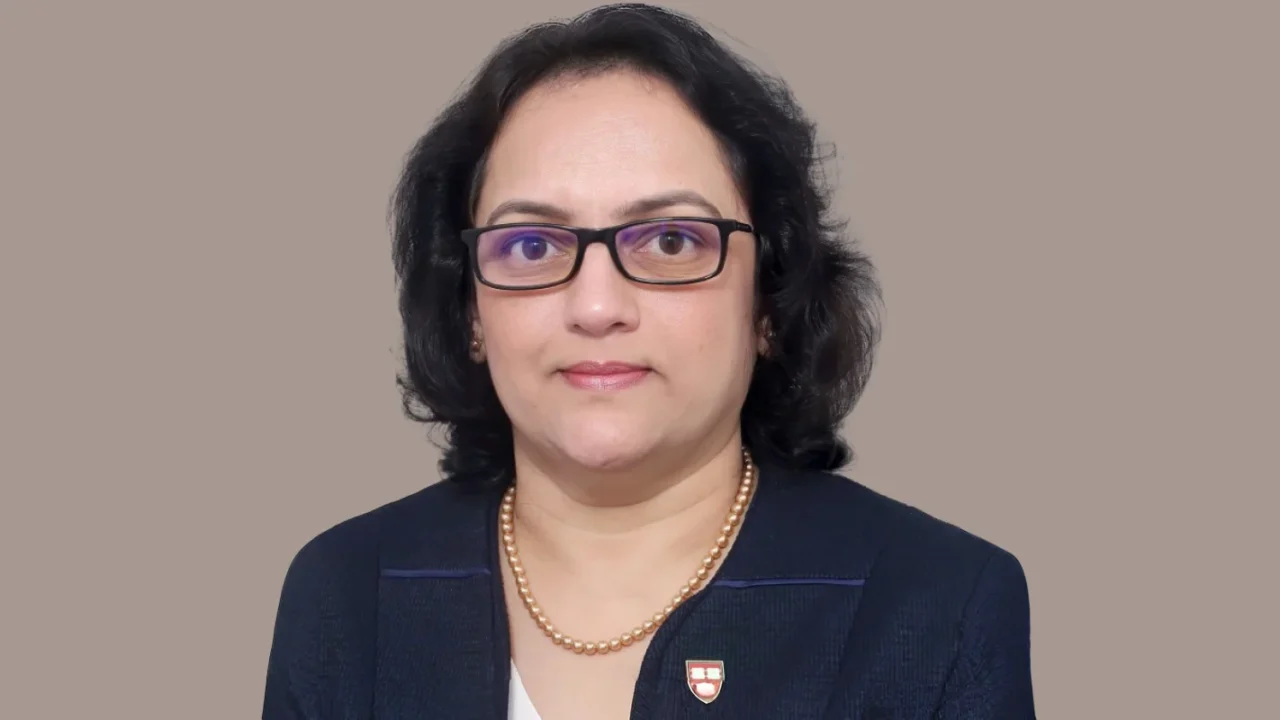
Shruti Gadgil: AI-Powered Smartphone Screening for Anemia Severity in Rural India
Shruti Gadgil, Professor Of Practice at JSS AHER Mysuru, shared a post on LinkedIn about a recent article she and her colleagues co-authored, published in medRxiv, adding:
“Excited to share our new preprint, ‘Smartphone-based Non-Invasive Classification of Anemia Severity using Deep Learning: A Cross-Sectional Study in Rural India,’ now live on medRxiv!
Anemia remains a profound public health crisis across low- and middle-income countries like India, where traditional diagnostic pathways often break down due to reliance on invasive blood draws, cold chains, and centralized lab infrastructure.
To help bridge this gap, our cross-sectional study evaluates a deep-learning and computer vision framework that uses smartphone-captured imagery (such as conjunctival/eyelid photos combined with simple demographic inputs like age, sex, and pregnancy status) to classify anemia severity non-invasively.
Technical and Field Highlights:
- Deep Learning at the Edge: We trained and evaluated models to explore how everyday consumer smartphones can function as accessible, point-of-care screening tools.
- Real-World Rural Deployment: Grounded in a rigorous field study setting in rural India, our research explicitly tackles the logistical realities, constraints, and operational hurdles of decentralized screening.
- Transparent Science: To foster open science and collaborative iteration, our dataset has been released on Hugging Face and code made accessible via GitHub for the broader research community.
Final results?
Very large data set of 5176 adults (including pregnant women) and children, including 711 with severe anemia.
Final model, using Samsung smartphone images of conjunctiva, showed sensitivity 90 percent and specificity 80 percent to detect severe anemia vs moderate, mild, or no anemia.
While point-of-care blood testing (like HemoCue) remains more accurate and further clinical validation is essential, this work highlights how AI can potentially serve as an initial triage mechanism to expand screening access in remote communities.
Proud to be part of this incredible co-author team! We welcome feedback, critiques, and collaboration from the digital health and AI communities as we work toward clinical translation.”
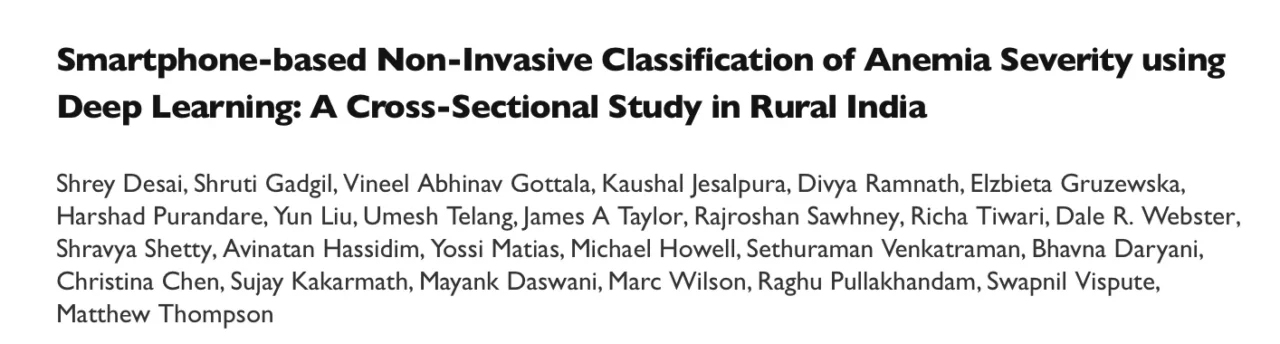
Title: Smartphone-based Non-Invasive Classification of Anemia Severity using Deep Learning: A Cross-Sectional Study in Rural India
Authors: Shrey Desai, Shruti Gadgil,Vineel Abhinav Gottala, Kaushal Jesalpura, Divya Ramnath, Elzbieta Gruzewska, Harshad Purandare, Yun Liu, Umesh Telang, James A Taylor, Rajroshan Sawhney, Richa Tiwari, Dale R. Webster, Shravya Shetty, Avinatan Hassidim, Yossi Matias, Michael Howell, Sethuraman Venkatraman, Bhavna Daryani, Christina Chen, Sujay Kakarmath, Mayank Daswani, Marc Wilson, Raghu Pullakhandam, Swapnil Vispute, Matthew Thompson
Stay updated on all scientific advances with Hemostasis Today.
-
Nov 2, 2026, 10:41Paulus Kirchhof: Smoking or Vaping – Nicotine Still Affects Vascular Health
-
Nov 2, 2026, 10:30Asesa Omullo: Connecting Sickle Cell Advocates at GANSID 2026
-
Nov 2, 2026, 10:18Salih Ehsan: Beyond IRIDA – Conditions That Mimic Iron-Refractory Anemia
-
Nov 2, 2026, 10:03Christian Heiss: Can Switching to E-Cigarettes Improve Vascular Health?
-
Nov 2, 2026, 09:56Priya Prasad: Safe Blood Begins with Informed Choices
-
Nov 2, 2026, 09:43Moath Ahmad Albliwi: More Than 10 Abstracts Accepted for ASH 2026
-
Nov 2, 2026, 02:56Leonhard Stärk: The Future of Universal Donor-Free Red Blood Cells
-
Nov 2, 2026, 02:45Marija Tashkovska: Advancing Transfusion Medicine Through Collaboration
-
Nov 2, 2026, 02:32Rachel Rosovsky: Pulmonary Embolism During Pregnancy and Postpartum