

Ali Hammed: Should DOAC Use Exclude Patients From Thrombolysis After Ischemic Stroke?
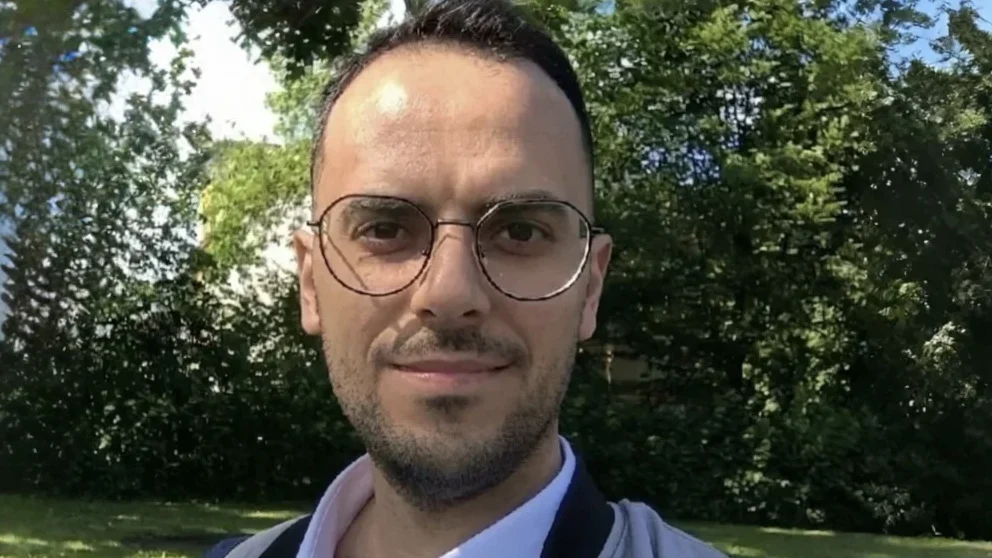
Ali Hammed, Resident Physician in Neurosurgery at Weiden Hospital, Nordoberpfalz Clinics, shared on LinkedIn about a recent article he and his colleagues co-authored, published in Sage Journal, adding:
“Should a patient with acute ischemic stroke be denied intravenous thrombolysis simply because they are taking a DOAC?
During my time working in a neurovascular unit, we encountered a case that has stayed with me.
A patient arrived as an emergency with severe neurological deficits, including aphasia and hemiparesis. The patient was unable to provide a medical history, and no reliable information about previous medication was available.
Following emergency neuroimaging, intravenous thrombolysis was initiated, followed by mechanical thrombectomy.
The patient showed remarkable neurological improvement, without symptomatic intracranial hemorrhage.
Only later did we discover that the patient had been taking a direct oral anticoagulant.
This experience raised a question that has remained with me ever since:
How many patients might lose the opportunity for meaningful neurological recovery because of a contraindication that may not apply equally to every patient?
Mechanical thrombectomy has transformed the treatment of large-vessel occlusion. Yet intravenous thrombolysis remains an important component of reperfusion therapy, with the potential to restore flow in smaller or distal vessels beyond the reach of mechanical intervention.
Of course, a single clinical experience cannot establish safety or justify changing treatment recommendations. But it can inspire us to question whether the available evidence supports a universal restriction.
I am pleased to share our newly published systematic review and meta-analysis in the Journal of Central Nervous System Disease (SAGE).
We analyzed 11 studies involving 262,325 patients, including 9,497 patients with prior DOAC exposure.
Our findings revealed:
- Symptomatic intracranial hemorrhage: No significant difference (RR 1.01; 95% CI 0.79–1.29).
- Mortality: No significant difference (RR 0.63; 95% CI 0.32–1.23).
- Favorable functional outcome (mRS 0–2): Significantly more frequent among DOAC-treated patients (RR 2.43; 95% CI 1.51–3.89).
- Major extracranial bleeding: Significantly increased in the DOAC group (RR 1.62; 95% CI 1.18–2.21).
These findings challenge the assumption that prior DOAC exposure necessarily translates into a substantially higher risk of intracranial hemorrhage following thrombolysis.
However, our results are based on observational studies and unadjusted pooled estimates. They do not establish a causal benefit, nor do they justify indiscriminate thrombolysis in patients with recent DOAC intake.
The question is not whether every patient taking a DOAC should receive thrombolysis. It is whether every such patient should automatically be denied the opportunity.
For me, this publication connects a memorable clinical experience with a broader scientific question.”
Title: Safety and Efficacy of Intravenous Thrombolysis after DOAC Use in Acute Ischemic Stroke: A Systematic Review and Meta-Analysis in Light of Current Guidelines
Authors: Sara Hirsch, Almonzer Al-Qiami, Thomas Reithmeier, Nada Hamam, Afaf Bachira Gouhiri, Dina Rishan, Salah Hammed, Numier Alyosef, Ali Hasan, Christian Tanislav, Ali Hammed

Stay updated on all scientific advances with Hemostasis Today.
-
Nov 12, 2026, 10:30Nancy Di Salvo: Protecting Access to IVIG and SCIG – A Call for Continued EU Recognition
-
Nov 12, 2026, 10:21Aseem Kumar Tiwari: The Molecular Dimension of HLA Matching
-
Nov 12, 2026, 10:18Sarah Connolly: Developing Advanced Haematology Services in Cancer Care
-
Nov 12, 2026, 10:13Carlos Esteban Gasko: Restrictive Transfusion in Critical Care
-
Nov 12, 2026, 10:07Samin Mohsenian: Advancing Care in Rare Bleeding Disorders
-
Nov 12, 2026, 10:03Influenza Vaccination in Patients With ITP – ITP Support Association
-
Nov 12, 2026, 10:00Akshat Jain: Asundexian for Recurrent Stroke Prevention
-
Nov 12, 2026, 09:57Romy Meier: From Research to New Scientific Perspectives on HIT and VITT
-
Nov 12, 2026, 09:50Denis Oduor: Did You Know What Happens to Your Body After You Donate Blood?