

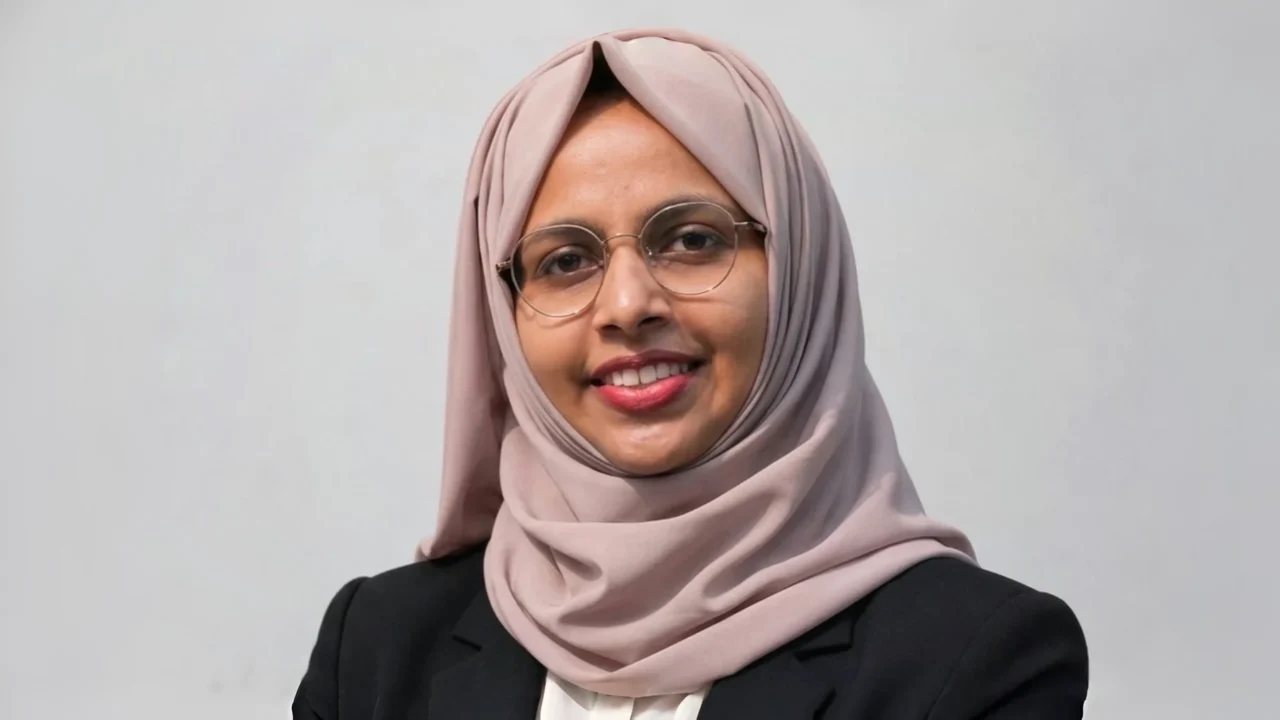
Afila Thasnim: Blood Crossmatching Challenges and Safe Transfusion Decisions
Afila Thasnim, Former Medical Laboratory Technologist at M.K.Haji Orphanage Hospital, shared a post on LinkedIn:
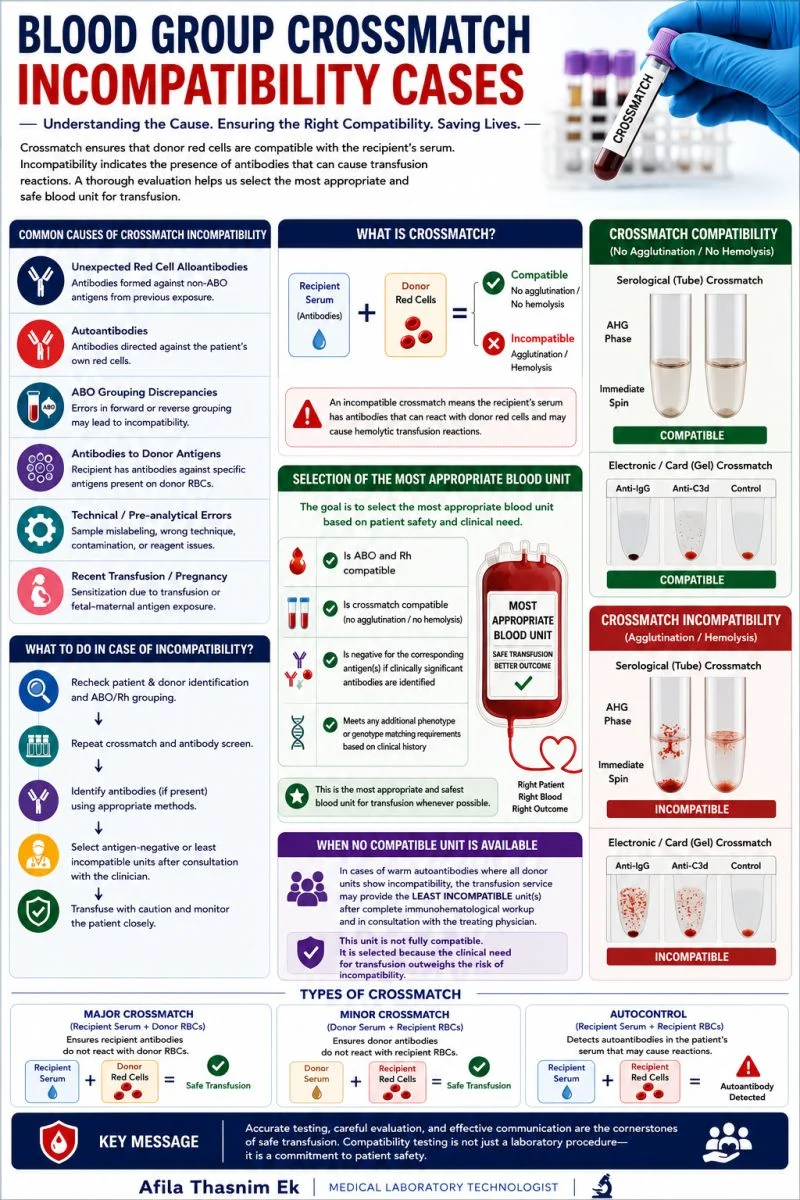
“When No Compatible Unit is Available
In complex cases such as patients with warm autoantibodies, every donor unit may appear incompatible during testing.
After comprehensive antibody identification and exclusion of clinically significant alloantibodies, the transfusion service may recommend the least incompatible blood unit only when the clinical need for transfusion outweighs the potential risks.
Such decisions require close collaboration between the blood bank, transfusion medicine specialist, and treating clinician, with continuous patient monitoring throughout transfusion.
Key Takeaway
Accurate crossmatching is one of the most critical responsibilities of the blood bank laboratory. Every incompatible reaction deserves systematic investigation—not assumptions.
Selecting the most appropriate blood unit requires scientific expertise, standardized laboratory practices, and effective communication between laboratory professionals and clinicians.
Safe transfusion begins with accurate testing, evidence-based decision-making, and an unwavering commitment to patient safety.”
Stay updated with Hemostasis Today.
-
Sep 19, 2026, 10:52Consuela A. Albright: The Critical Role of Black Blood Donors in Sickle Cell Treatment
-
Sep 19, 2026, 10:47Amber Yates: Inside Agios’ Partnership with the Sickle Cell Community
-
Sep 19, 2026, 10:46Anton Farkas: Mechanical Thrombectomy for Acute PE in Early Pregnancy
-
Sep 19, 2026, 10:40Marjolein Smidt: ASH Raises Ferritin Thresholds for Iron Deficiency
-
Sep 19, 2026, 10:34Nawsherwan Mohammad: ASH 2026 Guidelines Redefine How We Detect Iron Deficiency
-
Sep 19, 2026, 10:21Upcoming Podcast on Thalassaemia with The Lancet Haematology
-
Sep 19, 2026, 10:20Steve Helm: Cardiology and Anticoagulation Pharmacist Role Opens Near NYC
-
Sep 19, 2026, 10:12Omid Seidizadeh: A Great Pleasure to Speak on vWD at the 59th NordCoag Congress
-
Sep 19, 2026, 10:08Carsten Hansen: What Happens During a Sickle Cell Crisis?