

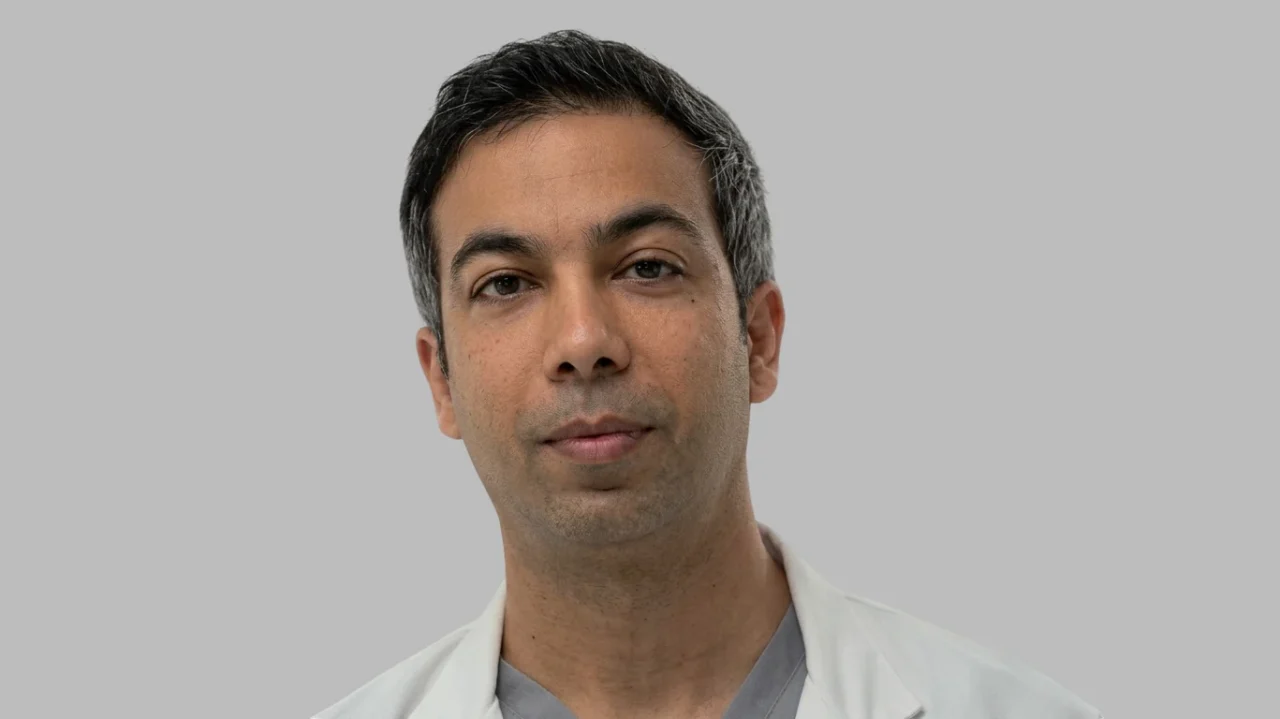
Alejandro González Veliz: Can Factor XIa Inhibition Prevent Recurrent Ischemic Events Without Increasing Bleeding?
Alejandro González Veliz, Interventional Cardiologist at Institute of Cardiology and Cardiovascular Surgery, shared a post on LinkedIn about a recent article by C. Michael Gibson et al., published in NEJM, adding:
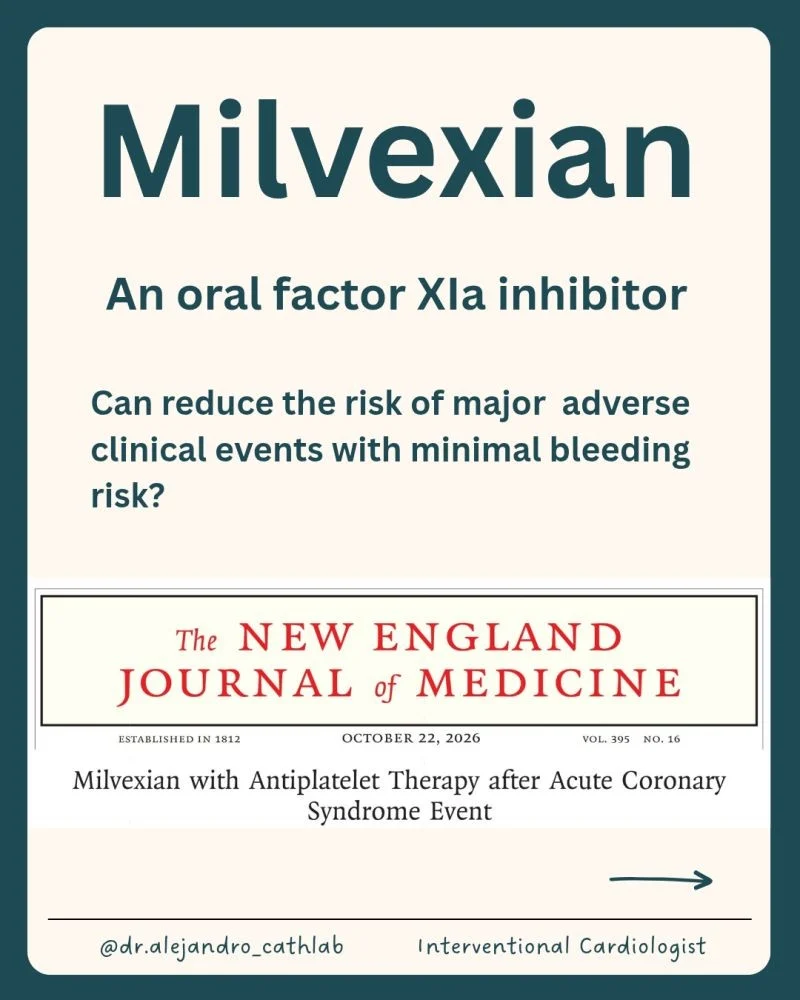
“Can factor XIa inhibition reduce recurrent ischemic events after ACS without increasing major bleeding?
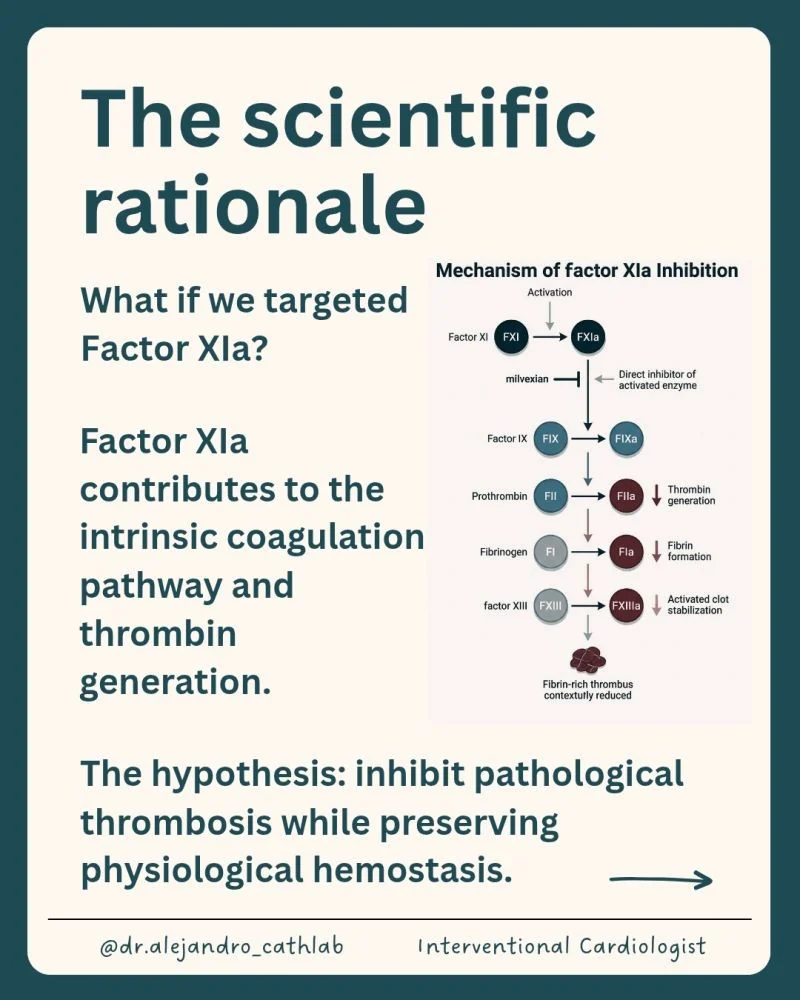
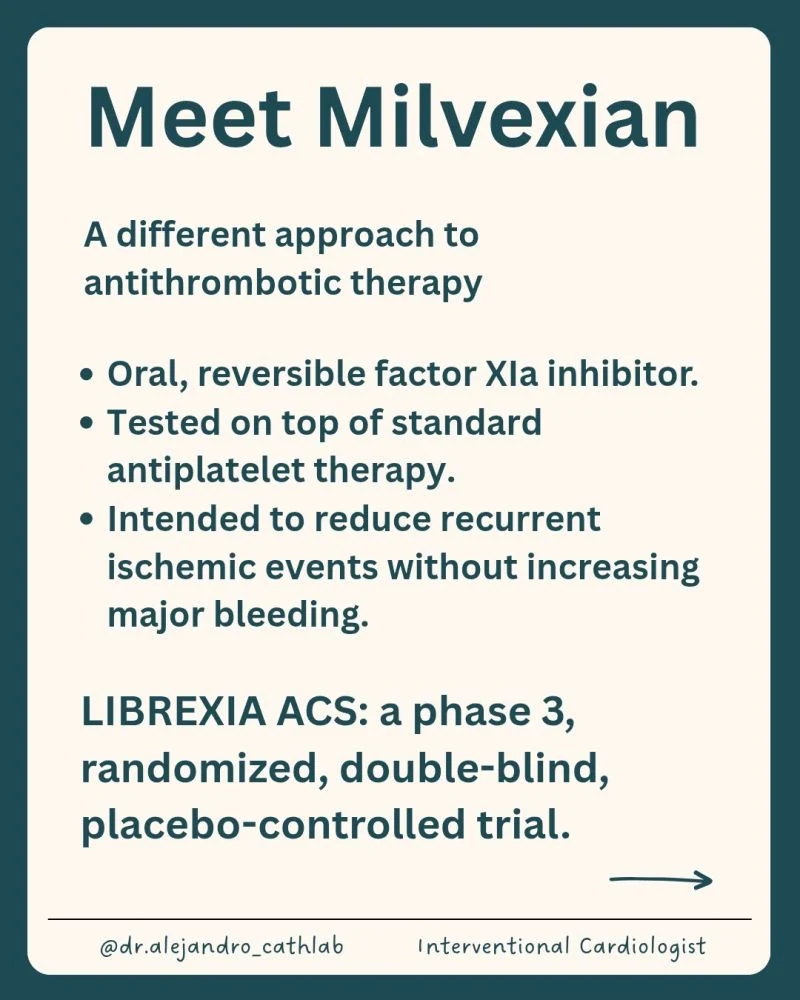
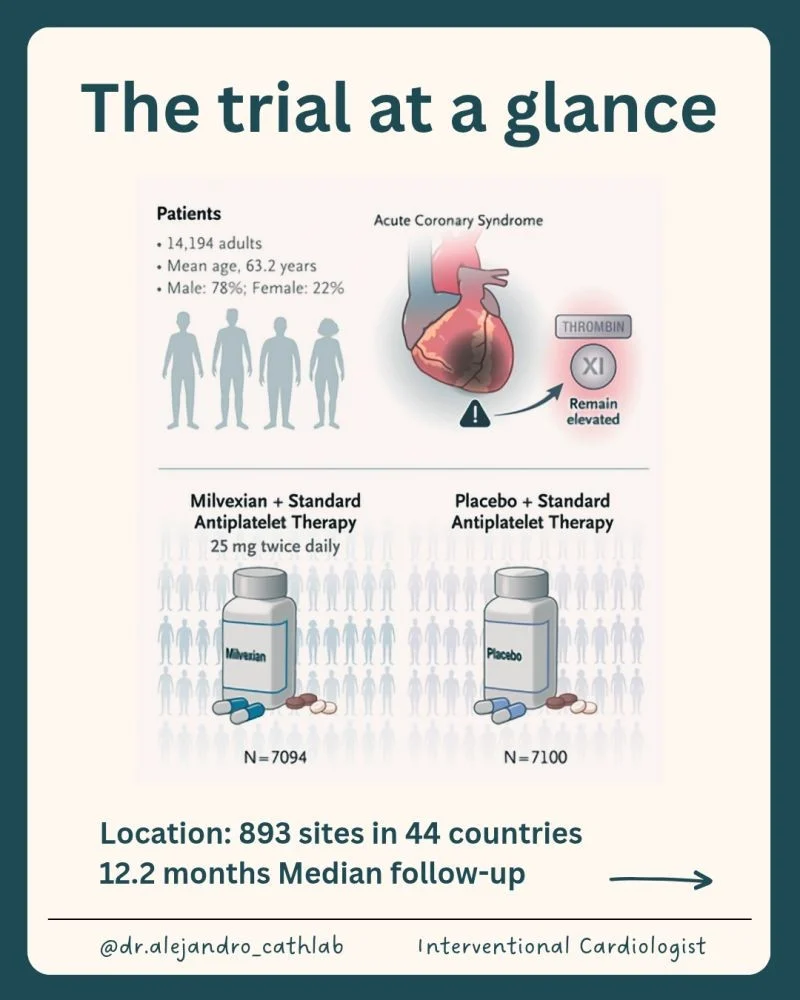
The phase 3 LIBREXIA ACS trial, published in The New England Journal of Medicine, tested this hypothesis with milvexian, an oral factor XIa inhibitor, added to standard antiplatelet therapy.
Key findings:
- 14,194 patients randomized Median follow-up:
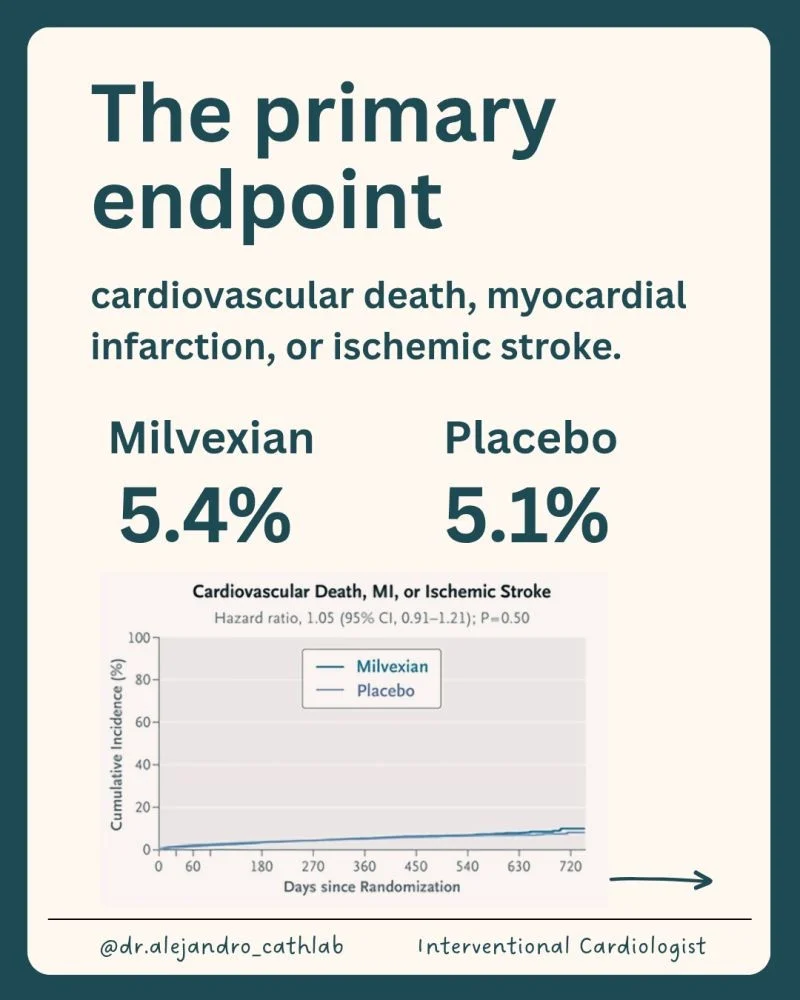
- 12.2 months Primary endpoint:
- 5.4% with milvexian vs. 5.1% with placebo HR 1.05 (95% CI 0.91–1.21);
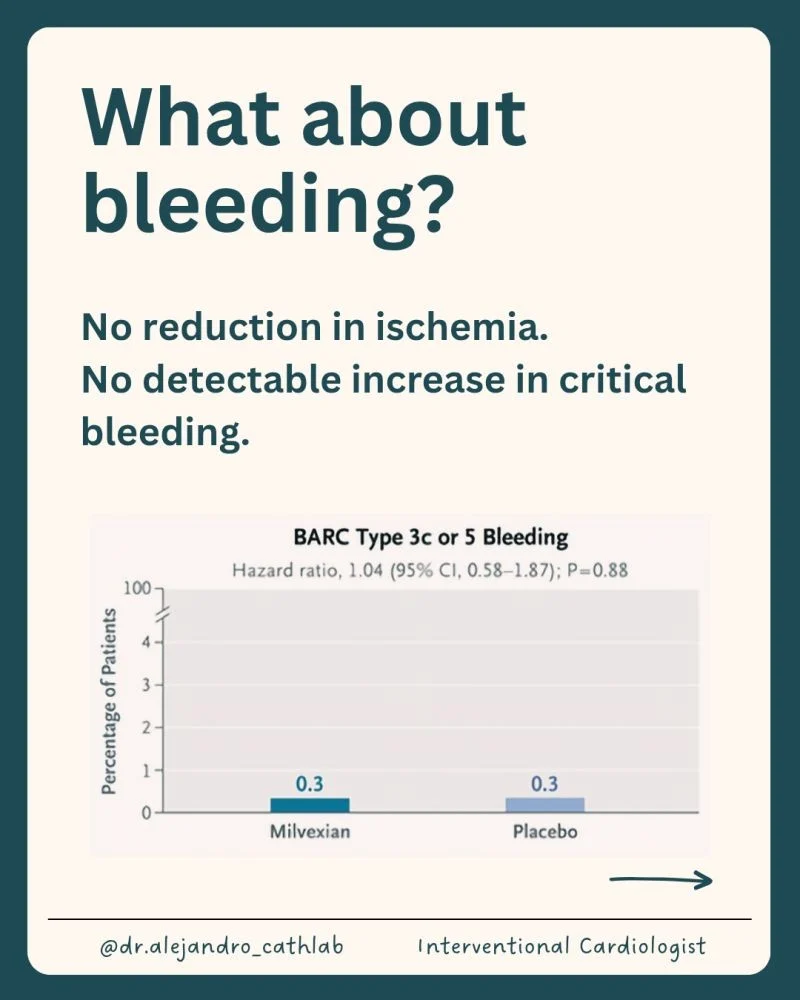
- P = 0.50 BARC type 3c or 5 bleeding: 0.3% in both groups
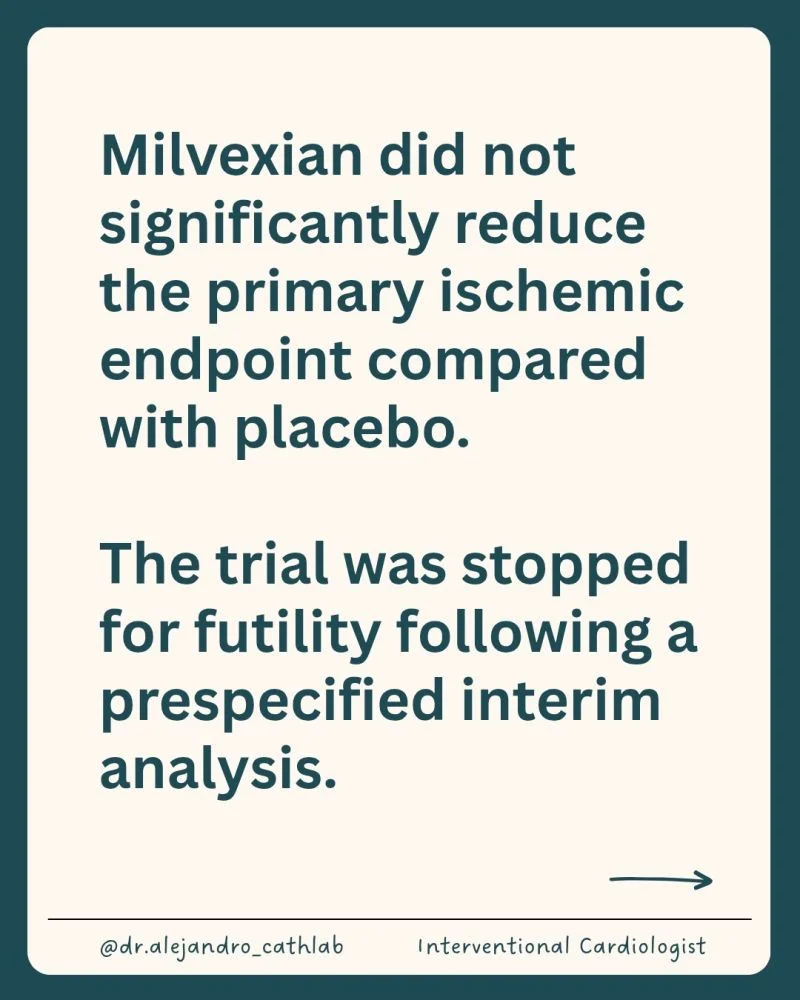
The trial was stopped for futility. Milvexian did not reduce cardiovascular death, myocardial infarction, or ischemic stroke compared with placebo.
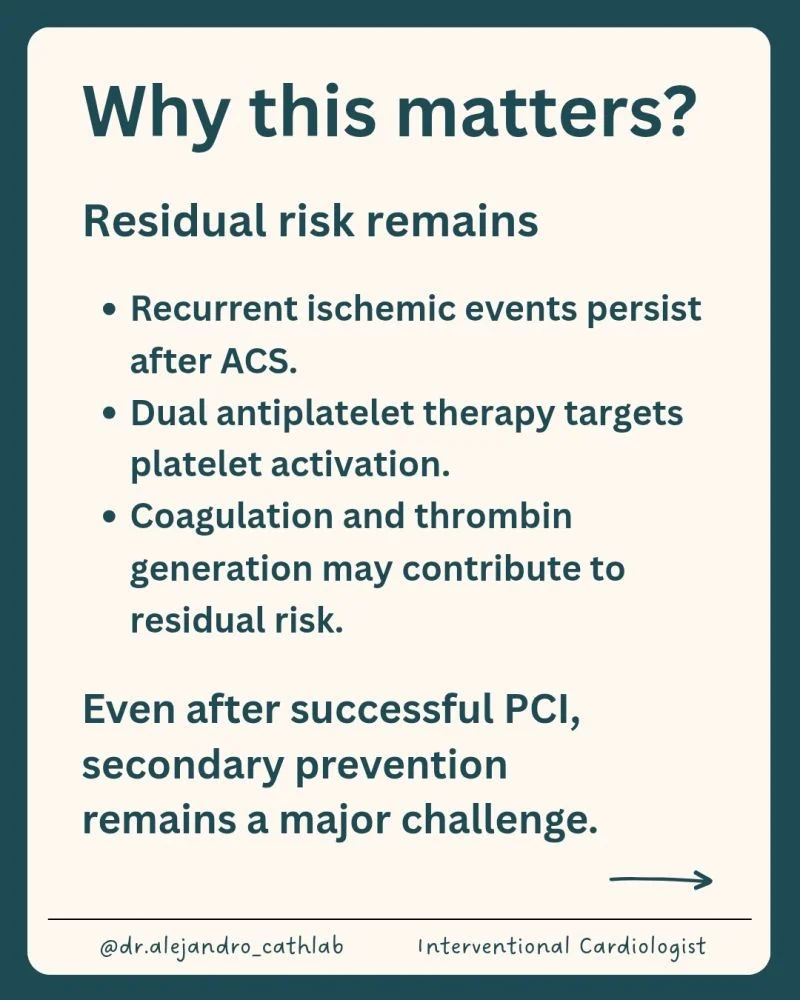
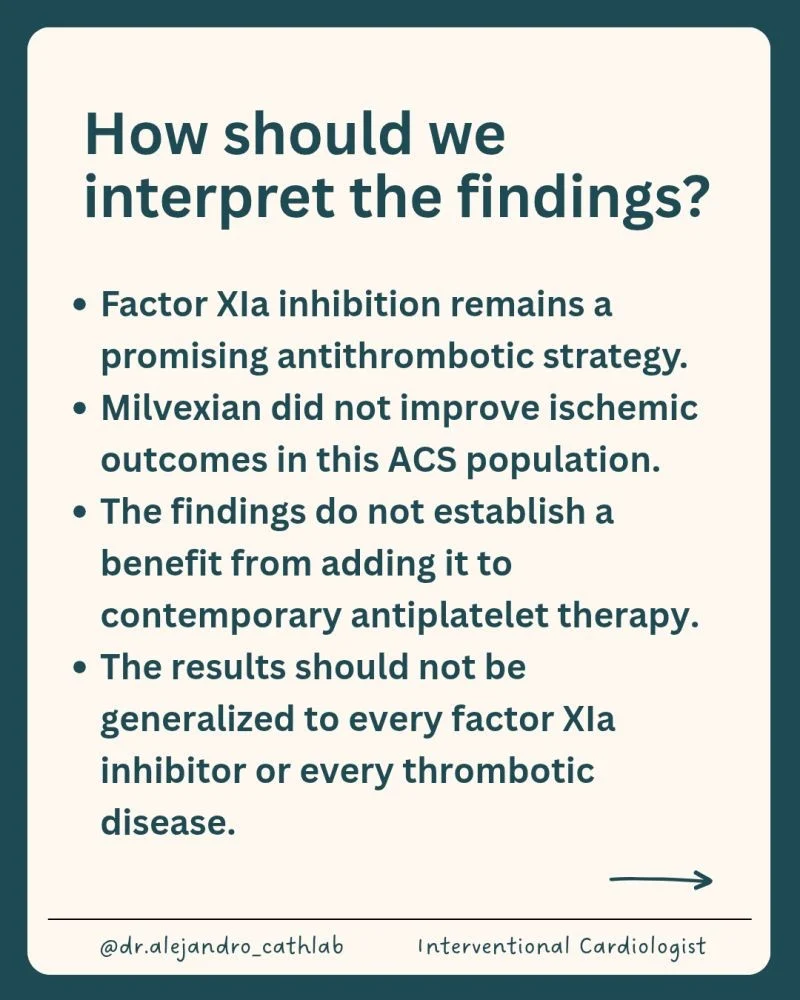
The clinical lesson: a compelling antithrombotic mechanism does not guarantee improved clinical outcomes. Factor XIa inhibition remains an important area of research, but these findings do not support a clinical benefit from adding milvexian in the studied ACS population.
What do you think is the future role of factor XIa inhibitors in cardiovascular medicine?”
Title: Milvexian with Antiplatelet Therapy after Acute Coronary Syndrome Event
Authors: C. Michael Gibson, P. Gabriel Steg, M. Cecilia Bahit, Rasha Al-Lamee, Shamir R. Mehta, Roxana Mehran, Jeffrey I. Weitz, Shinya Goto, Jose Carlos Nicolau, Renato D. Lopes, Junbo Ge, Nebojsa Tasic, Dominick J. Angiolillo, Suzanne J. Baron, Ajay J. Kirtane, Denis Xavier, Satoshi Yasuda, Basil S. Lewis, Duk-Woo Park, Jan H. Cornel, Thomas W. Johnson, Jaroslaw Trebacz, Daniel Duerschmied, Christoph Bode, Bela Merkely, Maria Dorobantu, Dragos Vinereanu, Zuzana Motovska, Hector Bueno, Jose Luis Lopez-Sendon, Gregory Ducrocq, Giuseppe Ambrosio, Lesley Burgess, Allan Bohm, Chern-En Chiang, Joao Morais, Alan Fong, Umit Guray, Jose Luis Leiva-Pons, Pascal Vranckx, Harvey D. White, Sasko Kedev, Marco Valgimigli, Duško Cerovec, Dimitris Tousoulis, Gemma Figtree, Thuong Dung Ho, Rody G. Sy, Morten Bøttcher, Kurt Huber, Rimvydas Slapikas, Andrejs Erglis, Jack Wei Chieh Tan, Christian Pincetti, Karen S. Pieper, Kenneth W. Mahaffey, Carolyn S.P. Lam, S. Claiborne Johnston, Graeme J. Hankey, Jennifer S. Li, Luke Zheng, Ronald Aronson, Danshi Li, Ravi Notani, Philippe Vieira Pires, Thomas J. Povsic, Alistair C. Lindsay, Alexei Plotnikov, Hsiaowei Deng, Elliot S. Barnathan, Robert A. Harrington
Other posts featuring Alejandro González Veliz on Hemostasis Today.
-
Oct 25, 2026, 13:0910 Posts Not to Miss This Week
-
Oct 25, 2026, 13:02Thomas Dayspring: Advancing Cardiovascular Risk Assessment Through Multidisciplinary Lipid Care
-
Oct 25, 2026, 12:46Ahmar U. Zaidi: RISE UP Study on Sickle Cell Disease
-
Oct 25, 2026, 10:32Jan Sloves: Advanced Venous Ultrasound Training in Poland
-
Oct 25, 2026, 10:20Jeff Sternlicht: Rethinking Cardiovascular Prevention Through Atherosclerosis Imaging
-
Oct 25, 2026, 10:12Dino Mehic: PhD Opportunity in Platelet Biology and Bleeding Disorders
-
Oct 25, 2026, 10:00Advancing Hemophilia Care Through Collaboration – WFH
-
Oct 25, 2026, 09:25Blood-Induced Joint Damage in Hemophilia: Beyond Recurrent Hemarthrosis
-
Oct 25, 2026, 05:30Denis Oduor: Whole Blood and Component Therapy in Clinical Practice