


Alexsander Santiago: Evaluating Clinical Harm from Missing versus Overdiagnosing HIT
Alexsander Santiago, Health Education Coordinator at Intensive therapy in Foco, shared a post on LinkedIn:
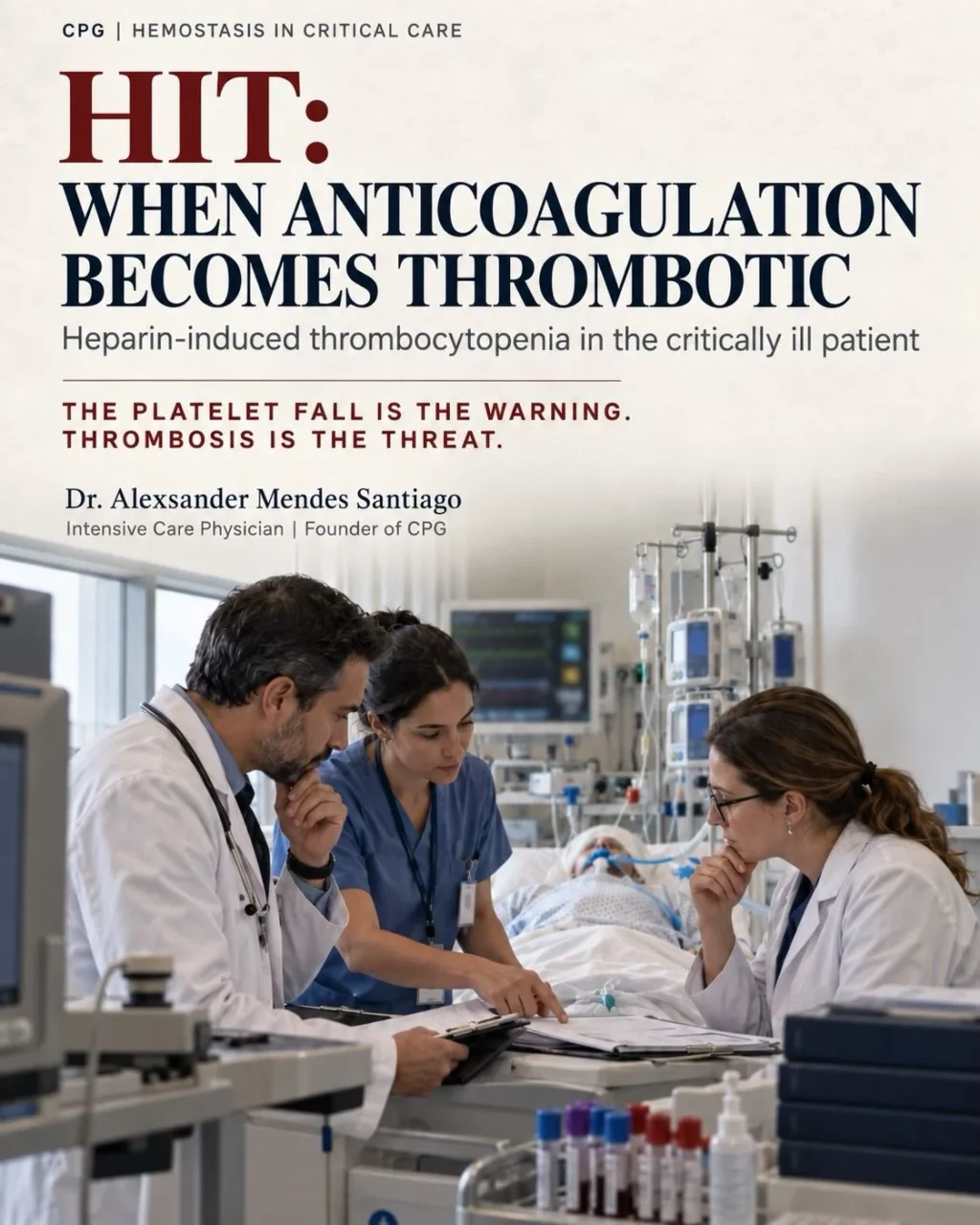
“The platelet fall is the warning.
Thrombosis is the threat.
Heparin-induced thrombocytopenia (HIT) is one of the most paradoxical complications we face in the ICU.
The platelet count falls.
But the patient is not primarily in danger because of bleeding.
The real emergency is an immune-driven, highly prothrombotic state.
Antibodies form against PF4/heparin complexes, activate platelets, amplify thrombin generation and can produce venous or arterial thrombosis.
That is why HIT should never be reduced to ‘thrombocytopenia after heparin.’
In critically ill patients, thrombocytopenia is common.
True HIT is not.
So the challenge is double:
- Miss HIT, then risk catastrophic thrombosis.
- Overdiagnose HIT, theb unnecessary testing, alternative anticoagulation and bleeding risk.
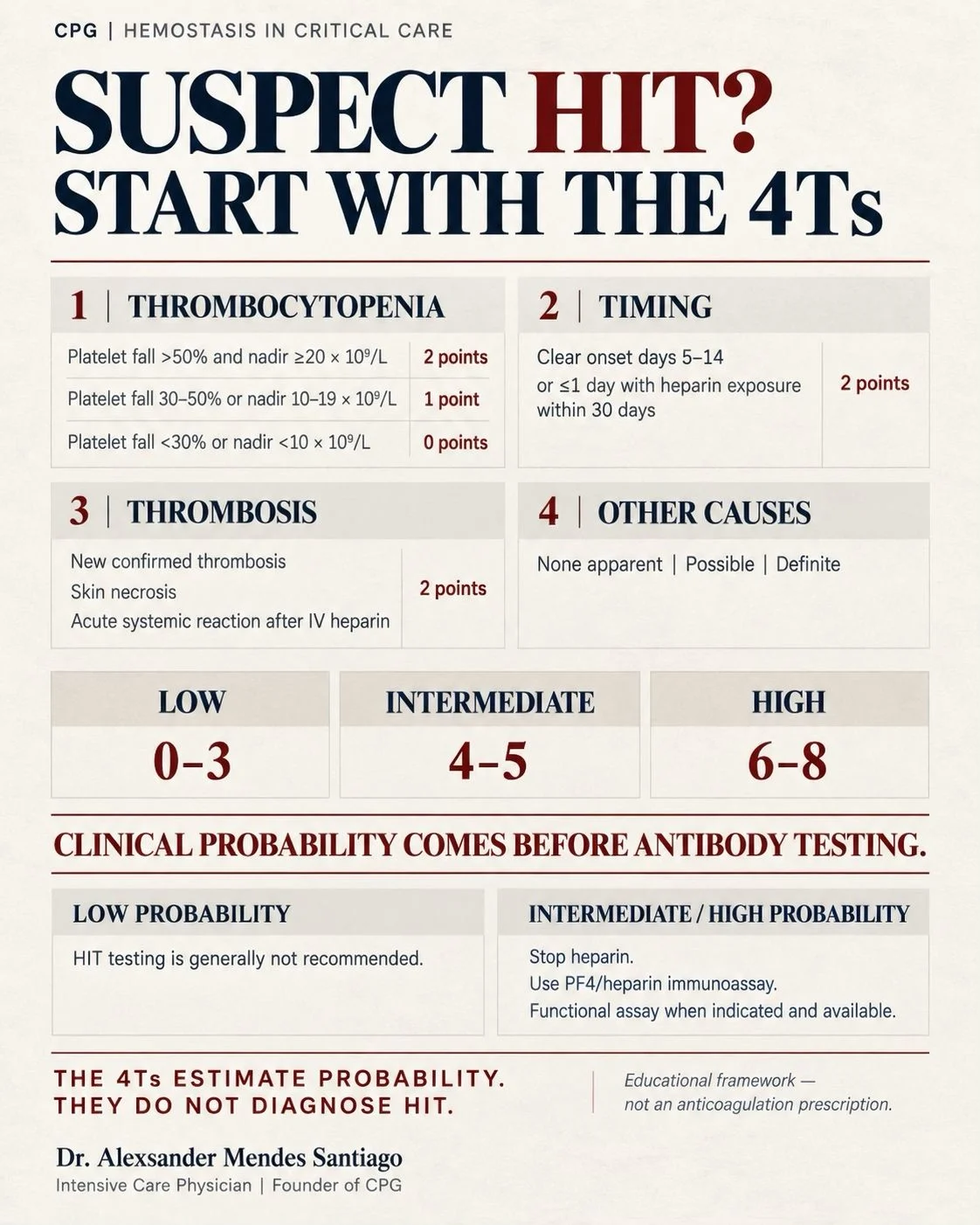
My bedside framework starts with the 4Ts:
1. Thrombocytopenia:
- How much did the platelet count fall?
- A fall >50 percent matters even if the absolute count is not dramatically low.
2. Timing:
- Classic onset is usually 5–14 days after heparin exposure.
- Earlier falls can occur with recent prior exposure.
3. Thrombosis:
- New venous or arterial thrombosis changes the entire picture.
4. Other Causes:
- Sepsis, DIC, drugs, devices, surgery and critical illness itself may explain the platelet fall.
- This is why the 4Ts score matters.
- ASH recommends using it before laboratory testing rather than relying on gestalt alone.
Low probability?
- HIT testing is generally not recommended.
Intermediate or high probability?
- Stop heparin, evaluate with a PF4/heparin immunoassay and, if positive, use a functional assay when available.
And importantly:
‘Stop heparin’ means identifying all relevant sources of heparin, not only the obvious infusion.
Treatment then requires a non-heparin anticoagulant, individualized to thrombosis, bleeding risk, organ function, clinical stability and procedural needs.
One more nuance matters:
- A positive PF4 immunoassay is not automatically HIT.
- Clinical probability and immunologic testing and functional confirmation, when available, belong together.
For me, the principle is simple:
Do not chase the platelet count.
Recognize the thrombotic syndrome.
In a heparin-exposed patient, a new platelet fall should trigger structured reasoning, not panic, and not complacency.
What causes more harm in practice: Missing HIT? Or overdiagnosing it?”
Stay updated with Hemostasis Today.
-
Sep 20, 2026, 16:19Astha Srivastava: The Missing Megakaryocytes in Amegakaryocytic Thrombocytopenia
-
Sep 20, 2026, 16:19Heghine Khachatryan: An Elegant Example of Precision Thrombolysis – Targeting the Scaffold of Microvascular Thrombosis
-
Sep 20, 2026, 16:01Mohamed Ismail: Managing Extensive Iliofemoral and Inferior Vena Cava DVT
-
Sep 20, 2026, 15:58Can αIIbβ3 Receptor Play a Role in Platelet Production – Glanzmann’s Research Foundation
-
Sep 20, 2026, 15:28Nico Gagelmann: iMTSS to Dissect the Drivers of Post-Transplant Outcomes
-
Sep 20, 2026, 15:10Ashenafi Tazebew Amare: Building the Future of Blood and Specialized Healthcare
-
Sep 20, 2026, 15:03Bastu Odoka: How Much Does Blood Transfusion Raise Hemoglobin in Children?
-
Sep 20, 2026, 14:58Julieta Rosales: Advancing Evidence-Based Stroke Care Through Education and Collaboration
-
Sep 20, 2026, 14:52Maha Othman: The Life, Function and Death of Platelets