

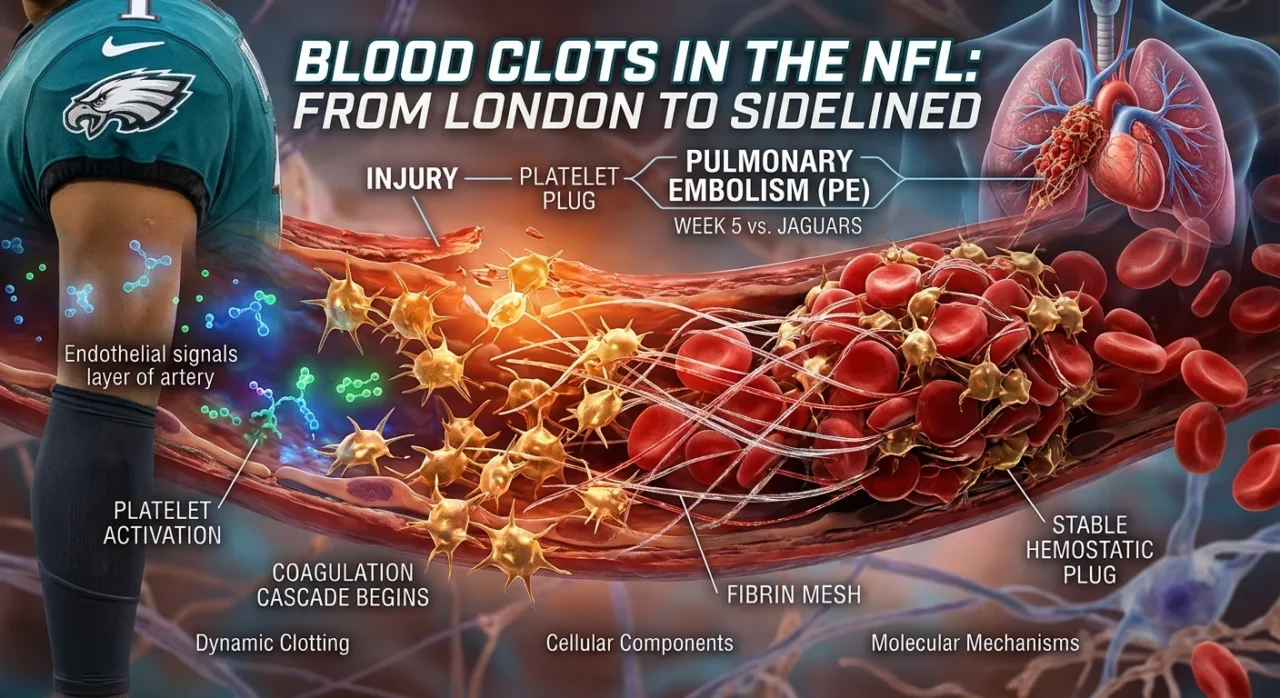
Basem Goueli: Blood Clots in the NFL
Basem Goueli, CEO and Founder of Cancer Light, CEO and Founder of Cancer Clarity, shared post on LinkedIn:
“I Live in the Blood Clot World
As a hematologist/medical oncologist, I’ve had very few days in my 16 plus year career where I haven’t cared for someone with a blood clot.
I’m also an avid sports fan, including soccer, football, basketball, etc. I grew up in Minnesota so I’m a Minnesota fan, through and through—the Vikings, Timberwolves, Wild, Twins, United, etc. My parents are from Egypt so I was rooting hard for them in the World Cup and still contend they were shafted in the Argentina game.
But I digress.
The Jalen Hurts Case: From London to Sidelined
Jalen Hurts, the franchise quarterback for the Philadelphia Eagles, incurred a superficial blood clot in his calf after being cleated there. It was noted on an ultrasound of the lower extremity on October 10 in London. Per ESPN, Hurts was in a London hospital late at night and returned to his hotel at 3 AM local time. At 10:30 AM, Hurts went to the stadium for pre-game warm-ups and later played quarterback against the Jacksonville Jaguars at Tottenham Hotspur Stadium.
Per ESPN, there are no details on why Hurts was allowed to play in the game, but NFL officials confirmed they had been in contact with Eagles medical personnel and Cleveland Clinic London throughout the process. The NFL chief medical officer, Allen Sills, called the Eagles’ treatment of Hurts ‘very conservative, very patient-focused and appropriately guarded in every step.’
After returning to Philadelphia, Hurts underwent a follow-up ultrasound on October 13 that revealed “movement of the blood clot,” prompting the Eagles to rule him out. Hurts’ agent, Nicole Lynn, and the Eagles released a subsequent statement saying that after further testing and monitoring, the new diagnosis was deep venous thrombosis (DVT)—a clot in the deep veins of the legs—and bilateral pulmonary emboli (PE), clots in the pulmonary arteries in both lungs. Hurts is now expected to miss the rest of the season.
Yesterday, per ESPN, Mr. Sills stated that doctors speculating online about ‘what should have been done’ without all the data or being in the room are ‘unprofessional and unethical.’ Jeff Miller, NFL executive vice president overseeing player health and safety, stated: ‘Conservative steps were taken to ensure Jalen Hurts’ health was always made the first priority and continues to be.’
Arteries vs. Veins: The Clinical Breakdown
I’ve literally seen thousands of patients for new DVTs and PEs over the years. When I see them, this is the review I write for them on a whiteboard. You can have blood clots in the arteries (like heart attacks and strokes) or clots in the veins. The predominant venous clots are DVTs and PEs, but theoretically, you can have a clot in any vein (e.g., superior sagittal sinus, superior mesenteric, splenic, portal, etc.).
When we evaluate clots in the veins, we ask ourselves if there was a clear, identifiable trigger (provoked) or not (unprovoked).
Provocations: These include surgery, trauma, immobility (long plane or car rides), estrogen (birth control pills, pregnancy, hormone replacement), cancer, hereditary conditions (Factor V Leiden mutation, prothrombin gene mutation, ATIII deficiency, protein C/S deficiency), blood proteins (lupus anticoagulant, B2 glycoprotein, cardiolipin), venous stasis (varicose veins), and myeloproliferative neoplasms (polycythemia vera, essential thrombocytosis).
Why it matters: The presence of a provocation determines how long someone needs to be on an anticoagulant, such as Eliquis, Xarelto, Pradaxa, Edoxaban, Lovenox, or Coumadin. A provoked clot with a resolved trigger typically requires 3–6 months of blood thinners. An unprovoked clot usually requires anticoagulation indefinitely.
Anatomical Risk and the Vascular Highway
In Hurts’ case, his clot was presumably provoked by trauma (being kicked by a cleat). What is critical to understand is that his clot was initially in the superficial veins of the calf, not the deep veins. This matters because superficial venous clots rarely migrate superiorly through the inferior vena cava into the lungs.
To visualize the structural proximity of these networks and why the initial risk profile can change rapidly, see the vascular architecture detailed below in Figure 1:
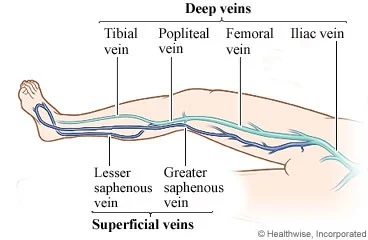
Figure 1: Anatomical comparison mapping out the superficial venous network relative to the deep venous system of the lower extremity.
What we worry most about with clots in the legs, such as DVTs, is that they migrate through the inferior vena cava, causing a fatal pulmonary embolism (e.g., a saddle pulmonary embolism). DVTs can be painful and debilitating, but are essentially never fatal. In contrast, pulmonary emboli can rarely be fatal events.
To see how a lower-extremity DVT physically breaks off and journeys straight up the vascular highway to compromise pulmonary function, refer to the systemic tracking in Figure 2:
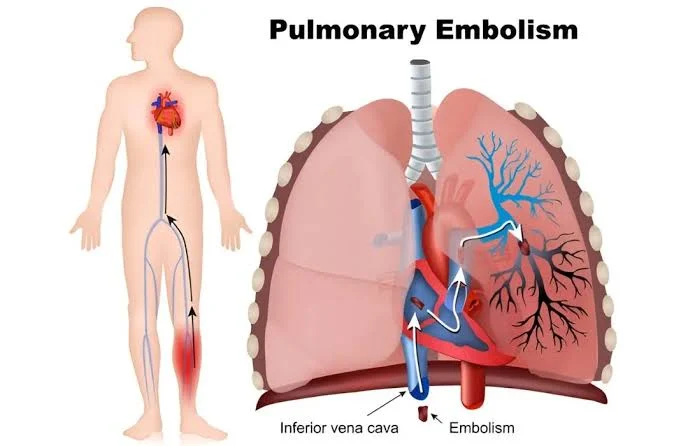
Figure 2: Systemic progression showing how deep vein thrombosis (DVT) detaches and travels superiorly to occlude the respiratory pathways.
I wasn’t in London with Hurts, but I surmise the physicians there felt that because the clot was provoked and superficial, it was of minimal risk for him to play in the Jaguars game. Here are some important considerations from my perspective:
Proximity to Deep Veins: How close was the superficial venous thrombus to the deep veins? If it was very close, it essentially should be treated as a DVT and considered much higher risk. Calf vein thrombi generally have a lower risk of migrating to the lungs than proximal leg clots, but they absolutely still can.
Extensiveness: How extensive was the superficial thrombus?
Patient History: Did Hurts have a family history of clots, prior experience with clots, or additional ‘soft’ risk factors?
An ‘Abject Failure’
These questions matter, but in the overall scheme of things, they don’t have a substantial impact on how I see this situation. And here’s why: When you come to me for a venous thrombus, my entire job as a hematologist is to make sure you don’t get another one, or that the thrombus doesn’t worsen or manifest as a pulmonary embolism. It’s why you’re paying me.
Although evaluating the risk/benefit ratio of initiating a blood thinner can be nuanced, the true measure of success is whether or not the patient’s clot worsens or fragments. In this case, not only did Hurts’ clot worsen locally, it manifested as a bona fide DVT and bilateral PEs. No matter what the NFL doctors say, there is zero way you can’t call this an abject failure.
When a clot transforms into a bilateral pulmonary embolism, the physical blockage severely compromises cardiorespiratory function. Figure 3 illustrates the structural danger of multiple embolic occlusions settling across both lungs as a saddle pulmonary embolism, underscoring exactly why pulmonary emboli are concerning for anyone, let alone an NFL player.
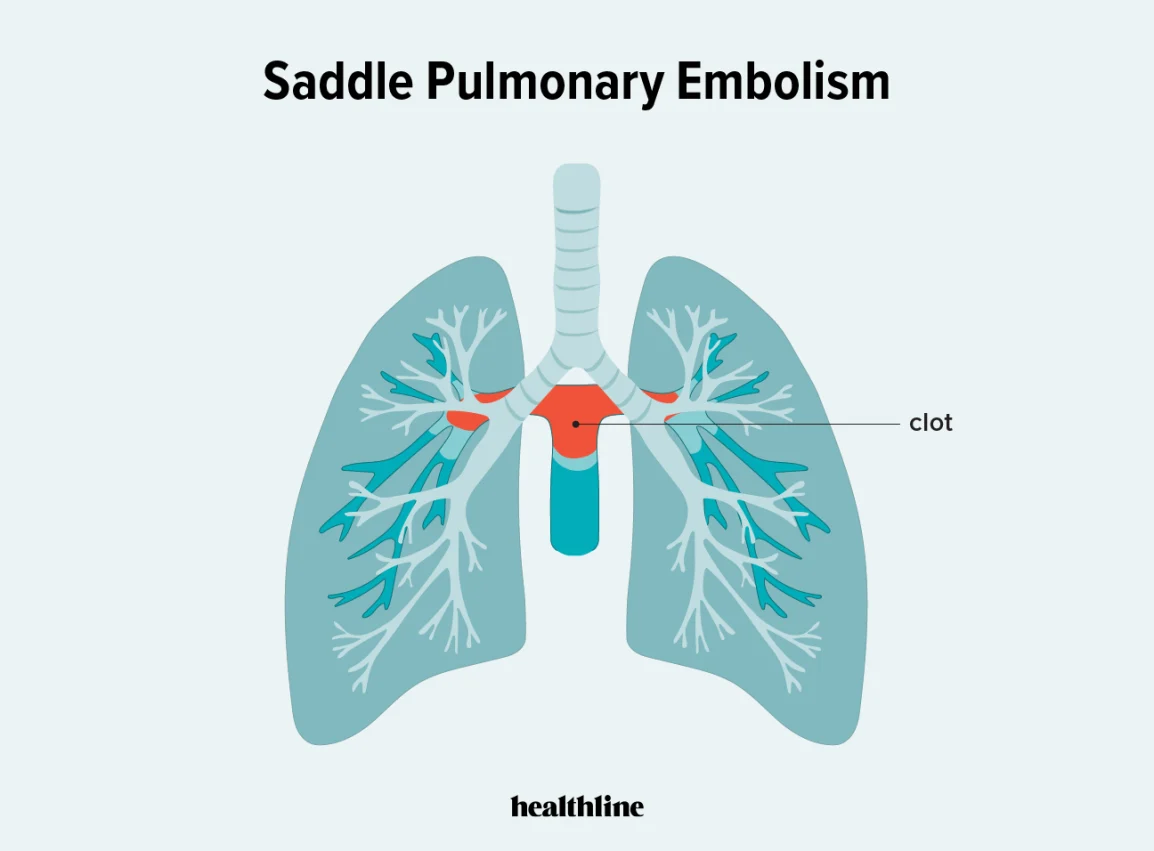
Figure 3: Medical rendering of bilateral pulmonary emboli occluding the main branching pulmonary arteries of the lungs.
Now, there may have been extenuating circumstances surrounding this failure. I’m guessing the physicians talked extensively about the risk of playing NFL football with a superficial thrombus with Hurts and the medical team. I’m guessing the decision wasn’t made in a vacuum.
But again, it doesn’t matter, and much of what’s being said is window dressing. Specifically, I’m referring to Dr. Allen Sills calling the treatment ‘very conservative, very patient-focused and appropriately guarded.’
I call bullshit.
The most conservative approach to Hurts’ superficial thrombus absolutely would have been to keep him out of the game in London, monitor the thrombus for spontaneous resolution, and potentially put him on aspirin (since it was superficial) or a direct oral anticoagulant if it was tracking close to the deep veins. No matter which of those conservative paths you take, they all reside on Hurts not playing in an NFL football game.
Ultimately, if I’m being fully honest, if I was one of the hematologists involved in Hurts’ initial consultation, I would feel awful and I wouldn’t want my name circulating in the media because it looks horrendous. I would also be very thankful Hurts didn’t die.
Which brings me to another point… Hurts had to fly back from London after incurring a superficial thrombus that he played a full NFL game with. Was he on a blood thinner when he flew? Remember the risk factors for venous clots I outlined above—long international flights cause substantial venous stasis that can increase blood clot risk.
Hurts is presently on anticoagulation. I’m guessing he’s either taking Eliquis or Xarelto. His DVT and PE are likely felt to be secondary to compounding factors that could have been mitigated with rest.
Hurts will likely receive 3-6 months of anticoagulation as his DVT and PEs are considered provoked, but Eagles fans, like Spurs fans, will be holding their breather afterwards. Importantly, if I were Hurts’ hematologist I would get a repeat CTA chest and ultrasound of the lower extremities to document resolution of his clots and obtain a new baseline at 3 months. I would also do a d-dimer, which is beyond the scope of this article. I would run a full hypercoagulability work-up as a precaution. I would also, as I have with other professional athletes I’ve seen in similar situations, truly outline the risks and benefits of continuing to play in the NFL with a history of a football provoked venous thrombus.
I absolutely, barring unforeseen results from testing I would do, would give Hurts’ body a ‘second chance’ and sign off on him playing again.
However, as I’m sure he knows, DVTs and PEs have ended tremendous sports careers. Indeed, Chris Bosh, the all-star forward/center for the Miami Heat and Toronto Raptors was forced to retire early from the NBA because of blood clots.
Victor Wembenyama, one of the top 3 NBA players in the world at the age of 22, had a DVT in his right shoulder in February 2025 that was presumably linked to ‘repetitive motion and travel’ and likely NBA related activity. That clot ended his 2024-2025 season. Fortunately, he hasn’t had a recurrence, but every San Antonio Spurs fan holds their breath in this regard, for if he were to have a second DVT or PE incident he would likely have to consider forced retirement due to necessity of anticoagulation.
Interestingly, after the comments made by NFL chief medical officer, Allen Sills, the NFL Players Association (NFLPA) issued a statement last night calling for a “full investigation” into the medical care provided to Eagles quarterback Jalen Hurts, per ESPN.
Per ESPN, the NFLPA was responding to Allen Sills’ press conference and reports the league will not issue any punishment to the Eagles for how they managed the process surrounding Hurts being cleared to play, which I can almost guarantee I never would have done as he had a superficial calf thrombus and was about to play an NFL game.
Good on the NFLPA. They should be inquiring about this.
It’s not chess. It’s not checkers. It’s not even baseball.
It’s the NFL.
Allen Sills is right that no doctor can fully comment on how Hurts’ situation was managed as they don’t have the details.
But with respect to the only metric that matters to me somebody and/or the system failed as Hurts went from having a superficial venous thrombus in the calf to DVT and bilateral pulmonary emboli in a few days.
By no metric is that a success. And for a hematologist/medical oncologist that should keep you up at night. Go Vikings!”
Stay updated with Hemostasis Today.
-
Oct 22, 2026, 17:57Syed Ahmed: Viral Triggers of Immune Thrombocytopenia and Thrombosis
-
Oct 22, 2026, 17:49Valerie Tutwiler: Bridging Engineering and Medicine to Advance Thrombosis Research
-
Oct 22, 2026, 17:41Jesus Ardila Novoa: How Patient Education Can Transform Hemophilia Care
-
Oct 22, 2026, 17:30Filipe Gonçalves: Advancing Bleeding Disorder Diagnosis Through Multidisciplinary Collaboration
-
Oct 22, 2026, 17:17Storage Pool Deficiency An Overview of a Rare Platelet Disorder – EHC
-
Oct 22, 2026, 17:10Matthew Hazell: Optimizing the Use of Rare Red Blood Cell Units
-
Oct 22, 2026, 17:03Smita Patil: New Insights Into Platelet Alpha-Granule Secretion
-
Oct 22, 2026, 16:48Ahmed Alotaibi: Rare Rh Phenotype and Severe Fetal Anaemia
-
Oct 22, 2026, 16:36Alissa Odum: Every Blood Type Matters Every Donation Saves Lives