

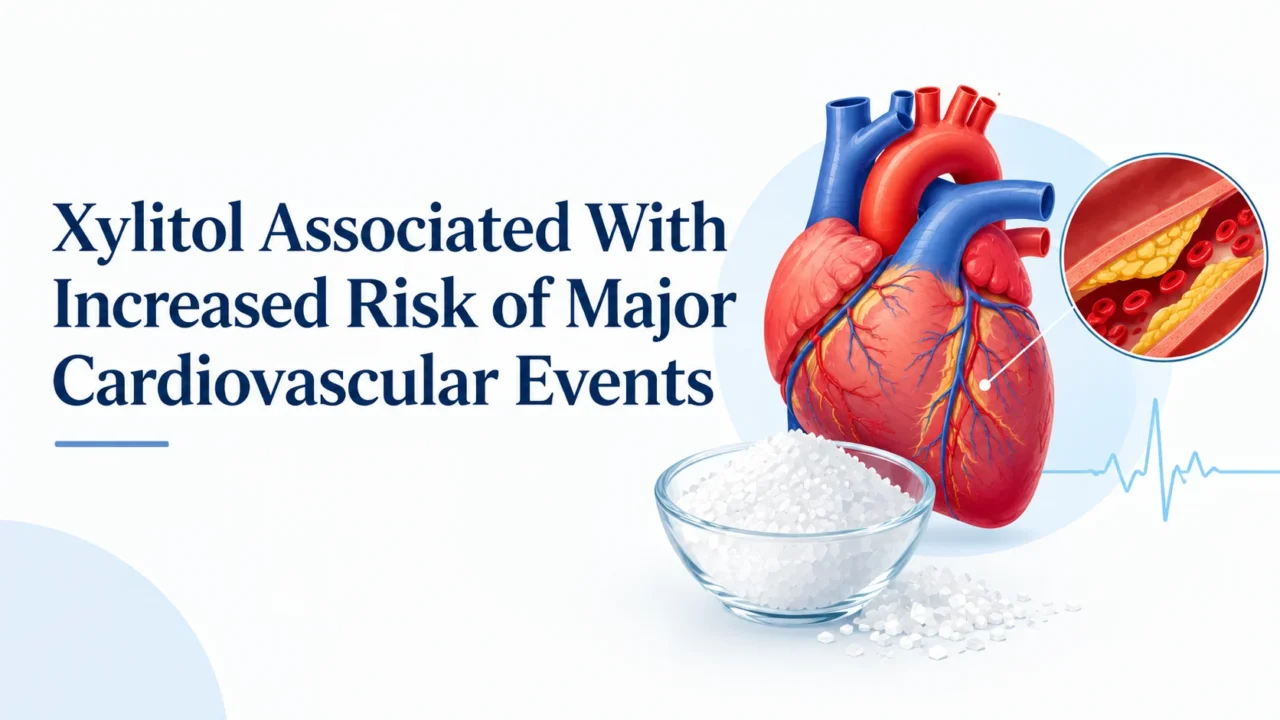
Beth Shirley: Xylitol Consumption Increases Platelet Reactivity and Cardiovascular Risk
Beth Shirley, Director of Education and Research at Approved Medical Solutions, shared a post on LinkedIn:
“Xylitol Linked to Risk for Major Cardiac Events
Blogged about this 2 years ago
Posted that xylitol enhances multiple indices of platelet reactivity and in vivo thrombosis
Previously shown in population with high burden of CV risk factors already over a 3 year period
New info – even with no traditional CV risk factors, xylitol can increase cardiac events
Xylitol, aka birch sugar extracted from birch wood, is a 5 carbon sugar alcohol
Even though we can produce these sugar alcohols endogenously, they are 1000 fold lower than observed following consumption
Added to many consumer products
Labeled as ‘keto-friendly’, ‘diabetic friendly’, or sugar free
- Candy and gum
- Toothpaste
- Nitrate chewing gum
This study ~18,000 participants, high levels in blood, associated with increased risk of CV events
Risk was Independent of many traditional CV risk factors including
- Age
- BMI
- Bp
- Diabetes
- Lipid status
- Smoking
After adjusting for traditional CV risk factors
Highest intake – greater risk for MACE (Major Adverse Cardiovascular Events)
- Myocardial infarction
- Stroke
- Death
- Consistent results across all subgroups
CV event 57 percent higher in those with highest level vs lowest level in 6 year follow up
Follow up period of 30 years, MACE was 18 percent higher
Suggests dose-dependent relationship
Their conclusion
‘In general population, we have shown that xylitol levels in blood are associated with event risk and based on known pro-thrombotic properties of xylitol, we can assume or speculate that even without overt CVD, xylitol portends risk in general population’.
Many people with these CV risk factors are looking to decrease sugar intake so they search for low to no calorie sweetener
These artificial sweeteners are widely accepted and embraced by modern society
However, these observational studies are showing a dark side to these sugar alcohols
Just say no to these sugar alcohols
While xylitol may have some positive effects on NO, its tendency to increase platelet activity and thrombosis raises considerable concern about CV health…..”
Stay updated with Hemostasis Today.
-
Oct 6, 2026, 16:37Jared Rice: What Sets the Transfusion Threshold in Anemia of Prematurity?
-
Oct 6, 2026, 16:30Thirunavukkarasu Angappan: Immunoglobulin Decides How Much Plasma Gets Collected
-
Oct 6, 2026, 16:18Gemma Davies: New CMML Research Selected for Presentation at the 68th ASH Annual Meeting
-
Oct 6, 2026, 16:03Professor Csongor Kiss Receives the Kálmán Laki Prize – Hungarian Society of Thrombosis and Haemostasis
-
Oct 6, 2026, 15:52Mark Kheifets: A Massive Stent Thrombosis Requiring Aspiration Thrombectomy
-
Oct 6, 2026, 15:40Joseph Aslan։ Targeting Mitochondrial Permeability Transition To Reduce Platelet Thrombogenicity
-
Oct 6, 2026, 15:36Nominations Open for ISTH Outstanding Mentor Awards – ISTH
-
Oct 6, 2026, 15:17Walaa Obaid: How Warfarin Went From Poison To Medicine
-
Oct 6, 2026, 15:16Nathan Hutchinson-Jones: Pharmacist-Led Care Optimises Cancer-Associated Thrombosis