


Brandy Seyller: Why Understanding the Coagulation Cascade Matters in Bleeding Cases
Brandy Seyller, Founder of ClinicianExperts.com and MedLexHQ.com, shared a post on LinkedIn:
“If you don’t understand the coagulation cascade, you can’t evaluate a bleeding case for merit.
I mean that literally. Especially an ECMO case.
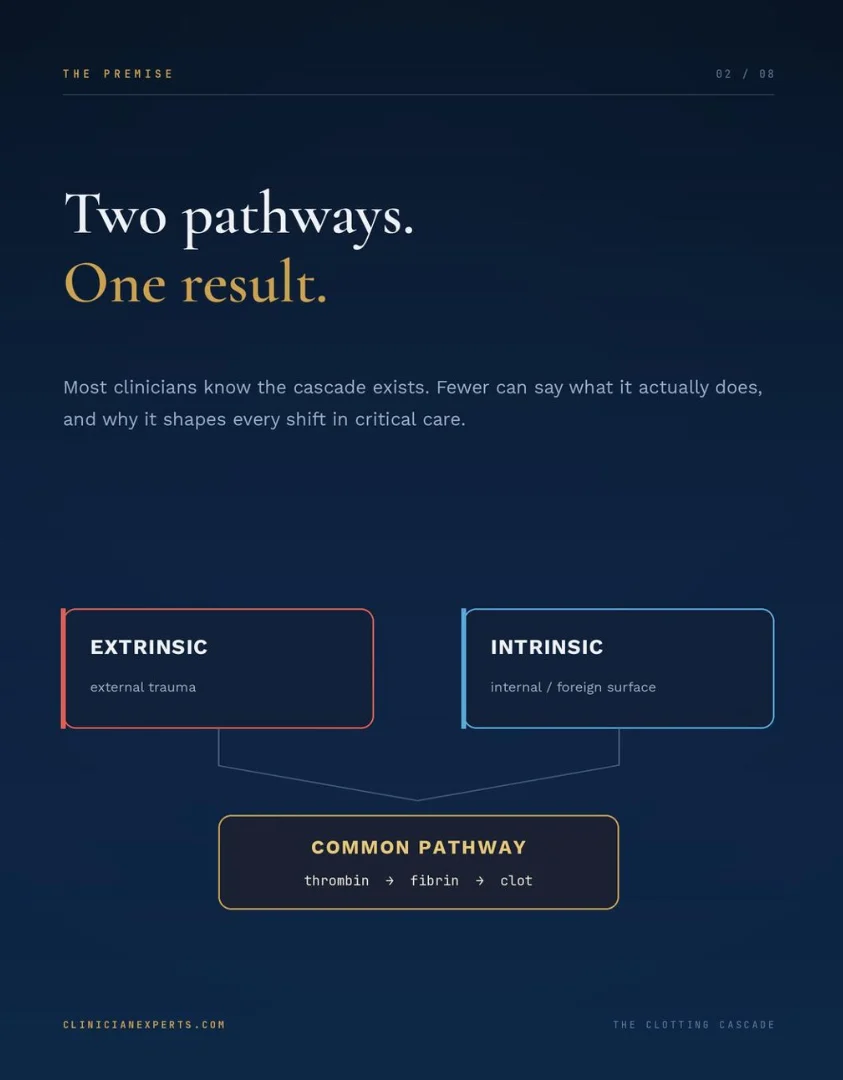
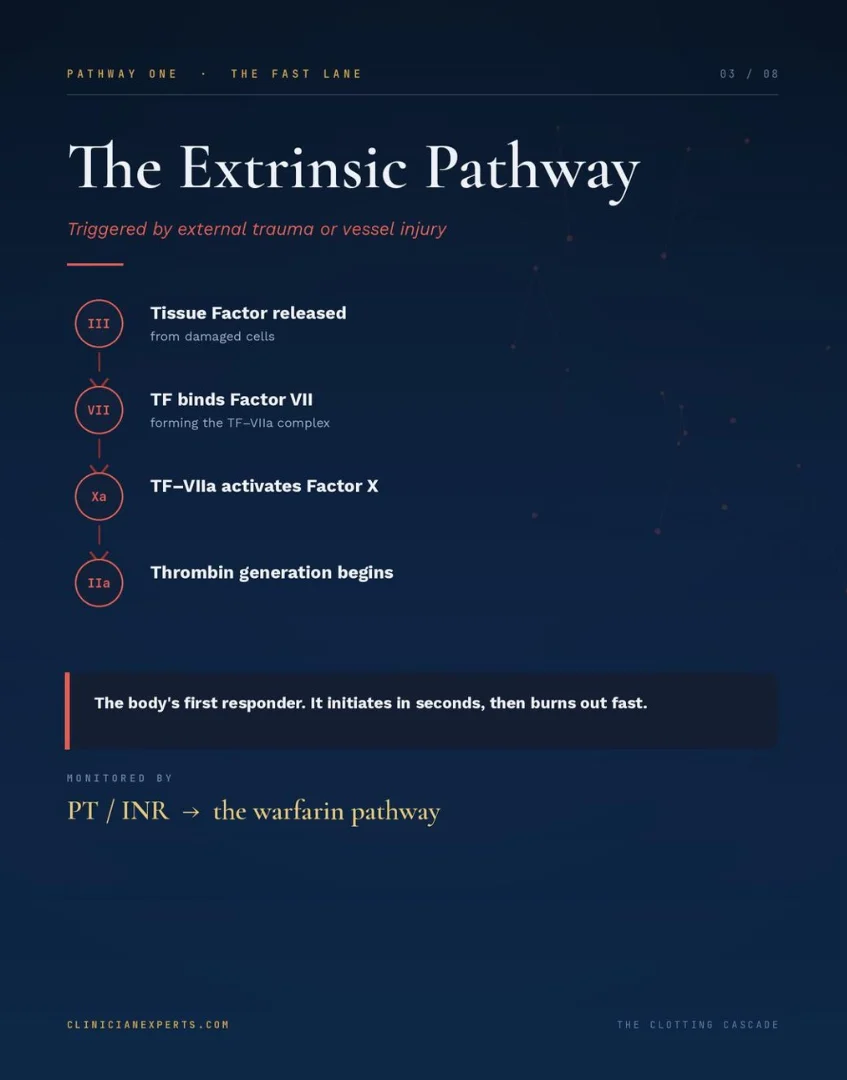
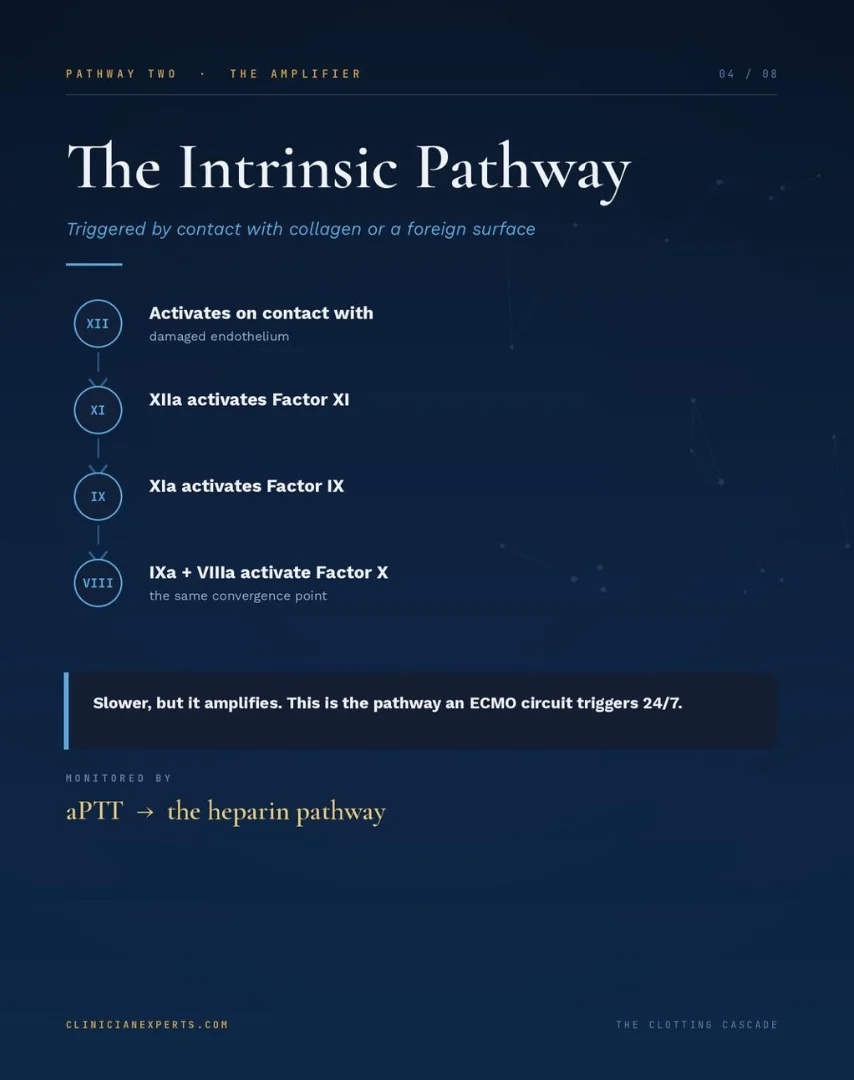
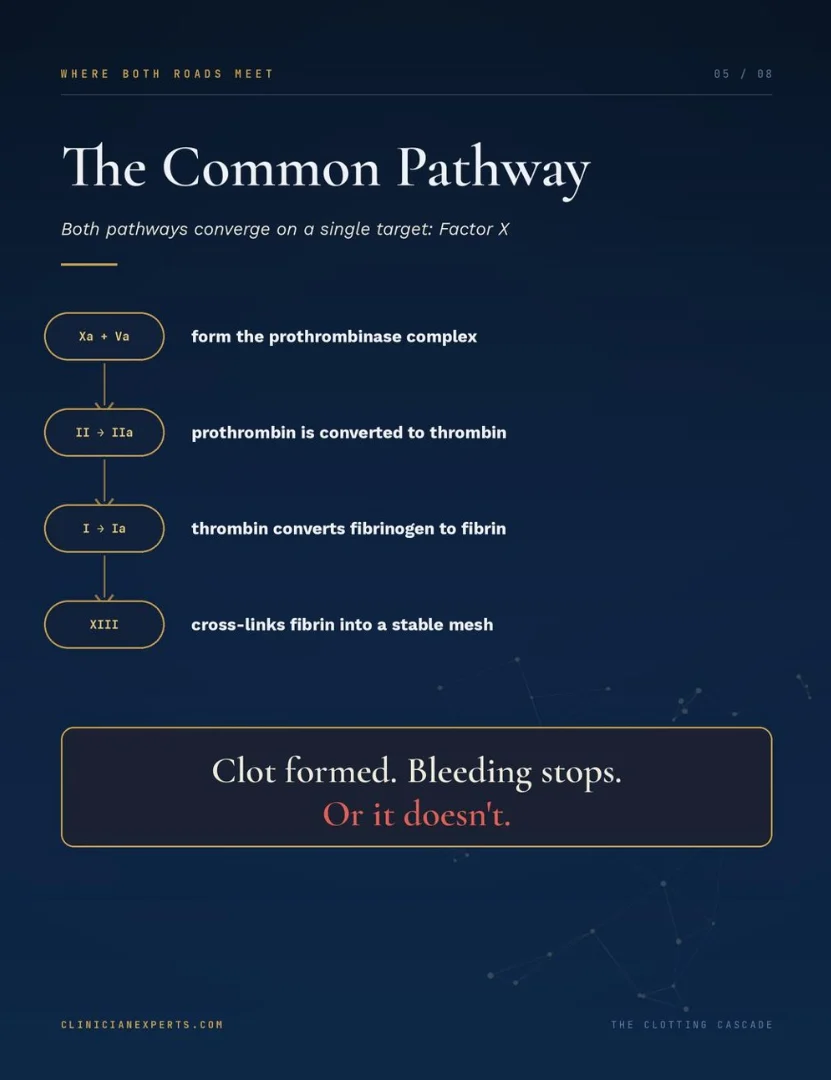
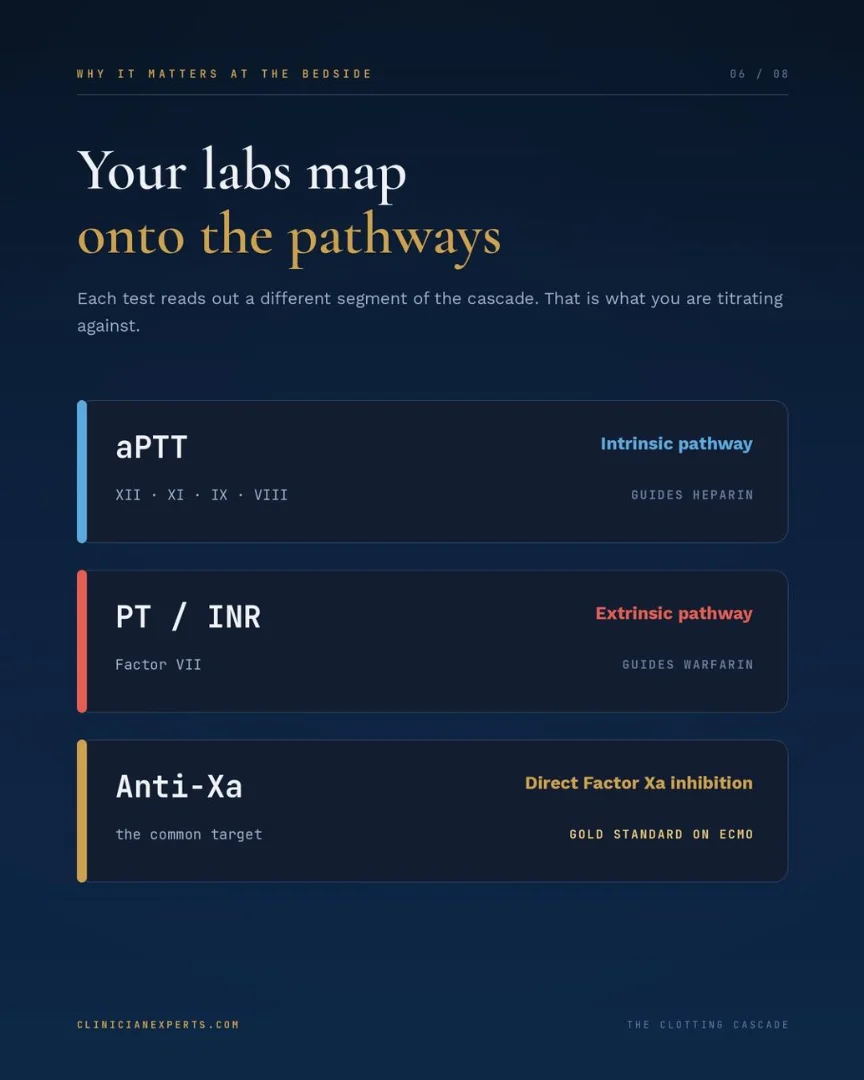
The cascade has three pathways: extrinsic, intrinsic, and common. Each one feeds into the next through a chain of clotting factors. Disrupt one factor, and the whole system can fail.
In litigation, that matters because:
- Hemophilia A means factor VIII is missing
- Hemophilia B means factor IX is missing
- Vitamin K deficiency knocks out factors II, VII, IX, and X
And then there’s antithrombin III.
AT3 is the protein that makes heparin work.
Heparin doesn’t anticoagulate on its own. It binds to AT3, and AT3 does the actual work of inhibiting clotting factors.
If AT3 levels are depleted, heparin loses its effectiveness.
The patient may look adequately anticoagulated, buttThey may not be.
In cases involving prolonged heparin use, liver disease, nephrotic syndrome, or sepsis, AT3 deficiency is a real and documented risk. It is important to have someone review the case that knows to look for the details, was AT3 checked?
Was heparin resistance investigated? Was the dose adjusted or a different agent considered?
If the answer is no, and the patient clotted or bled, that’s a problem that may a liability.
Blood thinners add another layer entirely.
Warfarin, heparin, direct oral anticoagulants like apixaban and rivaroxaban, and antiplatelet agents each carry distinct bleeding risks.
Managing them before surgery isn’t optional. It’s a clinical obligation with a timeline.
The questions I ask when doing an initial case review:
- Was the bleeding risk assessed before the procedure?
- Was anticoagulation held for the correct number of days?
- Was a bridging protocol indicated and followed?
- Was reversal considered? Was it ordered in time?
- Did the team document the decision and the rationale?
Reversal agents exist for a reason. Vitamin K and FFP for warfarin. Protamine for heparin.
Andexanet alfa for factor Xa inhibitors. Idarucizumab for dabigatran. If a patient bled out and reversal wasn’t on the table, documentation should be in place to know why.
When I review the records, I’m asking: did the team know this patient’s clotting history before surgery? Was anticoagulation managed correctly? Was a bleeding complication caught in time?
The coagulation cascade ends with fibrinogen converting to fibrin, forming a stable clot.
When that process breaks down and nobody acted on the warning signs in the chart, that’s where negligence lives.
Clinical knowledge isn’t just bedside skill. It’s the foundation of every report I write.
As an LNC, I can find this information before you find your medical expert… which I can also help you find on the platform I built that uses both AI and a 30-point algorithm to find the top 3 best scored matches at ClinicianExperts.”

Stay updated with Hemostasis Today.
-
Sep 13, 2026, 12:31Vishakha K. Kumar: ISTH Opens Public Comment Period on New Guidance
-
Sep 13, 2026, 12:13Tahsin Ara Mim: Takayasu’s Arteritis Case Report Secures 2nd Runner-Up
-
Sep 13, 2026, 11:26Tareq Abadl: When Good Samples Give Bad Numbers – Spotting EDTA Contamination in the Lab
-
Sep 13, 2026, 11:22Amanda Unsworth: Gratitude and Next Steps as Leadership Transitions at The Platelet Society
-
Sep 13, 2026, 11:18Mary Cushman: Covering Associations of Antiphospholipid Antibodies with Stroke
-
Sep 13, 2026, 11:13Mavis Agnes Kisakye: How Community Partnerships Are Driving Opportunity for Youths with Bleeding Disorders
-
Sep 13, 2026, 11:07Dianne E. van der Wal: Transforming Science into Art – The Launch of The Life, Function and Death of Platelets
-
Sep 13, 2026, 10:18Daniel Victor Ortigoza: Understanding Stroke, Risk Factors and Prevention
-
Sep 13, 2026, 08:13Selina Olwanda Ogweno: Expanding Access to Sickle Cell Care for Children and Young People