


Burhan Ullah: Blood Components Overview
Burhan Ullah, Medical Laboratory Technologist of Chughtai Lab, shared a post on LinkedIn:
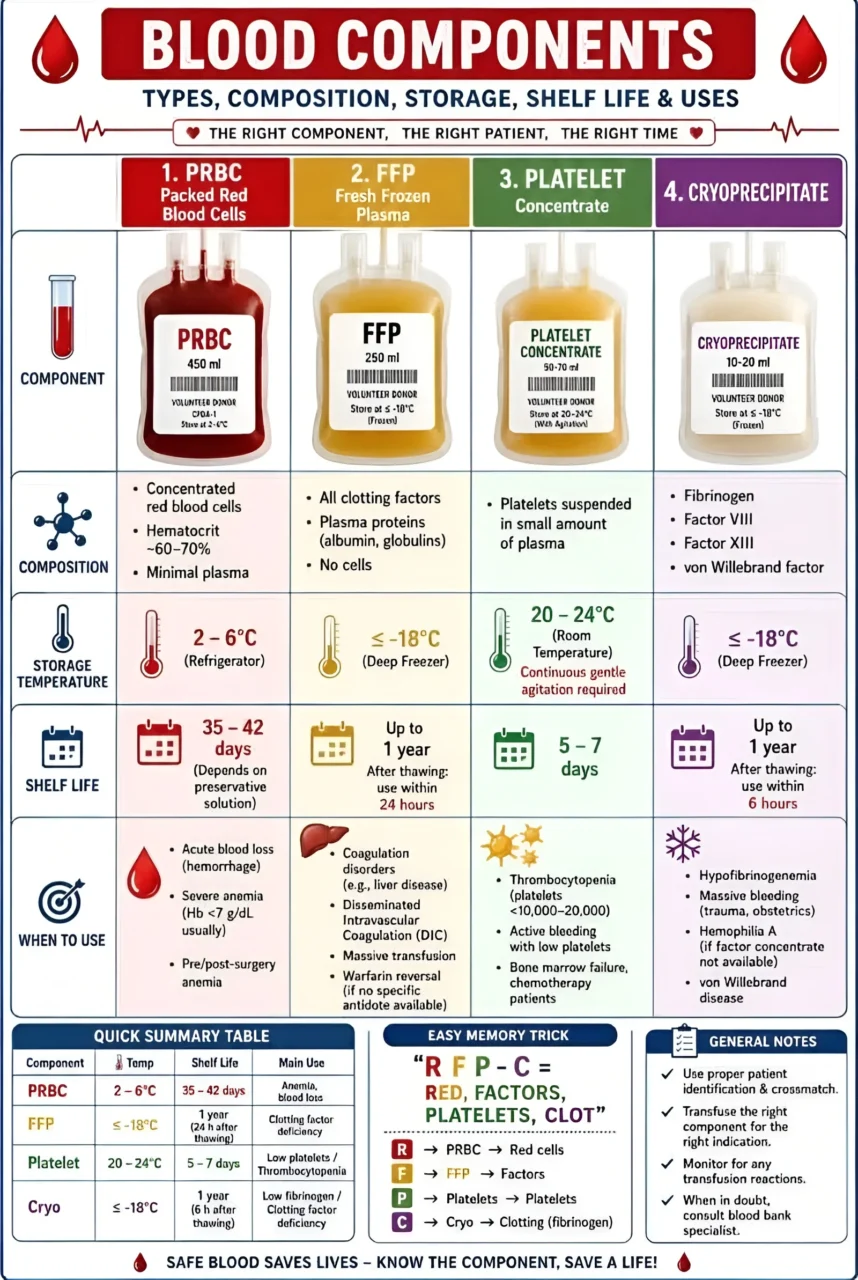
“Blood Components Overview
Understanding the specifics of blood components is vital for effective transfusion medicine.
Here is a comprehensive guide to the four main types, their storage requirements, and clinical indications.
1. Packed Red Blood Cells (PRBC)
Composition:
- Concentrated red blood cells
- Hematocrit ~60–70%
- Minimal plasma
- Storage Temperature: 2–6°C (refrigerator)
Shelf Life: 35–42 days (depends on preservative solution)
When to Use:
- Acute blood loss (hemorrhage)
- Severe anemia (Hb <7 g/dL usually)
- Pre/post-surgery anemia
2. Fresh Frozen Plasma (FFP)
Composition:
- All clotting factors
- Plasma proteins (albumin, globulins)
- No cells
- Storage Temperature: -18°C or colder (deep freezer)
Shelf Life:Up to 1 year
After thawing: use within 24 hours
When to Use:
- Coagulation disorders (e.g., liver disease)
- Disseminated Intravascular Coagulation (DIC)
- Massive transfusion
- Warfarin reversal (if no specific antidote available)
3. Platelet Concentrate
Composition:
- Platelets suspended in small amount of plasma
- Storage Temperature: 20–24°C (room temperature)
- Continuous gentle agitation required
Shelf Life: 5–7 days
When to Use:
- Thrombocytopenia (platelets <10,000–20,000)
- Active bleeding with low platelets
- Bone marrow failure, chemotherapy patients
4. Cryoprecipitate
Composition:
- Fibrinogen
- Factor VIII
- Factor XIII
- von Willebrand factor
Storage Temperature: -18°C or colder
Shelf Life: 1 year
After thawing: use within 6 hours
When to Use:
- Hypofibrinogenemia
- Massive bleeding (trauma, obstetrics)
- Hemophilia A (if factor concentrate not available)
- von Willebrand disease
Quick Memory Table
Component Temp Shelf Life Main Use
- PRBC 2–6°C 35–42 days Anemia, blood loss
- FFP ≤ -18°C, 1 year, Clotting factor deficiency
- Platelets 20–24°C; 5–7 days; Low platelets
- Cryo ≤ -18°C; 1 year; Low fibrinogen
Easy Memory Trick
‘RFP-C: Red, Factors, Platelets, Clot’
- R denotes PRBC denotes Red cells
- F denotes FFP denotes Factors
- P denotes Platelets denotes Platelets
- C denotes Cryo denotes Clotting (fibrinogen)”
Stay updated with Hemostasis Today.
-
Sep 23, 2026, 16:04Monia Ezzalfani: Advancing Patient-Centered Care in Hemophilia A and B
-
Sep 23, 2026, 15:49Bilge Başak: How Activated PRP Modulates Osteoarthritic Chondrocyte Function
-
Sep 23, 2026, 14:50Mbonjo Bitsie Dora: Strengthening Sickle Cell Care Through Education, Awareness and Innovation
-
Sep 23, 2026, 13:58The New B12 Diagnostic Algorithm: From Serum Cobalamin to Functional Deficiency
-
Sep 23, 2026, 13:56Noha Soror: Preparing for Hematology and Medical Oncology Board Certification
-
Sep 23, 2026, 13:46Ugochi Ogu: What Can Platelet Proteomics Reveal about Pain and Neurocognitive Vulnerability in Sickle Cell Disease?
-
Sep 23, 2026, 13:42Melissa Hollo: Connecting Obesity and Anemia for Earlier Maternal Risk Intervention
-
Sep 23, 2026, 13:16Beverley Hunt: Advances in Haemostatic Management of Postpartum Haemorrhage
-
Sep 23, 2026, 13:13Ioanna Mela: Recruiting a Research Associate on DNA nanotechnology