


Chayakrit Krittanawong: Precision Anticoagulation in the Cath Lab – What Happens when the Patient Doesn’t Look like the Trial?
Chayakrit Krittanawong, The ACC/AHA Joint Committee on Clinical Data Standards at American College of Cardiology, Founder of HumanX, shared a post on LinkedIn:
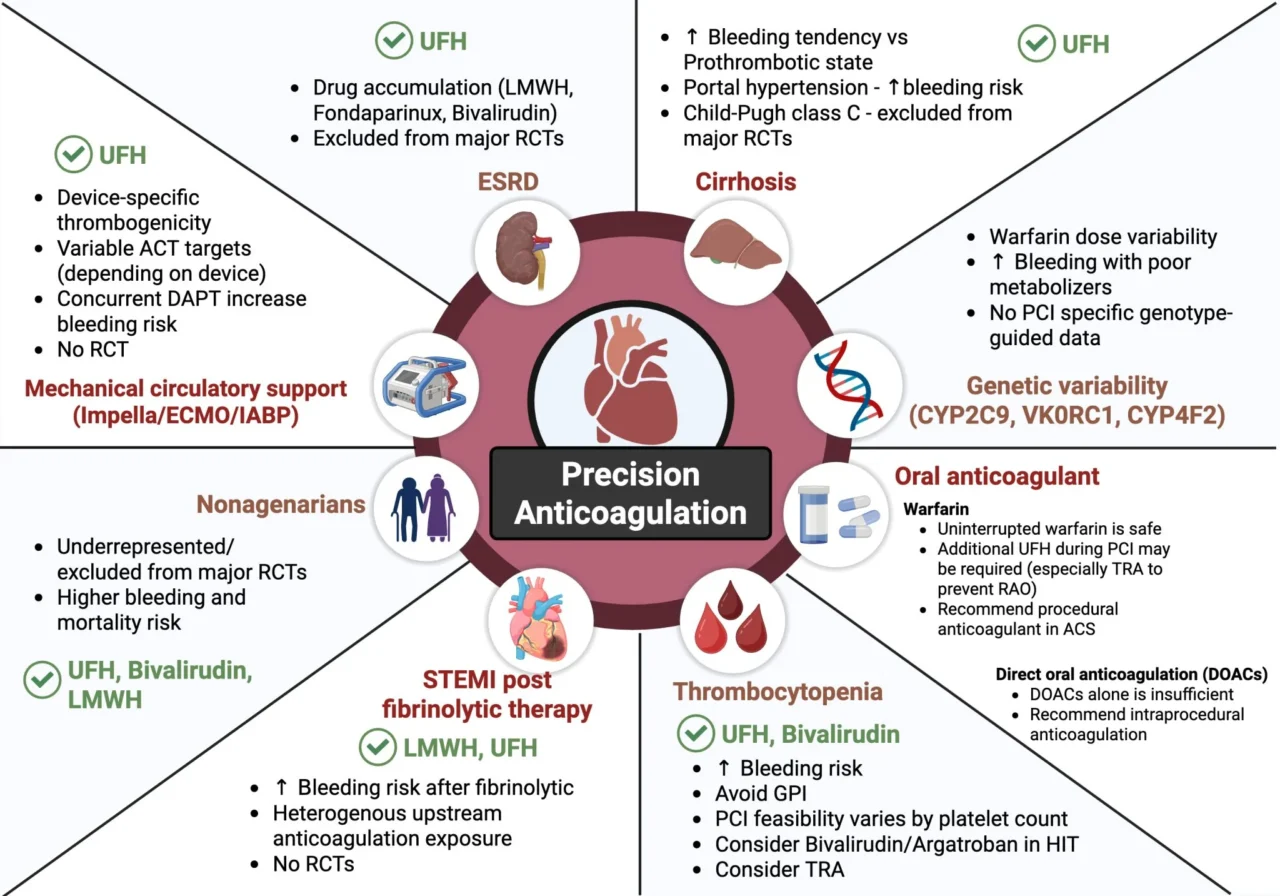
“Precision anticoagulation in the cath lab: What happens when the patient doesn’t look like the trial?
Following our review of intraprocedural anticoagulation in the cardiac catheterization laboratory: Part 1, I’m excited to share Part 2, focusing on patients who are often left out of the evidence.
STEMI after fibrinolysis
- Mechanical circulatory support
- Nonagenarians
- Warfarin and DOAC therapy
- Cirrhosis
- Advanced CKD and ESRD
- Thrombocytopenia
The challenge is simple:
The patients at highest risk of bleeding and thrombosis are often the patients with the least randomized evidence.
An elevated INR in cirrhosis doesn’t necessarily mean a patient is ‘auto-anticoagulated’.
A patient on a DOAC may still need intraprocedural anticoagulation.
Impella and ECMO require different anticoagulation strategies.
And in ESRD, nonagenarians, and thrombocytopenia, the usual risk scores may not tell the whole story.
One-size-fits-all anticoagulation doesn’t fit these patients.
The future is precision-guided anticoagulation: patient, procedure, device, and real-time risk.”
Stay updated with Hemostasis Today.
-
Sep 7, 2026, 14:49Abid Husain: Tirzepatide Drives Broad Improvements in Cardiovascular Risk Biomarkers
-
Sep 7, 2026, 14:46Shabnam Arsiwala: Did You Know there are Multiple Types of Sickle Cell Disease?
-
Sep 7, 2026, 14:46Ahmed Bennis: Angiotensin II and Platelet PAR4 Activation in Hypertension
-
Sep 7, 2026, 14:42Scott Isaacs: Obesity Is Not Only a Cardiometabolic Disease
-
Sep 7, 2026, 14:29Andrei Mesina: Tailoring Post-PCI Antithrombotic Therapy Balances Bleeding and Ischaemic Risks
-
Sep 7, 2026, 14:28Hugo R Lara-Martinez: Acute Immune Thrombocytopenia Following First Obinutuzumab Exposure
-
Sep 7, 2026, 14:27Davide Capodanno: Lp(a) After HORIZON and the Outcome Question
-
Sep 7, 2026, 14:17R.R. Baliga: Stable – But not Safe – Should We Intervene before Patients Crash?
-
Sep 7, 2026, 14:11Aravind Palraj: Exploring Hierarchical Frequency of Clinical Features of APS