


Fakhrul Abedin Jon/LinkedIn
Jun 21, 2026, 17:59
Fakhrul Abedin Jon: Exploring Types of Brain Bleeding
Fakhrul Abedin Jon, Oversight officer at Bangladesh Country Coordinating Mechanism, shared a post on LinkedIn:
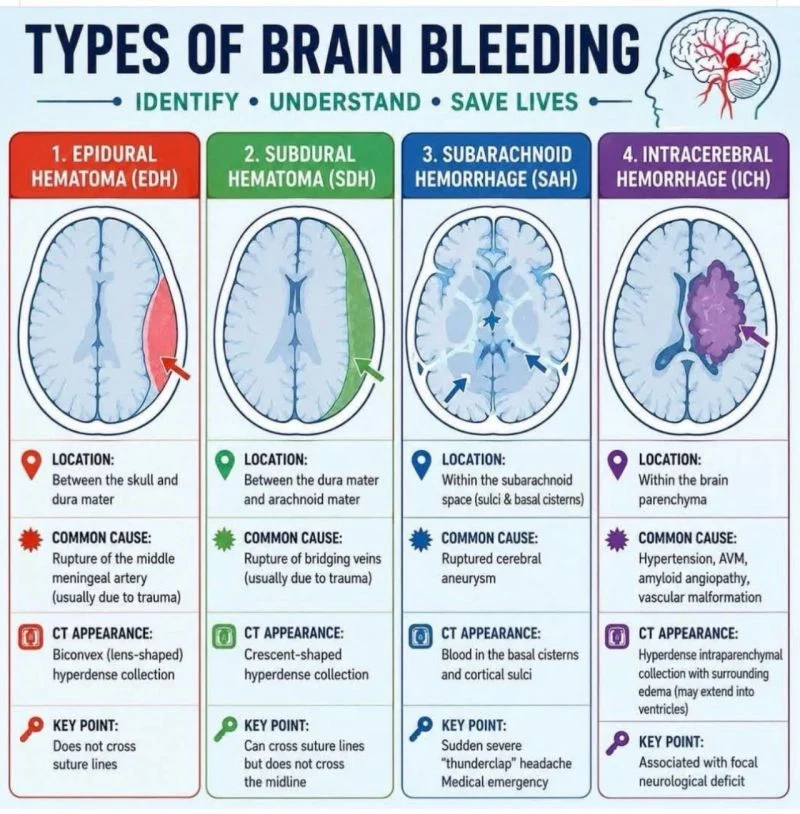
“Types of Types of Brain Bleeding
Brain bleeding (intracranial hemorrhage) is bleeding inside the skull.
It is classified according to the location of the bleed.
1. Epidural Hemorrhage
- Bleeding between the skull and dura mater
- Usually caused by head trauma and skull fracture
- Commonly arterial bleeding
- Rapidly progressive and life-threatening
2. Subdural Hemorrhage
- Bleeding between the dura mater and arachnoid mater
- Usually due to tearing of bridging veins
- Common in elderly patients and after trauma
- Can be acute or chronic
3. Subarachnoid Hemorrhage
- Bleeding between the arachnoid and pia mater
- Often caused by ruptured cerebral aneurysm
- Presents with sudden severe ‘thunderclap’ headache
- Considered a neurosurgical emergency
4. Intracerebral Hemorrhage
- Bleeding within the brain tissue itself
- Commonly caused by hypertension
- A form of hemorrhagic stroke
- May cause focal neurological deficits
5. Intraventricular Hemorrhage
- Bleeding into the ventricular system of the brain
- Seen in premature infants or severe brain injury/stroke
- May lead to hydrocephalus and raised intracranial pressure
Common Symptoms
- Severe headache
- Vomiting
- Weakness or paralysis
- Altered consciousness
- Seizures
- Speech or vision problems
Major Causes
- Trauma
- Hypertension
- Ruptured aneurysm
- Anticoagulant use
- Vascular malformations
- Brain tumors
Diagnosis
- CT scan of the head
- MRI brain
- Cerebral angiography in selected cases
Management
- Emergency stabilization
- Blood pressure control
- Surgical evacuation when indicated
- Treatment of underlying cause
- Intensive neurological monitoring”
Stay updated with Hemostasis Today.
-
Sep 21, 2026, 15:56Anita Zaidi: Why Only 2% of Health Research and Development Goes to Women’s Conditions
-
Sep 21, 2026, 15:49Omid Khalafi: Gating Strategy and How Do We Decide Which Cells to Analyze
-
Sep 21, 2026, 15:44Levacetylleucine: A New Therapeutic Approach to Ataxia Telangiectasia
-
Sep 21, 2026, 15:40Andreas Tridimas: The Diagnostic Traps of Lipaemic Blood – Why a Normal Amylase Can Mislead You
-
Sep 21, 2026, 15:33Arsene Mekinian: Exploring Cardiac Involvement in Behçet’s Disease
-
Sep 21, 2026, 15:23Anis Mahjoubi: MRI Findings of Krukenberg Tumors
-
Sep 21, 2026, 15:08Fikreab Tesfaye Tefera: 10 Practical Take-Home Points for Diagnosing Iron Deficiency Anemia
-
Sep 21, 2026, 14:10Aswin K Mohan: Lessons from TRANSCON 2026 – Building Resilient Blood Supply Systems Before Crisis Hits
-
Sep 21, 2026, 14:00Vincent Lu: Beyond PT and aPTT – How Hemostasis Evolves Across a Lifetime